

×
GreekEnglish

×
  • Politics
  • Diaspora
  • World
  • Lifestyle
  • Travel
  • Culture
  • Sports
  • Cooking
Tuesday
21
Jul 2026
weather symbol
Athens 35°C
  • Home
  • Politics
  • Economy
  • World
  • Diaspora
  • Lifestyle
  • Travel
  • Culture
  • Sports
  • Mediterranean Cooking
  • Weather
Contact follow Protothema:
Powered by Cloudevo
> World

The next generation of lunar rovers might move like flying saucers

The new look may be a familiar one

Newsroom January 4 11:41

Δείτε περισσότερα άρθρα μας στα αποτελέσματα αναζήτησης

Add Protothema.gr on Google

Could the next generation of lunar rovers resemble UFOs? To some, the idea isn’t as far-fetched as it sounds.

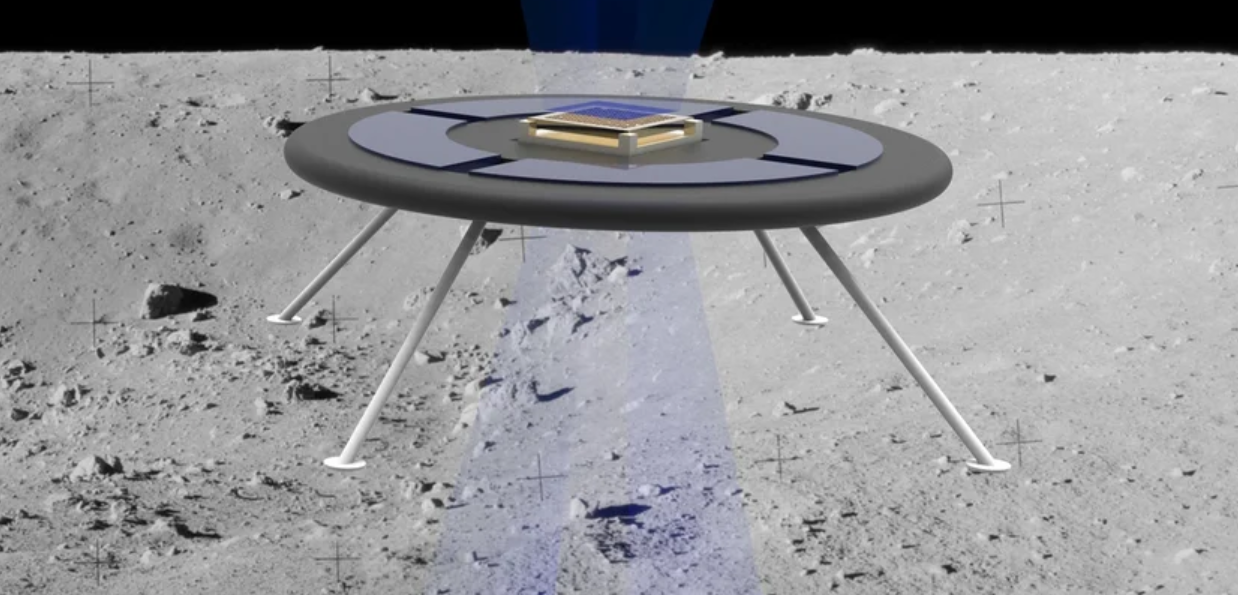
Researchers at MIT have recently tested a new concept for a ‘hovering rover,’ a spacecraft that instead of relying on a traditional wheels-on-the-ground approach, will use the moon’s natural electric field to levitate over its surface.

Because celestial bodies like the moon and other asteroids lack atmospheres, they’re unable to deflect solar wind, and thus are able to build up electric fields through direct exposure to the sun and surrounding plasma. The resulting charge is strong enough to lift dust particles in the air, a phenomenon that most closely resembles the way static electricity might make someone’s hair stand on end.

The hovering rover works by utilizing a cheap, yet effective power source: miniature ion thrusters. Typically used to propel spacecraft through space, in this case, small ion beams are used to charge the vehicle and boost the surface’s natural charge, which creates a powerful force that repels the vehicle from the ground.

See Also:

>Related articles

Court puts “brake” on $110 billion paramount–Warner Bros. merger

“When she turns eight, they will take her”: Children sold as brides to repay family debts in Afghanistan

Hormuz on “Red Alert”: Ship in flames after Iranian attacks, new US bombardment

Frozen ship delivers ice-covered cars to Russia port in frigid cold (photos)

Oliver Jia-Richards, a graduate student at MIT and lead author of the paper, says that the team’s idea for the project originally stemmed from NASA’s research into dust levitation, which is the study of how static electricity and dust behave in an airless environment like the moon, and how the combination might affect mechanical and electrical systems—those that allow rovers to function. That led him to wonder if it was possible to apply the concept to space exploration and engineering.

Read more: Popsci

Ask me anything

Explore related questions

#flying saucer#rover#science#technology#world
> More World

Follow en.protothema.gr on Google News and be the first to know all the news

See all the latest News from Greece and the World, the moment they happen, at en.protothema.gr

> Latest Stories

Trump: US will respond immediately if Houthis threaten Red Sea shipping

July 21, 2026

Emergency heatwave warning as thermometer set to hit 43C in three regions

July 21, 2026

Eurostat: Greece leads Europe in public debt reduction

July 21, 2026

Former minister Ann Widdecombe killed in hammer attack, court told

July 21, 2026

Houthis open a second war front: Threat of a Saudi Arabia blockade brings new risk to oil

July 21, 2026

Hellenic Civil Aviation Authority: 45 new air traffic controllers sworn in

July 21, 2026

France records worst wildfire season in 20 years by mid-July

July 21, 2026

Greek EU presidency is a national goal that transcends parties and political divisions, says Tasos Hatzivasileiou

July 21, 2026
All News

> Greece

In reverence, the emotional deposition in Jerusalem, see photos & video

The Holy Temple of the Resurrection opened after many days due to the war between Israel and Iran

April 10, 2026

In the final stretch for the accreditation of joint master’s degrees: Aiming for their launch in the coming academic year

April 10, 2026

Schedule for Epitaph Procession today (10/4)

April 10, 2026

Perfect weather for Easter excursions, according to Tsatrafyllia’s forecast

April 10, 2026

Easter in Greece: The customs that continue in Greek tradition – From Nafpaktos to Corfu

April 10, 2026
Homepage
PERSONAL DATA PROTECTION POLICY COOKIES POLICY TERM OF USE
Powered by Cloudevo
Copyright © 2026 Πρώτο Θέμα



