

×
GreekEnglish

×
  • Politics
  • Diaspora
  • World
  • Lifestyle
  • Travel
  • Culture
  • Sports
  • Cooking
Monday
13
Jul 2026
weather symbol
Athens 28°C
  • Home
  • Politics
  • Economy
  • World
  • Diaspora
  • Lifestyle
  • Travel
  • Culture
  • Sports
  • Mediterranean Cooking
  • Weather
Contact follow Protothema:
Powered by Cloudevo
> World

Astronomy’s environmental toll is surprisingly high. But there are ways to clean it up

Astronomy, in some ways, seems like the cleanest of sciences...

Newsroom March 22 03:50

Δείτε περισσότερα άρθρα μας στα αποτελέσματα αναζήτησης

Add Protothema.gr on Google

It’s hard not to love the Kepler Space Telescope. Launched in 2009, the venerable spacecraft discovered nearly 5,000 suspected or confirmed exoplanets—or worlds orbiting other stars—during its 11-year lifetime. Built and launched at a relative bargain price of $600 million, it generated 4,306 scientific papers written by 9,606 authors. So all good, right? Well, not entirely.

In that same 11 years, the telescope that discovered so many other worlds did no favors for our own, generating an annual total of 4,784 tons of carbon dioxide emissions, or a hefty 52,620 tons over its lifetime, mostly as a result of the electricity and supercomputing power it took to keep it operating. That also comes out to 12 tons of CO2 per paper and five tons per author.

See Also:

>Related articles

Coalition of the Willing: Kyiv to purchase 16 Rafale fighter jets and air defence systems

IMF warns Europe: Public debt could surge to 130% of GDP by 2040 without action

US to enforce naval blockade of Iran starting Tuesday at 11:00 p.m.

Greek Foreign Minister Dendias proposes he lead a humanitarian mission to Mariupol

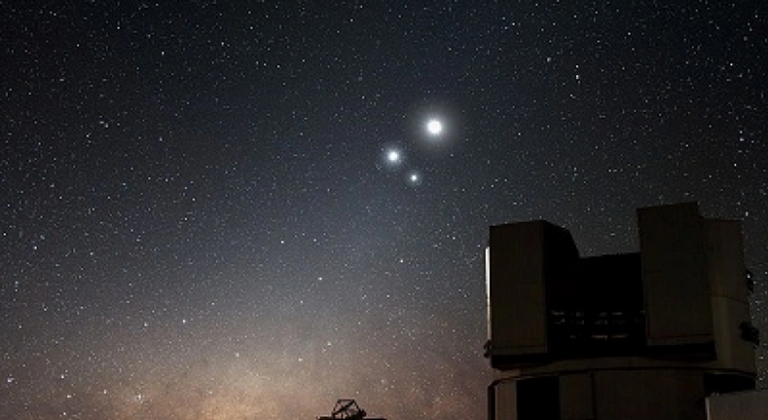
Astronomy, in some ways, seems like the cleanest of sciences. After all, it costs nothing to look at the sky. But both ground-based and space-based observatories extract a huge environmental toll—in terms of construction, launch, energy generation and consumption, and even, at least before the pandemic, in the air miles burned as the world’s estimated 30,000 astronomers flew from conference to conference around the globe.

Read more: TIME

Ask me anything

Explore related questions

#astronomy#environment#science#technology#world
> More World

Follow en.protothema.gr on Google News and be the first to know all the news

See all the latest News from Greece and the World, the moment they happen, at en.protothema.gr

> Latest Stories

Coalition of the Willing: Kyiv to purchase 16 Rafale fighter jets and air defence systems

July 13, 2026

IMF warns Europe: Public debt could surge to 130% of GDP by 2040 without action

July 13, 2026

US to enforce naval blockade of Iran starting Tuesday at 11:00 p.m.

July 13, 2026

Mitsotakis in Paris for 37-nation Ukraine support summit, Zelensky also present

July 13, 2026

US strikes Iranian submarine using maritime drones for the first time, following Ukraine’s example

July 13, 2026

How Mossad allegedly planned to topple Iran’s clerical regime using Mahmoud Ahmadinejad as a “Trojan Horse”

July 13, 2026

Alert in the Gulf of Aden: Six speedboats approached an oil tanker – Security team fired warning shots

July 13, 2026

A visit to Alimos: Remembering Australia’s fallen & strengthening community ties

July 13, 2026
All News

> Greece

In reverence, the emotional deposition in Jerusalem, see photos & video

The Holy Temple of the Resurrection opened after many days due to the war between Israel and Iran

April 10, 2026

In the final stretch for the accreditation of joint master’s degrees: Aiming for their launch in the coming academic year

April 10, 2026

Schedule for Epitaph Procession today (10/4)

April 10, 2026

Perfect weather for Easter excursions, according to Tsatrafyllia’s forecast

April 10, 2026

Easter in Greece: The customs that continue in Greek tradition – From Nafpaktos to Corfu

April 10, 2026
Homepage
PERSONAL DATA PROTECTION POLICY COOKIES POLICY TERM OF USE
Powered by Cloudevo
Copyright © 2026 Πρώτο Θέμα



