×
GreekEnglish

×
  • Politics
  • Diaspora
  • World
  • Lifestyle
  • Travel
  • Culture
  • Sports
  • Cooking
Saturday
07
Feb 2026
weather symbol
Athens 19°C
  • Home
  • Politics
  • Economy
  • World
  • Diaspora
  • Lifestyle
  • Travel
  • Culture
  • Sports
  • Mediterranean Cooking
  • Weather
Contact follow Protothema:
Powered by Cloudevo
> Culture

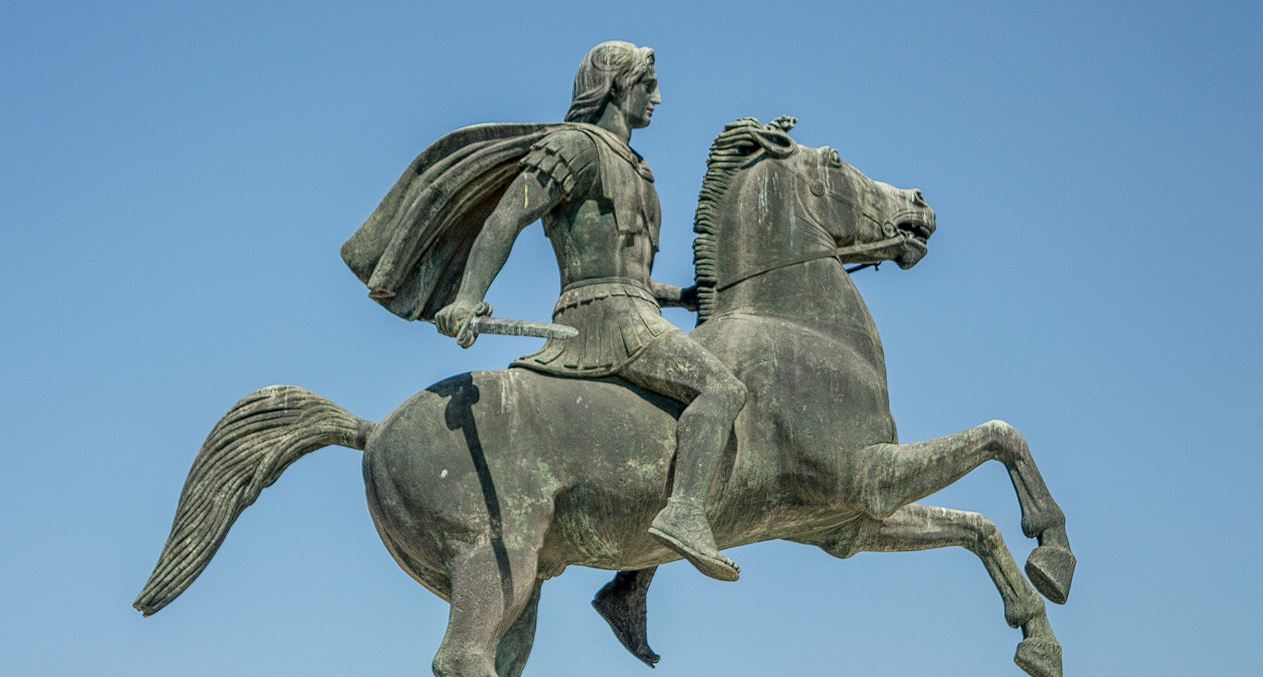
AI is deciphering a 2,000-year-old ‘lost book’ describing life after Alexander the Great

Researchers are using machine learning, a branch of artificial intelligence, to discern the faint ink on the rolled-up papyrus scroll

Newsroom February 8 06:18

A 2,000-year-old “lost book” discussing the dynasties that succeeded Alexander the Great may finally be deciphered nearly two millennia after the text was partially destroyed in the eruption of Mount Vesuvius in A.D. 79 and, centuries later, handed off to Napoleon Bonaparte.

The reason for the breakthrough? Researchers are using machine learning, a branch of artificial intelligence, to discern the faint ink on the rolled-up papyrus scroll.

“It’s probably a lost work,” Richard Janko(opens in new tab), the Gerald F. Else distinguished university professor of classical studies at the University of Michigan, said during a presentation at the joint annual meeting of the Archaeological Institute of America and the Society for Classical Studies, held in New Orleans last month. The research is not yet published in a peer-reviewed journal.

>Related articles

Kyriakos Mitsotakis: Live discussion on “The Greek AI Accelerator” programme

European Parliament: “Yes” to AI protection for artists and media in the EU

What changes in tax audits in 2026: Digital modernisation and AI in the fight against tax evasion

Only small parts of the heavily damaged text can be read right now. “It contains the names of a number of Macedonian dynasts and generals of Alexander,” Janko said, noting that it also includes “several mentions of Alexander himself.” After Alexander the Great died in 323 B.C., his empire fell apart. The text mentions the Macedonian generals Seleucus, who came to rule a large amount of territory in the Middle East, and Cassander, who ruled Greece after Alexander’s death.

The lost book is from the Villa of the Papyri at Herculaneum, a city that was destroyed alongside Pompeii when Mount Vesuvius erupted after the turn of the first millennium. The villa, named for its vast scrolls of papyri, contains numerous writings from the philosopher Philodemus (lived circa 110 B.C. to 30 B.C.). These papyri were carbonized when the volcano erupted. At some point, the text was found, and it was given to Napoleon Bonaparte in 1804. He gave it to the Institut de France in Paris, where it now resides. In 1986, an attempt to unroll the papyrus resulted in further damage, Janko said.

source livescience.com

Ask me anything

Explore related questions

#AI#Alexander the Great#scroll
> More Culture

Follow en.protothema.gr on Google News and be the first to know all the news

See all the latest News from Greece and the World, the moment they happen, at en.protothema.gr

> Latest Stories

Thessaloniki’s Flyover: Greece’s largest bridge project nears completion, set to revolutionize urban mobility

February 7, 2026

What kind of tourism do we want – Experts from around the world speak out: “Stop issuing permits that will turn Greece into Costa del Sol

February 7, 2026

Vinyl records make a comeback: Record stores return as an aesthetic choice, not just nostalgia

February 7, 2026

Winter Olympics: As a tribute to Giorgio Armani, Mariah Carey rocked San Siro

February 7, 2026

Weather: Spring in winter with temperatures up to 22 degrees at the weekend

February 7, 2026

Boos for Israel and JD Vance at Winter Olympics Opening Ceremony

February 7, 2026

Ministry of Finance: Six privatisations and five tax cuts in focus for 2026

February 7, 2026

US Ambassador begins tours across Greece: From Zappeion to Washington, the vertical corridor

February 7, 2026
All News

> World

Boos for Israel and JD Vance at Winter Olympics Opening Ceremony

The Israeli delegation entered the stadium amid strong boos from parts of the crowd during the Opening Ceremony of the 2026 Milan-Cortina Winter Olympics on Friday evening (February 6). The event highlighted the heavy geopolitical shadow cast over the Games

February 7, 2026

The Commission targets TikTok for its addictive design that harms children

February 6, 2026

“True friend, fighter & winner”: Trump openly supports Orban ahead of the Hungarian elections

February 6, 2026

The WSJ on the negotiations in Oman: Iran rejects the US demand to halt uranium enrichment

February 6, 2026

What qualities does a good astronaut have for the mission to the Moon? The requirements of NASA

February 6, 2026
Homepage
PERSONAL DATA PROTECTION POLICY COOKIES POLICY TERM OF USE
Powered by Cloudevo
Copyright © 2026 Πρώτο Θέμα