

×
GreekEnglish

×
  • Politics
  • Diaspora
  • World
  • Lifestyle
  • Travel
  • Culture
  • Sports
  • Cooking
Tuesday
04
Aug 2026
weather symbol
Athens 30°C
  • Home
  • Politics
  • Economy
  • World
  • Diaspora
  • Lifestyle
  • Travel
  • Culture
  • Sports
  • Mediterranean Cooking
  • Weather
Contact follow Protothema:
Powered by Cloudevo
> World

Could an ‘Earth-like’ planet be hiding in our solar system’s outer reaches?

Astronomers are racing to explain peculiar orbits of faraway objects at the edge of our solar system.

Newsroom September 7 07:09

Δείτε περισσότερα άρθρα μας στα αποτελέσματα αναζήτησης

Add Protothema.gr on Google

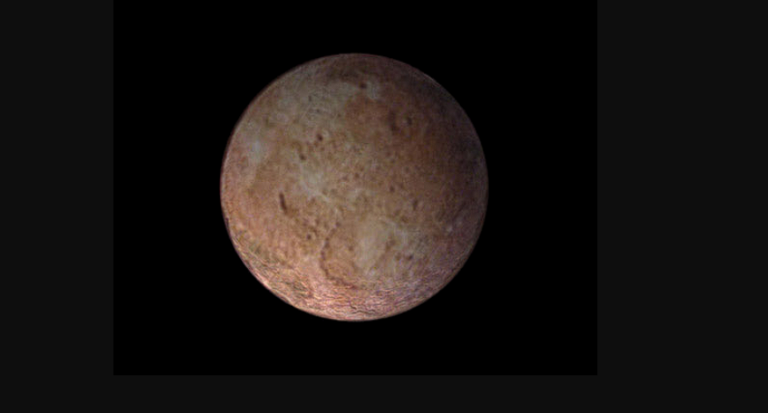
Among the many mysteries that make the furthest reaches of our solar system, well, mysterious, is the exceptionally egg-shaped path of a dwarf planet called 90377 Sedna.

>Related articles

According to NASA, a piece of a SpaceX rocket is on a collision course with the Moon—what is the risk to Earth?

After the Moon and Mars, scientists set their sights on Titan: The ambitious plan for a human mission to Saturn’s largest moon

Elon Musk & SpaceX: How the “failed idea” and the Russians’ “NO” led to the launch of a $2 trillion company

Its 11,400-year orbit, one of the longest of any resident of the solar system, ushers the dwarf planet to seven billion miles (11.3 billion km) from the sun, then escorts it out of the solar system and way past the Kuiper Belt to 87 billion miles (140 billion km), and finally takes it within a loose shell of icy objects known as the Oort cloud. Since Sedna’s discovery in 2003, astronomers have struggled to explain how such a world could have formed in a seemingly empty region of space, where it is too far to be influenced by giant planets of the solar system and even the Milky Way galaxy itself.

Now, a new study suggests that a thus far undetected Earth-like planet hovering in that region could be deviating orbits of Sedna and a handful of similar trans-Neptunian objects (TNOs), which are the countless icy bodies orbiting the sun at gigantic distances. Many TNOs have oddly inclined and egg-shaped orbits, possibly due to being tugged at by a hidden planet, astronomers say.

more at space.com

Ask me anything

Explore related questions

#earth#planet#space
> More World

Follow en.protothema.gr on Google News and be the first to know all the news

See all the latest News from Greece and the World, the moment they happen, at en.protothema.gr

> Latest Stories

Saudi Arabia: Aramco’s profits surge 44% despite the war in the Middle East

August 4, 2026

According to NASA, a piece of a SpaceX rocket is on a collision course with the Moon—what is the risk to Earth?

August 4, 2026

New images emerge from the helicopter crash site during Western Attica wildfire, Watch video

August 4, 2026

The traffic restrictions that were to be implemented tonight on the Thessaloniki ring road have been lifted

August 4, 2026

FBI agent stole $1 million in cryptocurrency, asked ChatGPT what it would do with the money if leaving the U.S.

August 4, 2026

Interministerial meeting at Maximos Mansion under Mitsotakis tomorrow on compensation for wildfire victims

August 4, 2026

“Her parents never wanted their marriage,” wife’s aunt says of Afghan man accused of killing British woman in Kypseli

August 4, 2026

Drought is drying out the Kalochori wetland – See photos

August 4, 2026
All News

> Greece

In reverence, the emotional deposition in Jerusalem, see photos & video

The Holy Temple of the Resurrection opened after many days due to the war between Israel and Iran

April 10, 2026

In the final stretch for the accreditation of joint master’s degrees: Aiming for their launch in the coming academic year

April 10, 2026

Schedule for Epitaph Procession today (10/4)

April 10, 2026

Perfect weather for Easter excursions, according to Tsatrafyllia’s forecast

April 10, 2026

Easter in Greece: The customs that continue in Greek tradition – From Nafpaktos to Corfu

April 10, 2026
Homepage
PERSONAL DATA PROTECTION POLICY COOKIES POLICY TERM OF USE
Powered by Cloudevo
Copyright © 2026 Πρώτο Θέμα



