





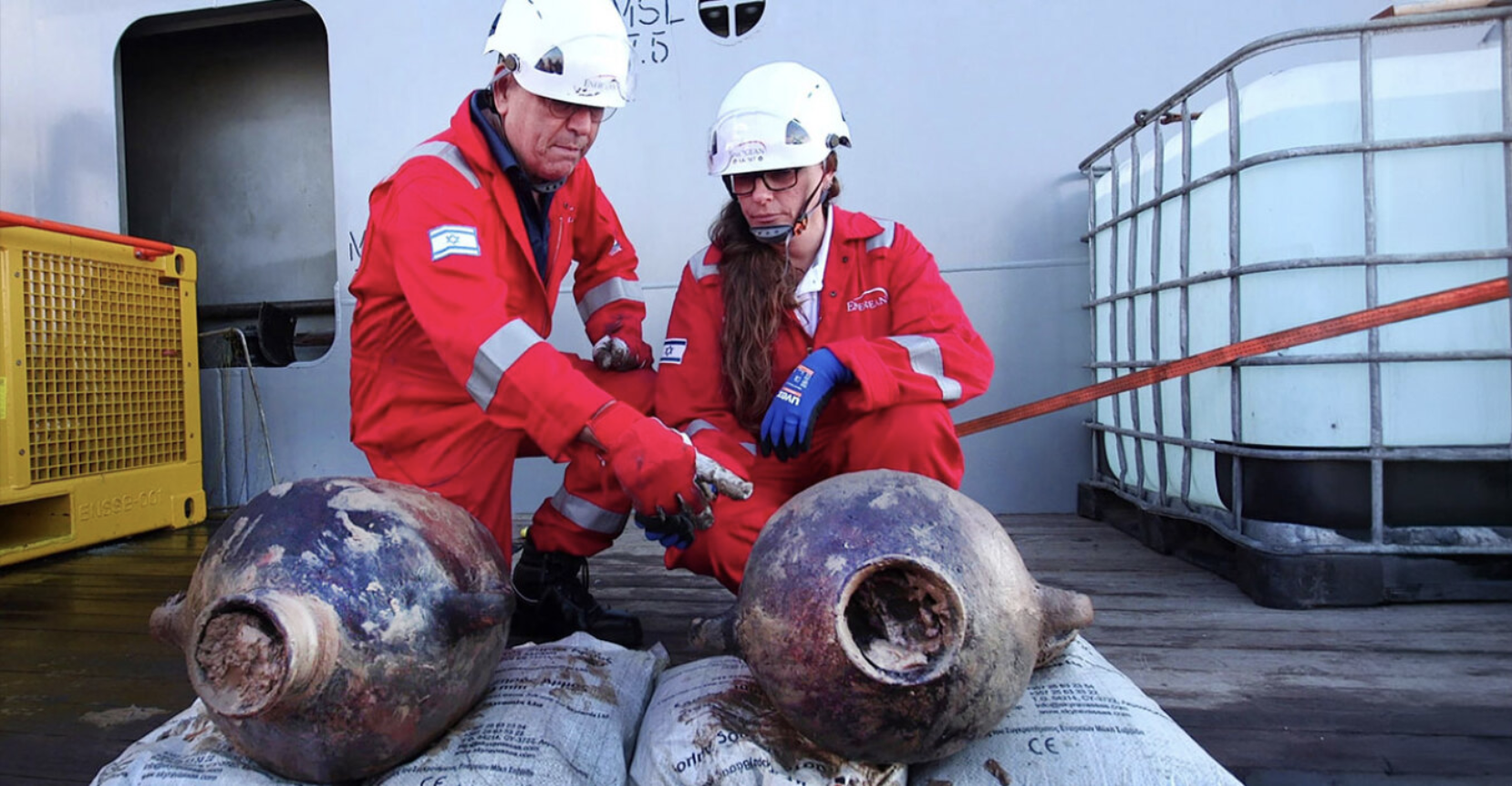
A major archaeological discovery has been made by archaeologists in Israel who have managed to locate the remains of the oldest shipwreck ever discovered.
Based on the study and analysis of two of the finds, two clay jars known as Canaan amphorae, it is estimated that the merchant ship that was currying them, was 11 to 14 metres long and sunk sometime between 1400 BC and 1300 BC, a time when the Egyptian Empire stretched from what is now northern Syria to Sudan.
As the New York Times reports, “It is not clear whether the galleon was wrecked after a sudden storm, due to winds or after an attempted piracy. But based on plans recorded by a remote-controlled underwater robot, the vessel sank to the bottom without capsizing, and the hundreds of storage jars in its hold were kept virtually intact.”
“I think any Bronze Age shipwreck discovery is very important, as shipwrecks from this period are extremely rare. They are so rare that only two other cargo shipwrecks are known from the late Bronze Age in the Mediterranean – both were found, unlike the current one, off the Turkish coast relatively close to shore and were accessible using standard diving equipment. The most recent of these two discoveries was made in 1982. No spectacular new discoveries have been made since then,” said University of Texas archaeologist Cemal Pulak.
The Bronze Age wreck was discovered in the summer of 2023 during Energean’s exploration for natural gas deposits.
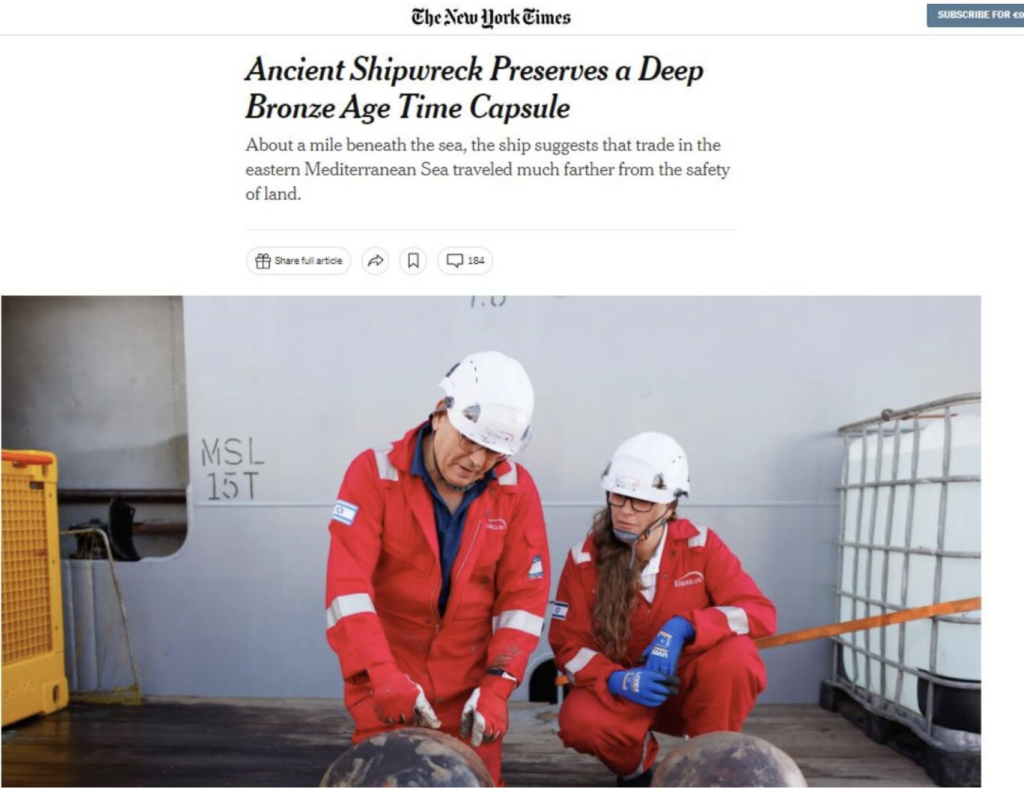
Images sent to the Israel Antiquities Authority from a remotely operated submersible were found to depict Late Bronze Age storage containers designed to contain, among other things, honey, olive oil and resin from the Pistacia atlantica tree. This resin was used as a preservative in wine and, in Egypt, as incense and varnish in New Kingdom-era funerary equipment.
“The ship is preserved at such a great depth that time has been frozen since the moment of sinking,” explained the head of the Israeli authority, Jacob Sharvit
Trade in the Bronze Age
The 14th century BC in the eastern Mediterranean was a period of international trade and vast wealth concentrated in the hands of a few. Scattered along the coast were the great trading centres of the Canaanites, which provided strategic and useful raw materials and industrial products in the Aegean region and beyond. Most exports involved copper and tin, which when mixed together, created copper for both the manufacture of agricultural tools that increased yields and for the manufacture of weapons and armour to equip armies.
Most of what we know about trade in this period is based on two shipwrecks in southern Turkey. Using these finds, scholars have hypothesized that trade during the Late Bronze Age was conducted from port to port within sight of the coast.
The naval vessel found in Israel shows that Bronze Age traders traveled much farther from ports.
“The discovery of this ship is now changing our entire understanding of the navigation skills of ancient seafarers. It is the first to be found at such a great distance, without visual contact with any land. From this geographical point, only the horizon is visible all around,” Sharvit explained.
Ask me anything
Explore related questions




