





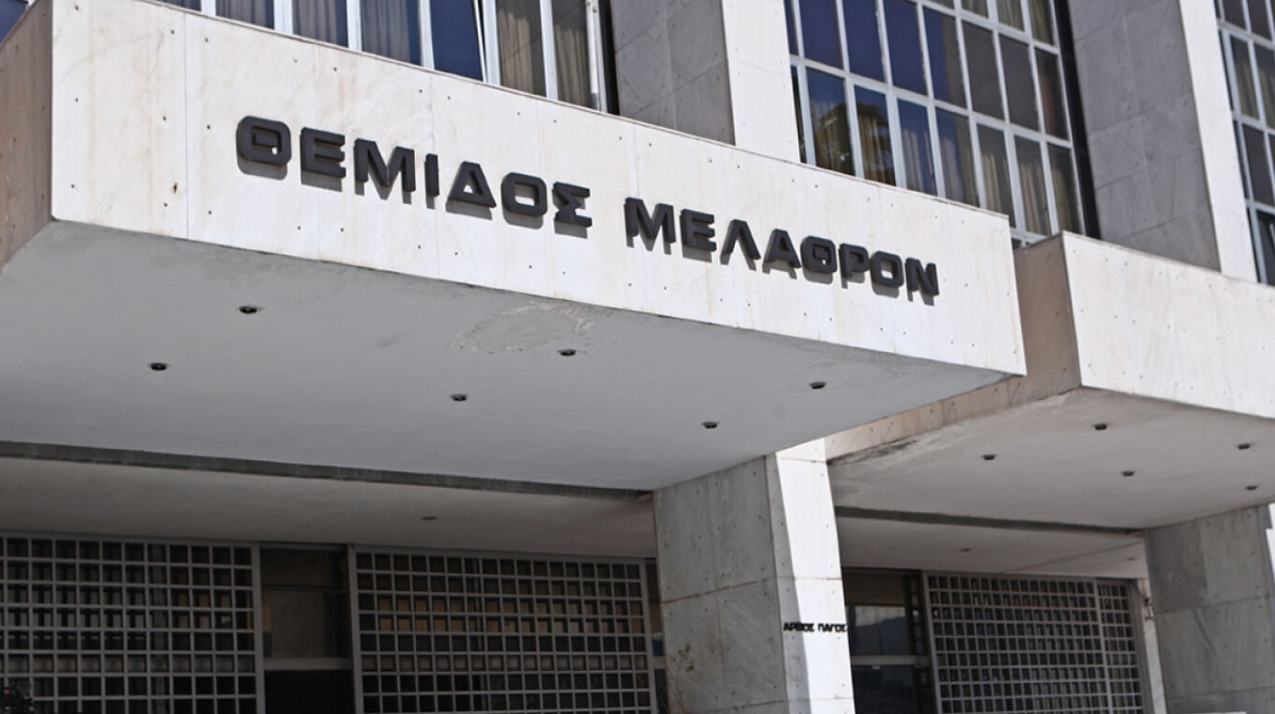
The Supreme Court’s investigation into the wiretapping case, which lasted nearly two years and included testimonies from all proposed witnesses, has reached three key conclusions. Today, Supreme Court Prosecutor Georgia Adelini announced the main findings of the report:
1. There is no connection between the Predator spyware and state services (EYP, DAEEB, Hellenic Police).
2. EYP’s surveillance activities were entirely legal.
3. Four executives from private companies are referred to trial. Their referral concerns misdemeanors.
In detail, Prosecutor Adelini states that the investigation “unequivocally concludes that there was no involvement whatsoever of state services—including the National Intelligence Service (EYP), the Counter-Terrorism Unit (DAEEB), and generally the Hellenic Police (Ministry of Citizen Protection)—or any government official in the use of Predator or any similar spyware.”
On the other hand, “sufficient indications” were found at this stage to initiate criminal proceedings against certain (four) legal representatives and actual owners of companies for offenses such as the violation of communication privacy, which are classified as misdemeanors. The announcement further states that all proposed witnesses were examined, including service directors, government officials, and findings from three independent authorities: the Hellenic Data Protection Authority (HDPA), the Hellenic Authority for Communication Security and Privacy (ADAE), and the National Transparency Authority (EAD), which conducted investigations and on-site inspections at public institutions, including the Ministry of Citizen Protection (Hellenic Police), EYP, as well as private companies, and submitted their reports.
The individuals from the private sector will stand trial to determine the validity of the charges against them.
The Supreme Court Prosecutor’s announcement:
The preliminary examination of the wiretapping case has been completed today, nearly two years after it began, and just nine months after the investigation was upgraded and assigned personally by the Supreme Court Prosecutor to Deputy Supreme Court Prosecutor Achilles Zisis, due to the case’s significance and to prevent the risk of statute limitations. Given the extensive scope of the investigation and the need for an in-depth examination of all aspects of the case, the time taken was deemed absolutely necessary.
The investigation included testimonies from nearly all witnesses proposed by the complainants, including politicians, journalists, representatives of telecommunications companies, and senior officials from EYP over the past decade, as well as members of ADAE, EAD, and senior officers of the Hellenic Police, including departments for Intelligence Analysis, Economic Affairs, and Cybercrime, totaling over forty witnesses.
Three independent authorities (HDPA, ADAE, and EAD) were involved, conducting investigations and on-site checks in public institutions, such as the Ministry of Citizen Protection (Hellenic Police), EYP, and private companies, submitting their findings.
The Cybercrime Division also conducted witness examinations and searched companies and suspects’ residences, seizing documents, tax records, and digital evidence, which were later analyzed by the Criminal Investigations Directorate. Additionally, two mutual legal assistance requests were sent to judicial authorities in the USA and Switzerland. The Financial Police Department also conducted audits on individuals and legal entities and submitted its report. Statements were taken from suspects, and memoranda were submitted.
All requests from the involved parties were satisfied, including a judicial forensic examination conducted on EYP records by two experts, in the presence of the assigned prosecutor. The preliminary examination resulted in a comprehensive 300-page report, which was submitted by the Deputy Supreme Court Prosecutor and approved both legally and substantively by the Supreme Court Prosecutor.
The extensive evidence “unequivocally proves that there was no involvement whatsoever of state services—including EYP, the Counter-Terrorism Unit (DAEEB), and the Hellenic Police (Ministry of Citizen Protection)—or any government official in the use of Predator or similar spyware.”
Regarding the legal provisions for lifting communication confidentiality, which were issued by the then-prosecutor of EYP for the years 2020-2024, the process strictly adhered to legal requirements. The law, historically and consistently, has not required detailed justification for these provisions, a rule maintained by all governments until Law 5002/9-12-2022. Furthermore, this framework aligns with the European Court of Justice’s interpretation (see the February 16, 2023, ruling in Case C-349/21). Moreover, a disciplinary preliminary examination conducted by a Deputy Supreme Court Prosecutor resulted in a ruling exonerating the former EYP prosecutor, which was approved by the Supreme Court Vice President and President of the Judicial Inspection Council.
Furthermore, “sufficient indications” were found to initiate criminal proceedings against certain legal representatives and actual owners of companies for offenses such as violating communication privacy. However, due to a more lenient amendment to the Penal Code in 2019 (Law 4619/2019), these acts are now classified as misdemeanors, whereas they were previously felonies under both the old Penal Code and the new Law 5002/9-12-2022. Consequently, in accordance with the principle of retroactive application of the more lenient law (Article 2 of the Penal Code), the timing of these acts (2020-2021) means they will be prosecuted as misdemeanors.
The “sufficient indications” necessary for initiating prosecution against the private individuals primarily stem from findings that their companies were involved in similar privacy violations in other countries and had common “targets” in Greece. Therefore, these allegations must be examined in court to determine their validity.
Finally, it is highlighted that no other country has conducted such a thorough (judicial) investigation into a similar case—with the involvement of three independent authorities. In most cases, similar investigations abroad resulted in mere fines for the companies involved.
Kasselakis: “I Apologize to Mr. Dimitriadis”
“I urge the Prime Minister to immediately reinstate Mr. Dimitriadis at the Maximos Mansion to correct a great injustice and continue their joint work,” said SYRIZA President Stefanos Kasselakis in a post on X, referring to the wiretapping issue.
Specifically, he stated:
“I apologize to Mr. Dimitriadis for having assumed that he was ‘involved’ in the EYP-Predator scandal. The truth is that I was misled by Mr. Mitsotakis when he ‘resigned’ him and apologized to Mr. Androulakis. I urge the Prime Minister to immediately reinstate Mr. Dimitriadis at Maximos Mansion to correct a great injustice and continue their joint work. I wish them both an enjoyable listening experience.”
Ask me anything
Explore related questions




