





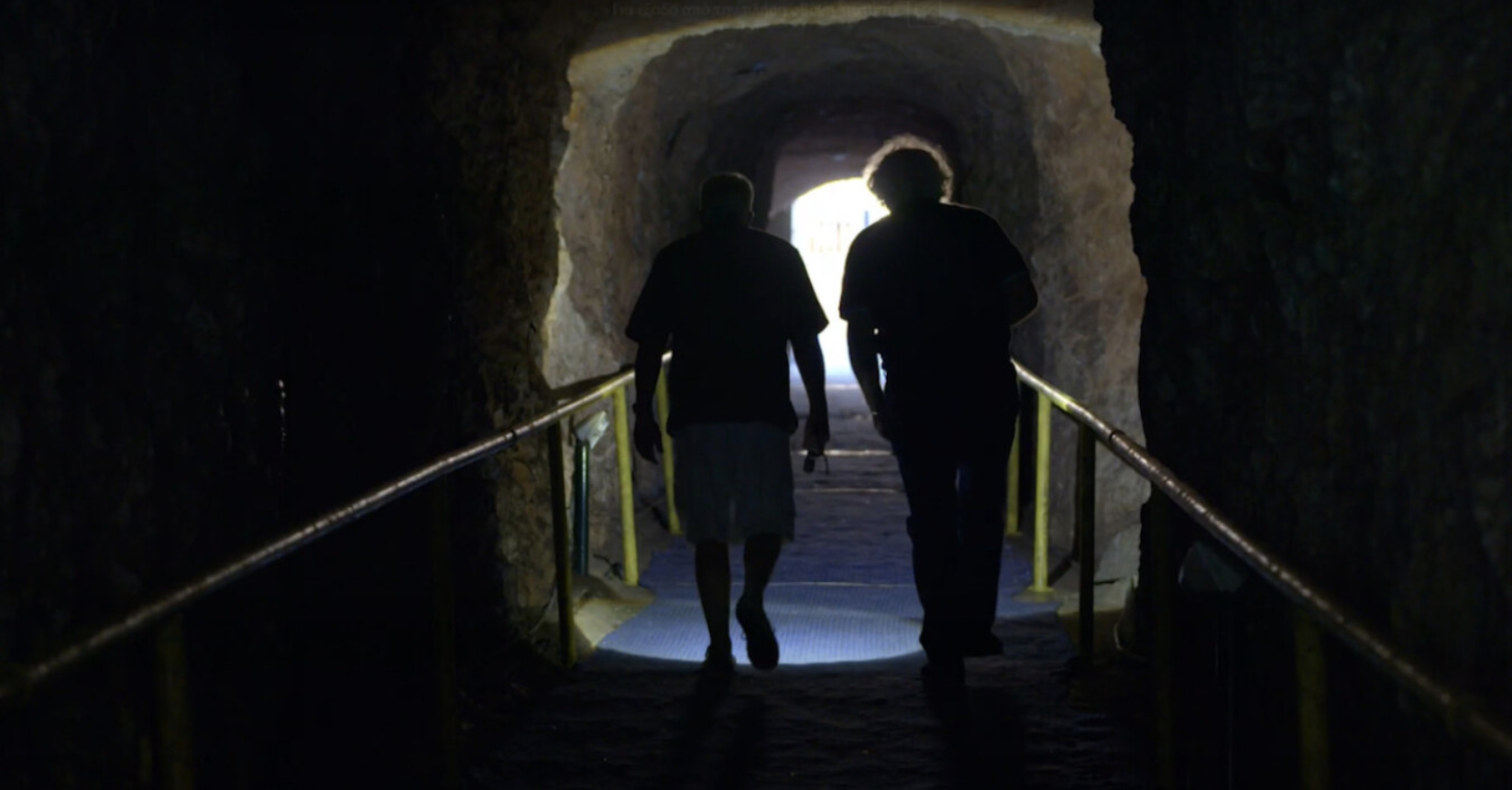
The American newspaper Wall Street Journal addresses this controversy in an article discussing the documentary “Odysseus Returns”.
It focuses on Makis Metaxas’ quest to prove that Odysseus was a real person who was buried on Kefalonia, possibly the Ithaca described by Homer.
According to the WSJ, this is a controversial theory that has sparked reactions, especially among the residents of present-day Ithaca.
However, Metaxas believes that his findings confirm the connection between Kefalonia and the mythical hero.
The documentary portrays Metaxas’ personal odyssey as an amateur archaeologist who, since the 1990s, has followed clues left by Homer himself.
Watch the video, a trailer for the documentary:
The physical descriptions of “Ithaca,” such as the geology, landscape, and features like a “majestic” mountain and a nymphs’ cave that is a “wonder to behold,” align with Kefalonia, says the newspaper. In contrast, the parallels with modern Ithaca are weaker.
On Kefalonia, Mount Ainos and the island’s blue cave seem to confirm Homer’s praise. The gorge of Poros, a coastal town where Metaxas once served as mayor, resembles the “Harbor of Phorcys” from the Odyssey. Following these clues, Metaxas discovered the entrance to a tomb hidden under the vegetation.
Although there have been no archaeological discoveries on Ithaca comparable to Heinrich Schliemann’s excavations of ancient Troy and Mycenae in the 1870s, Metaxas’ efforts led to the uncovering of a royal tholos tomb, typical for nobles.
Despite centuries of looting, some items were preserved, including gold jewelry and a crystal seal, which leading archaeologist Lazaros Kolonas identified as typical of the Mycenaean era.
This seal, according to Kolonas, is one of the most significant objects from the Bronze Age and bears a design that resembles Homer’s description of a beloved item of Odysseus.
Watch the video:
Ismini Milliouresi describes the excavation that took place on her family’s land in Kefalonia in 1992. The discovery of a large beehive-shaped tomb raised hopes that it might be the final resting place of a Mycenaean king from the Bronze Age. After clearing the debris, archaeologists expected to find burials, but the tomb’s floor was empty … until they realized that the floor wasn’t actually a floor.
The PBS documentary, directed by Seth Warden and James Younger and narrated by Morgan Freeman, is a delight for archaeology and classical studies enthusiasts.
Emma Greensmith, a professor of classics at Oxford University, provides significant literary context, while the leading expert on Mycenaean and Minoan seals, John Younger, visits Kefalonia and leaves impressed.
Ismini Milliouresi, whose family land hosted the tomb, was inspired to become an archaeologist, and her contribution to the documentary is doubly important, as her family’s video recordings from the 1990s show the initial local efforts to excavate the site.
The unfortunate part of the story is the politics: Mr. Metaxas, despite being elected governor of Kefalonia and Ithaca at one point, faced opposition from Ithaca’s commercial interests because of his discoveries.
Additionally, there is significant skepticism toward Mr. Kolonas, as he never formally wrote or recognized the connection between Kefalonia’s archaeological site, Homer, the island’s findings, or Mr. Metaxas’ contributions. Nevertheless, in the documentary, Mr. Kolonas appears to leave room for the possibility that Mr. Metaxas’ claims linking Kefalonia to Odysseus could be validated.
PBS’s description of the documentary reads:
Is King Odysseus, the mastermind behind the Trojan horse in Homer’s epic poem, Iliad, merely a figure of ancient fiction? Or was he a flesh-and-blood person?
In 1991, Makis Metaxas, a local politician on the Greek island of Kefalonia, discovers a 3,000-year-old Mycenaean tomb. Soon, Greece’s leading archaeologist, Lazaros Kolonas, begins two years of excavations.
The dig culminates in the revelation of an object eerily similar to one described by Homer as a prized possession of King Odysseus. But these incredible findings only ignite a storm of controversy.
Residents of the neighboring island of Ithaca passionately believe they live in Odysseus’ homeland. They are outraged at the prospect of losing their ancient claim… and their most significant tourist attraction. The political rivalries between Ithaca and Kefalonia push the discovery to the sidelines, where it languishes, unpublished, in a dusty museum storage.
Now, after three decades of silence, the story can finally be shared with the world, and the evidence found in the tomb is ready to be scientifically analyzed. Makis and his wife, Hettie Metaxas-Putman Cramer, reveal how they discovered ancient clues in Homer’s text that led them to investigate the area where they later found the tomb. And archaeologist Lazaros Kolonas finally returns to the site to weigh in on whether this tomb truly belonged to the legendary King Odysseus.
Ask me anything
Explore related questions




