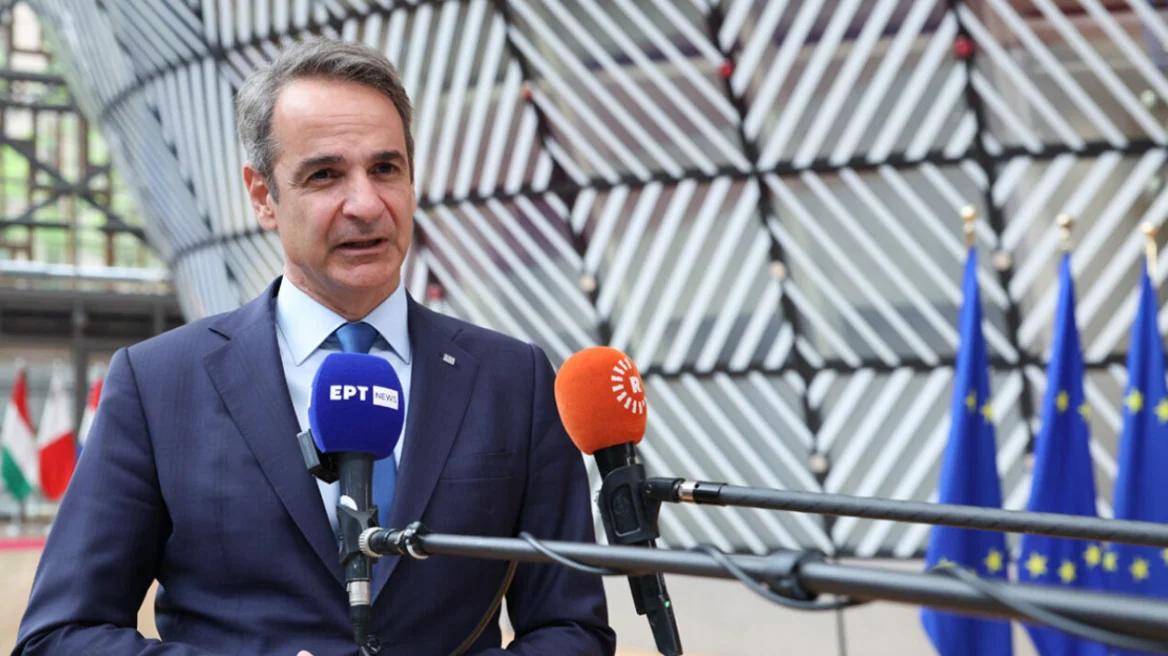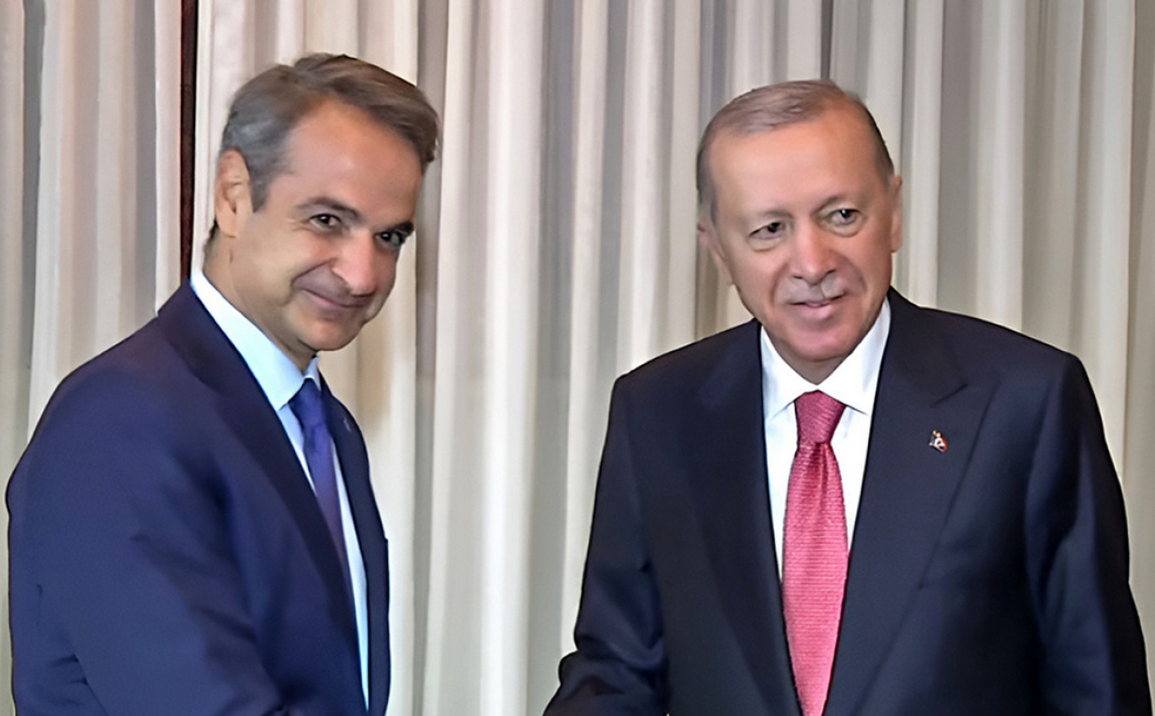
Kyriakos Mitsotakis and Recep Tayyip Erdoğan hold their sixth meeting in a year in New York. However, tensions rose when the Turkish president, shortly before the meeting, spoke at the UN General Assembly, advocating for a solution to the Cyprus issue based on two states and two nations.
The meeting is took place on the sidelines of the 79th session of the UN General Assembly, and both leaders once again send a message of continuing the positive climate in Greek-Turkish relations.
The two leaders aimed to reaffirm the desire for calm in Greek-Turkish relations, despite the fact that international tensions have increased, and signs of “fatigue” in the rapprochement process are becoming evident.
Despite optimistic messages from Foreign Minister Giorgos Gerapetritis, who spoke of a “historic opportunity” for Greek-Turkish relations, the conditions do not yet seem ripe for starting even exploratory talks on the key issue of delimiting the continental shelf and Exclusive Economic Zone (EEZ), which is crucial for the normalization of relations.
Prime Minister Kyriakos Mitsotakis has made it clear that “there are no illusions about the difficulties in approaching Turkey,” emphasizing that “the core of Turkish revisionism has not changed. The ‘Blue Homeland’ remains on the table, challenging Greece’s sovereign rights.” This issue remains the primary obstacle to meaningful dialogue on the delimitation of the continental shelf and EEZ in the Aegean and Eastern Mediterranean.
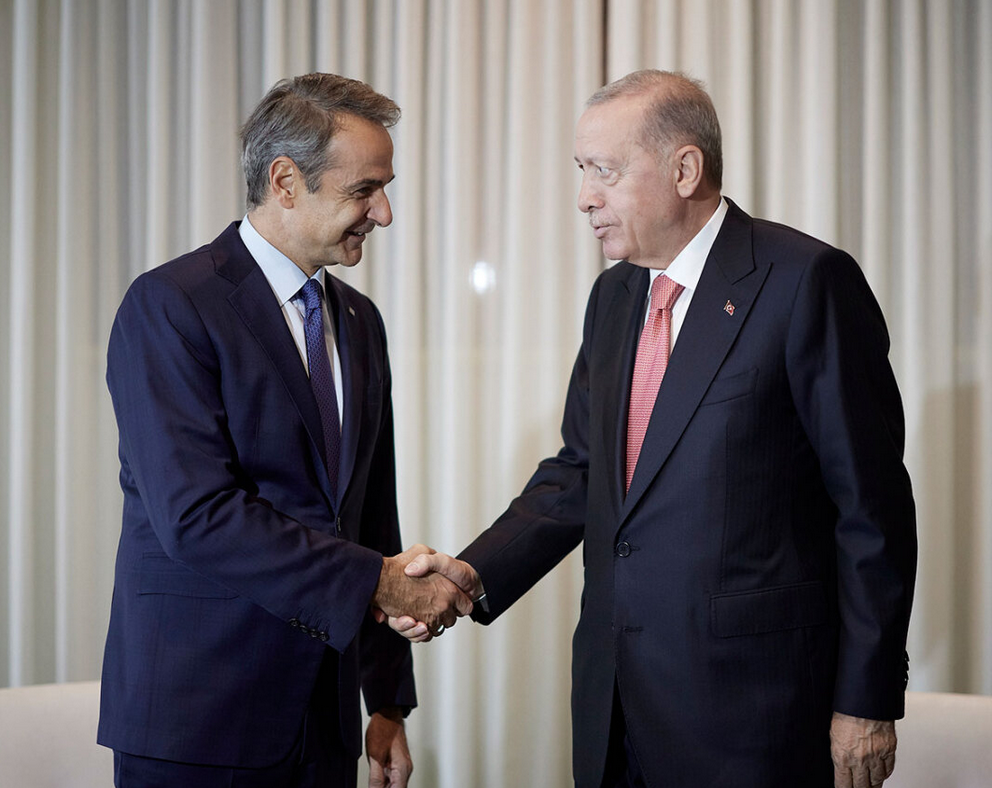
The experience of recent months, following the signing of the Athens Declaration in December 2023, has shown that while there have been positive results (such as visas for visits to Greek islands and some reduction in migration flows), the persistence of Turkish revisionism and its ongoing claims against Greece continue to hinder progress.
Recent developments, such as Turkey officially raising the issue of expanded “gray zones” following Greece’s announcement of its intent to create marine parks, incidents like the Kasos episode over the laying of an electrical cable, and ongoing calls for the demilitarization of Greek islands, highlight the fragility of the rapprochement. Turkey’s approach to maintaining a positive climate often involves Greece refraining from exercising its sovereign rights, which challenge the “Blue Homeland” doctrine.
In Athens, it is clear that any talks on delimitation, under current circumstances, would likely end in a deadlock, jeopardizing the entire rapprochement process and threatening the preservation of calm.
The meeting between Mitsotakis and Erdoğan in New York took place in a particularly dangerous and volatile international environment, with two wars ongoing in the region and Turkey gradually shaping an independent foreign policy aimed at establishing itself as a regional power. As the U.S. elections approach, Erdoğan is prioritizing other matters over Greek-Turkish relations, hoping that a new U.S. president could restore relations that have been problematic for Ankara’s goals in recent years, despite sanctions on Turkey during Trump’s tenure.
Turkey’s exclusion from the F-35 program, Greece’s agreement to acquire the same fighter jets, the enhancement of US presence in the strategic port of Alexandroupolis, and the U.S. military presence in other Greek facilities have enraged Ankara. Additionally, the signing of the U.S.-Cyprus Defense Cooperation Roadmap has further strained relations. Turkey remains in constant tension with Washington, not only over support for the Kurds in Northern Syria but especially over U.S. support for Israel in the Gaza war, where Erdoğan has emerged as one of the most extreme critics of both Netanyahu and the Israeli state. This has caused concern within Washington’s diplomatic and military circles regarding Turkey’s true objectives and direction. Relations with Russia and Erdoğan’s intention for Turkey to join the BRICS have further complicated the situation.
Athens cannot overlook the fact that Turkey, taking advantage of the situation created by the Gaza war and Israel’s isolation from its Arab neighbors, seeks to fill the vacuum in the Eastern Mediterranean and strengthen its presence in the Arab world. This is also reflected in Turkey’s policy of normalizing relations with Egypt, following Al-Sisi’s visit to Ankara. This development is of great interest to Greece, as its strategic relationship with Egypt was initially based on countering Turkish revisionism and hegemony in the Eastern Mediterranean and North Africa. Nonetheless, Cairo has sent reassuring messages to Athens and Nicosia, with a sign of the strong relationship being the tripartite meeting between Greek Foreign Minister Giorgos Gerapetritis and his counterparts from Egypt and Cyprus, on the sidelines of the UN General Assembly in New York.
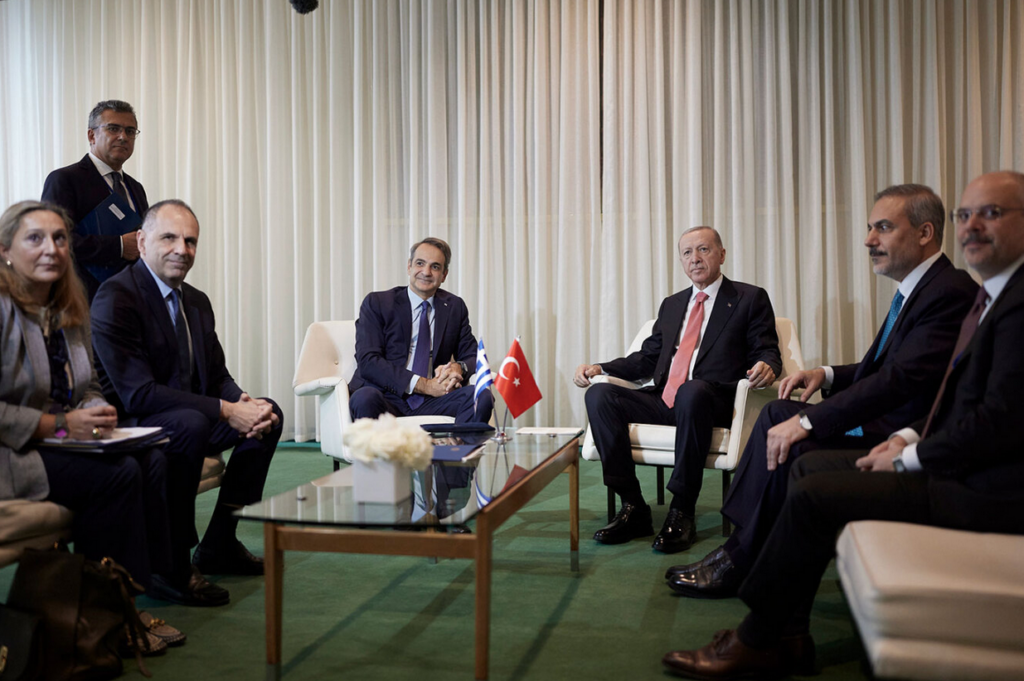
During the New York meeting, Mitsotakis and Erdoğan are expected to shape a roadmap for the period leading up to the Supreme Cooperation Council, which is likely to convene in Turkey in December.
Regarding the “Positive Agenda,” there has been progress, though there is a risk, as in the past, that signed agreements, even on “low politics” issues, remain on paper and are not implemented, reducing the momentum of the process. Military Confidence Building Measures (CBMs) are progressing slowly and mainly involve symbolic actions. A substantive discussion on military CBMs is hindered by Turkey’s demands, which include demilitarization, “gray zones,” and disputes over air and sea jurisdiction in the Aegean and Eastern Mediterranean.
The next round of Political Dialogue, likely in October, will focus on useful exchanges of views on regional issues but will mainly center on cooperation in addressing migration. This issue has taken on new significance due to the evolving situation in Europe and the risk of escalating conflicts in the Middle East. Another focus will be Civil Protection, an area where positive results have been achieved through cooperation during recent wildfires in both Greece and Turkey.
A significant upcoming test will be the Greece-Cyprus electrical interconnection, following the resolution of outstanding issues after the Mitsotakis-Christodoulides meeting in Athens. The Italian ship “Ievoli Relume”, currently docked in Limassol, is expected to continue its research from Cyprus toward Greece. Turkey disputes Cyprus’ EEZ, recognizing only 12 nautical miles of territorial waters and rejecting Cyprus’ authority to issue NAVTEX notices. The question is whether Turkey will react, as it did in the case of Kasos, by attempting to block the interconnection work or by demanding recognition of its claims as a condition for the continuation of the Italian ship’s research.
The Cyprus Issue
The Cyprus issue remains one of the most challenging topics on the agenda of Greek and Turkish leaders. UN Secretary-General António Guterres has called for separate meetings in New York with Cypriot President Nikos Christodoulides and Turkish Cypriot leader Ersin Tatar to find “common ground” for the next steps. Despite the significant gap between the two sides, reports suggest that the UN is working toward a Christodoulides-Tatar meeting in October, which will determine whether a Five-Party Conference will be convened to restart the Cyprus process. However, statements by Tatar and the Turkish leadership demanding implicit recognition of the self-proclaimed Turkish Cypriot state as a precondition for resuming talks are negative and completely outside the framework of UN Security Council resolutions.
Nicosia has also rejected efforts by the Turkish-occupied regime to achieve indirect recognition through Confidence Building Measures (CBMs) such as “direct flights, direct trade, and direct contacts” (the “three Ds” as Tatar calls them), which essentially lead to recognition of the occupying entity.
The atmosphere in Cyprus has deteriorated further, not only due to direct accusations from Ankara and Tatar that Cyprus is militarily involved in supporting Israel in the Gaza war, but also due to ongoing violations of the Green Line regime, which Nicosia formally protested to the UN last week.
Ask me anything
Explore related questions