





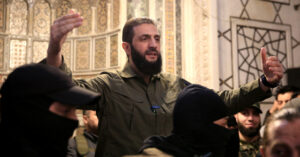
Ahmad al-Sharaa, better known as Abu Mohammad al-Julani, has become one of the most controversial yet pivotal figures in the Syrian opposition. The “former jihadist” managed to reinvent himself as a moderate revolutionary, leading a swift operation to capture Damascus and force Bashar al-Assad to flee the country.
Following the regime’s collapse, Julani has assumed a central role in Syria’s new political reality. His efforts to shed the jihadist image and present himself as a capable politician and strategist reflect his multifaceted ambitions and desire for international legitimacy.
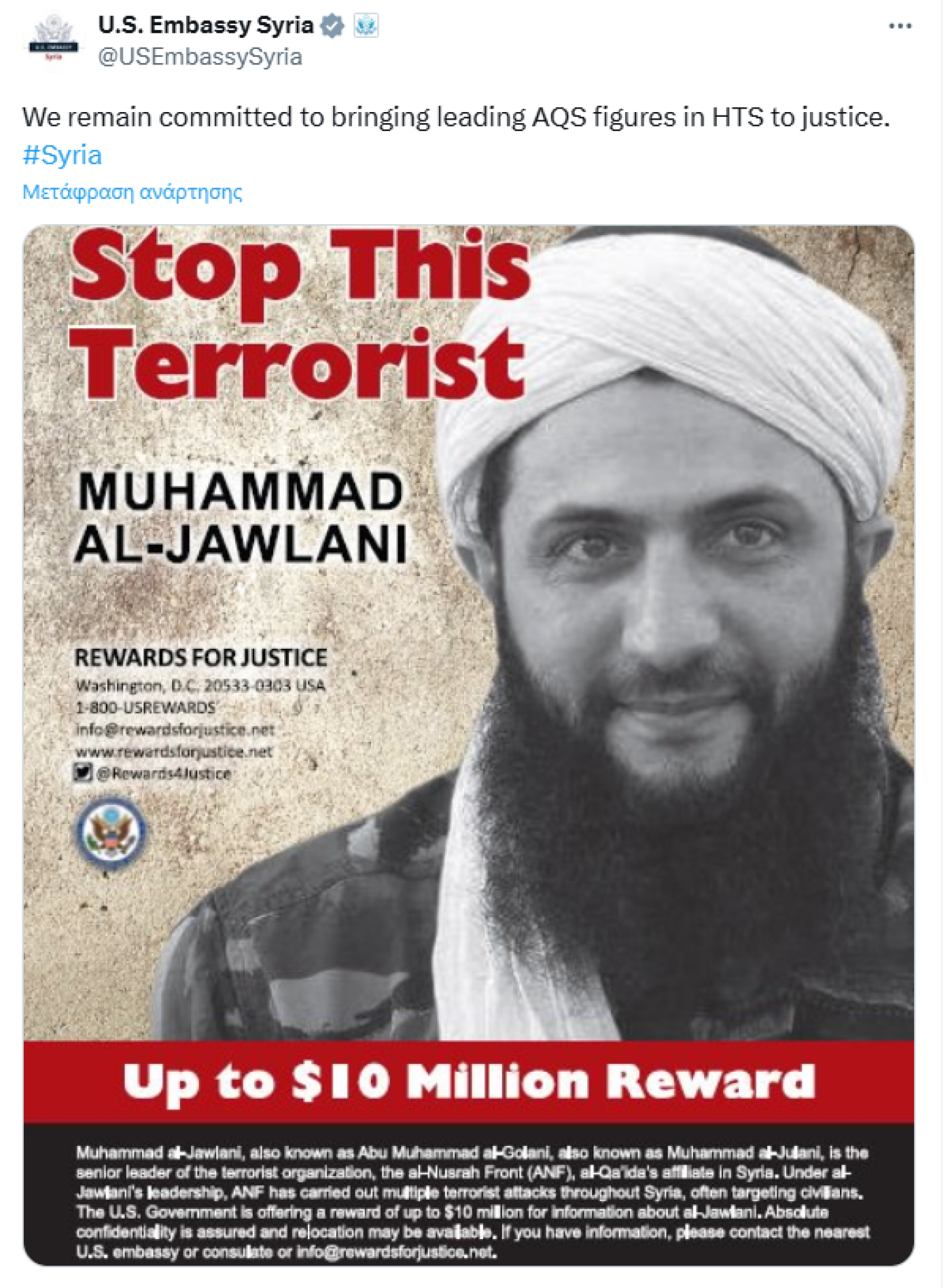
This transformation did not happen overnight. Tall, sturdy, with a black beard and an intense gaze, Julani gradually abandoned the jihadist turban he wore at the start of the war in 2011 for a military uniform and occasionally a suit.
In recent years, Julani has systematically worked to elevate HTS (Hay’at Tahrir al-Sham) not only as a military force but also as a political entity capable of governance. From rebranding the organization to establishing political and administrative structures, Julani has emerged as a figure seeking to position himself as the leader of a nation in reconstruction.
Seven years ago, the U.S. offered a $10 million reward for the former ISIS extremist.
His Roots and Path to Extremism
Born in 1982 in Saudi Arabia, Sharaa moved to Damascus in 1989 with his family. His first encounters with jihadism came after the 2003 U.S. invasion of Iraq. Joining Al-Qaeda through the Islamic State of Iraq (ISI), Sharaa found himself at the heart of the jihadist movement, but disagreements over the organization’s extreme tactics led to his distancing from it.
In 2011, he was sent to Syria by Abu Bakr al-Baghdadi to establish Jabhat al-Nusra, a group aimed at toppling Assad. However, revelations of its ties to ISIS caused backlash and led Julani to pledge allegiance to Al-Qaeda, distancing Jabhat al-Nusra from ISIS’s extreme violence.
Breaking Away from Al-Qaeda and Strategic Shift
In 2016, Julani made a decisive move: he split from Al-Qaeda and renamed his group Hay’at Tahrir al-Sham (HTS). This step was not only symbolic but also strategic.
Aiming to gain local support and distance himself from extremist labels, he focused on stabilizing and reorganizing areas under his control. HTS became the dominant force in Idlib, the largest rebel-held province in northwest Syria.
The group established the “Syrian Salvation Government,” a political arm functioning as an administrative mechanism. With a prime minister, ministries, and local administrations, HTS seeks to project an image of stability and governance capacity. Simultaneously, Julani adopted more moderate rhetoric, aiming to engage with international stakeholders.
Criticism and Challenges
Despite his efforts, Julani and HTS continue to provoke strong reactions. Many accuse the group of authoritarianism and suppressing opposition in Idlib. Protests by activists and residents are frequent, with allegations of arbitrary arrests and restrictions on freedom of expression. Additionally, hardline Islamists criticize Julani for making excessive concessions to the international community.
Despite contradictions, his strategy of balancing HTS’s religious identity with demands for stability has yielded results. HTS’s recent success in uniting opposition forces and capturing Damascus demonstrates the effectiveness of this approach.
Who Are the Rebels Who Ended Assad’s 25-Year Rule?
Julani’s future remains uncertain. Despite his success in ousting Assad, stabilizing Syria and securing international support will be immense challenges. Julani has pledged peaceful relations with neighboring countries and security for all minorities in Syria, but he will need to convince the international community of his sincerity.
The precarious balance in Syria is underscored by the fact that as rebels entered Damascus, in Manbij, SNA (Syrian National Army) forces clashed with SNF troops. As the SNF prepared a counterattack, Turkish fighter jets carried out airstrikes, prompting the U.S. military to warn both the SNA and HTS against skirmishes in areas controlled by the SDF in Deir ez-Zor and Raqqa, including the western bank of the Euphrates.
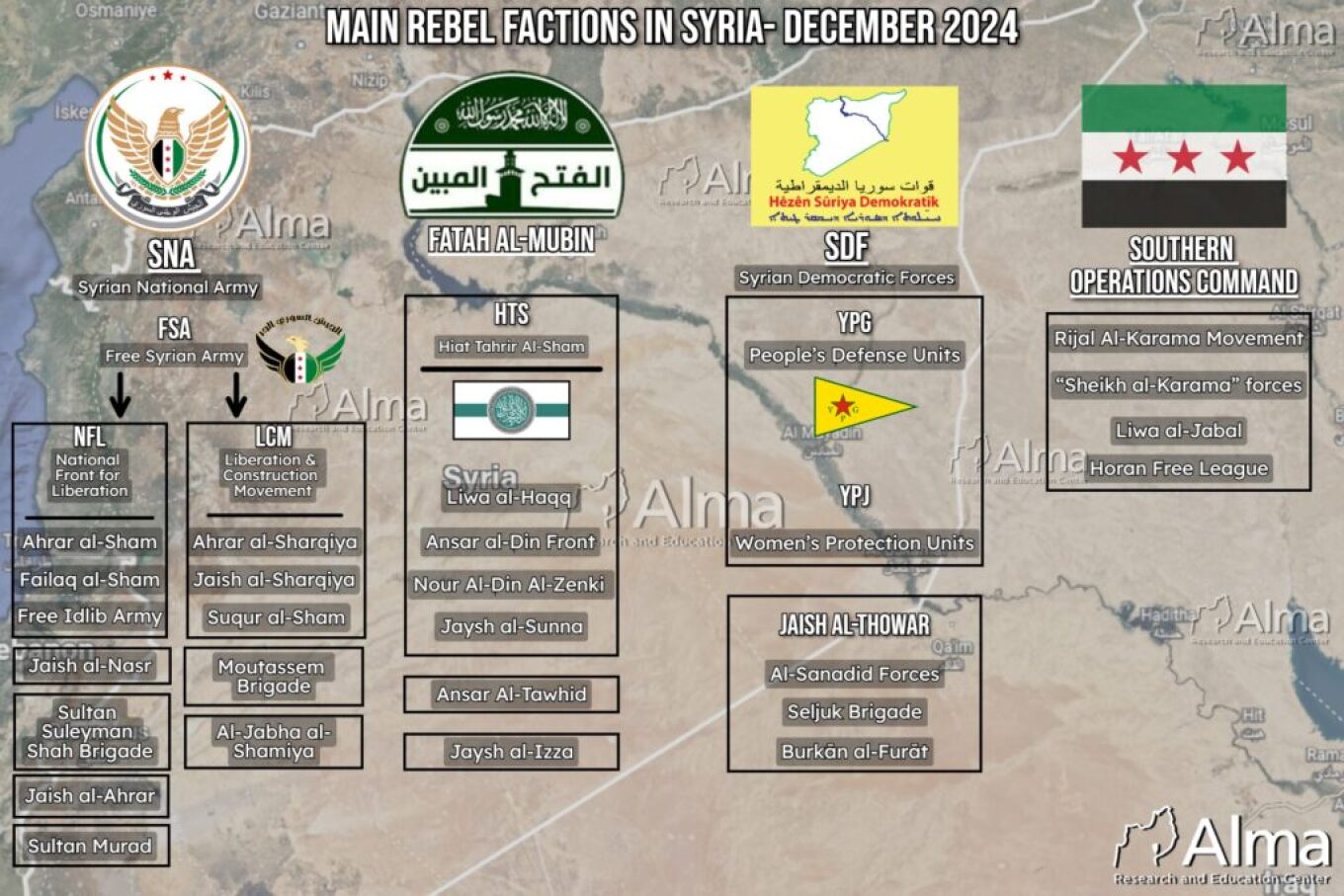
Areas Controlled by Organizations with Their Flags
In Syria’s colorful mosaic of tribes—Shiites, Sunnis, Christians, Druze, Alawites, etc.—the lightning offensive began from the northwest, led by small groups of rebels with light trucks and motorcycles, guided by the alliance of Salafist Islamists Hay’at Tahrir al-Sham (HTS), and a Turkish-backed umbrella group of Syrian militias called the Syrian National Army.
Today, HTS is the largest armed group in Syria, incorporating members from factions such as Jabhat Fateh al-Sham, Liwa al-Haq, Jabhat Ansar al-Din, and Jaysh al-Sunna.
HTS, estimated to have up to 30,000 fighters, was headquartered in Idlib and controlled significant economic resources. This includes the area’s oil fields, a major source of revenue, and the Bab al-Hawa border crossing with Turkey.
HTS and the Syrian Salvation Government (SSG)
HTS also controls the Syrian Salvation Government (SSG), a technocratic administration based in Idlib, overseeing opposition-controlled regions in northern Syria. The group benefits from logistical support provided by Turkey, which uses HTS to counter Kurdish armed groups.
SNA – Syrian National Army
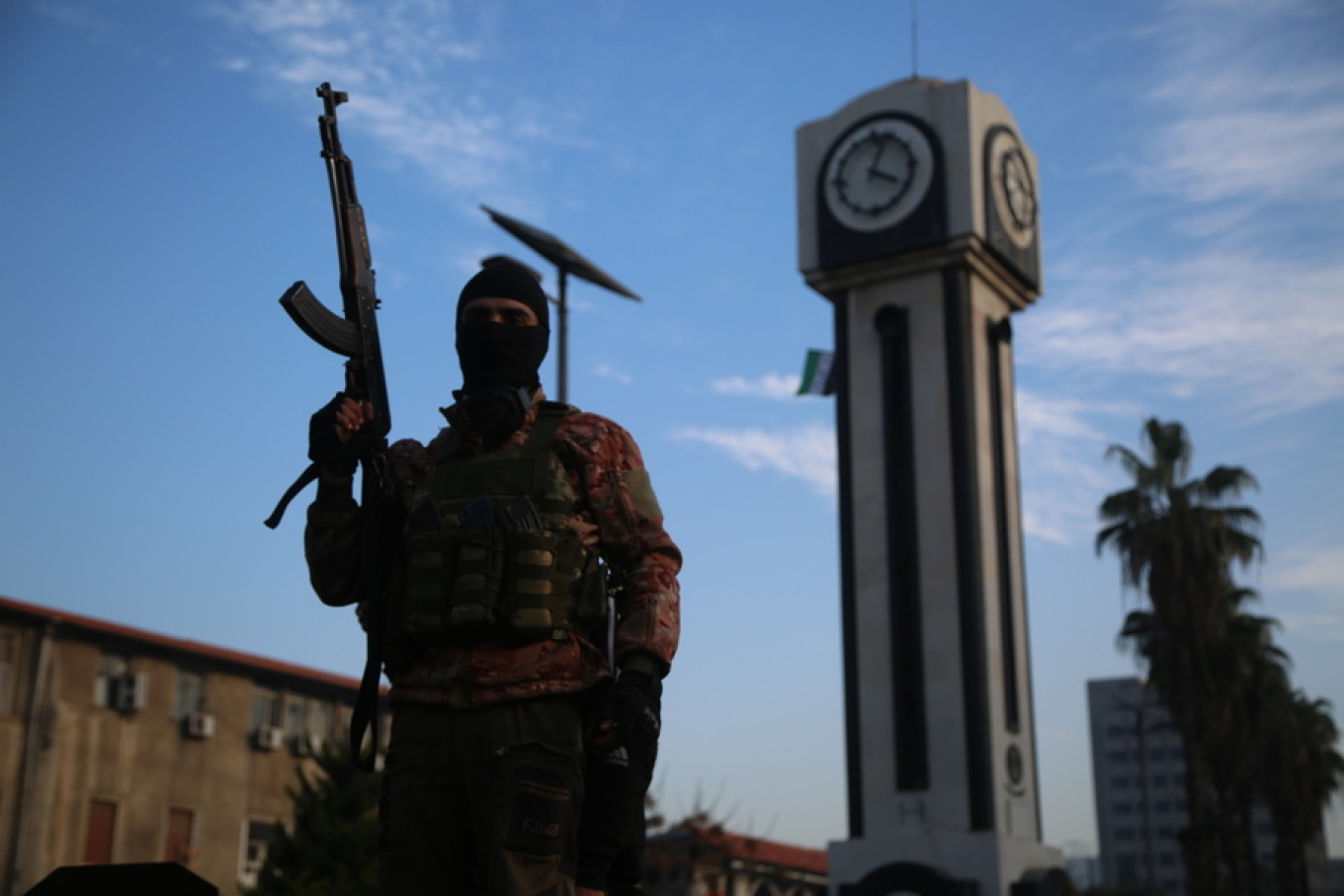
The SNA is another umbrella organization for dozens of rebel groups operating in northern Syria, aligned with Idlib’s government. Turkey provides political, economic, and logistical support, including training, weaponry, and intelligence sharing. This coalition of tens of thousands of fighters operates near the Turkish border and includes sub-coalitions like the National Front for Liberation (NFL), the Free Syrian Army (FSA), and the Liberation and Construction Movement (LCM). However, significant internal conflicts persist within these groups, sometimes leading to armed clashes.
Despite Turkish backing, the SNA is also used by Turkey, as evidenced by its operations against Kurdish groups in Aleppo, which have forced many Kurds to flee the area.
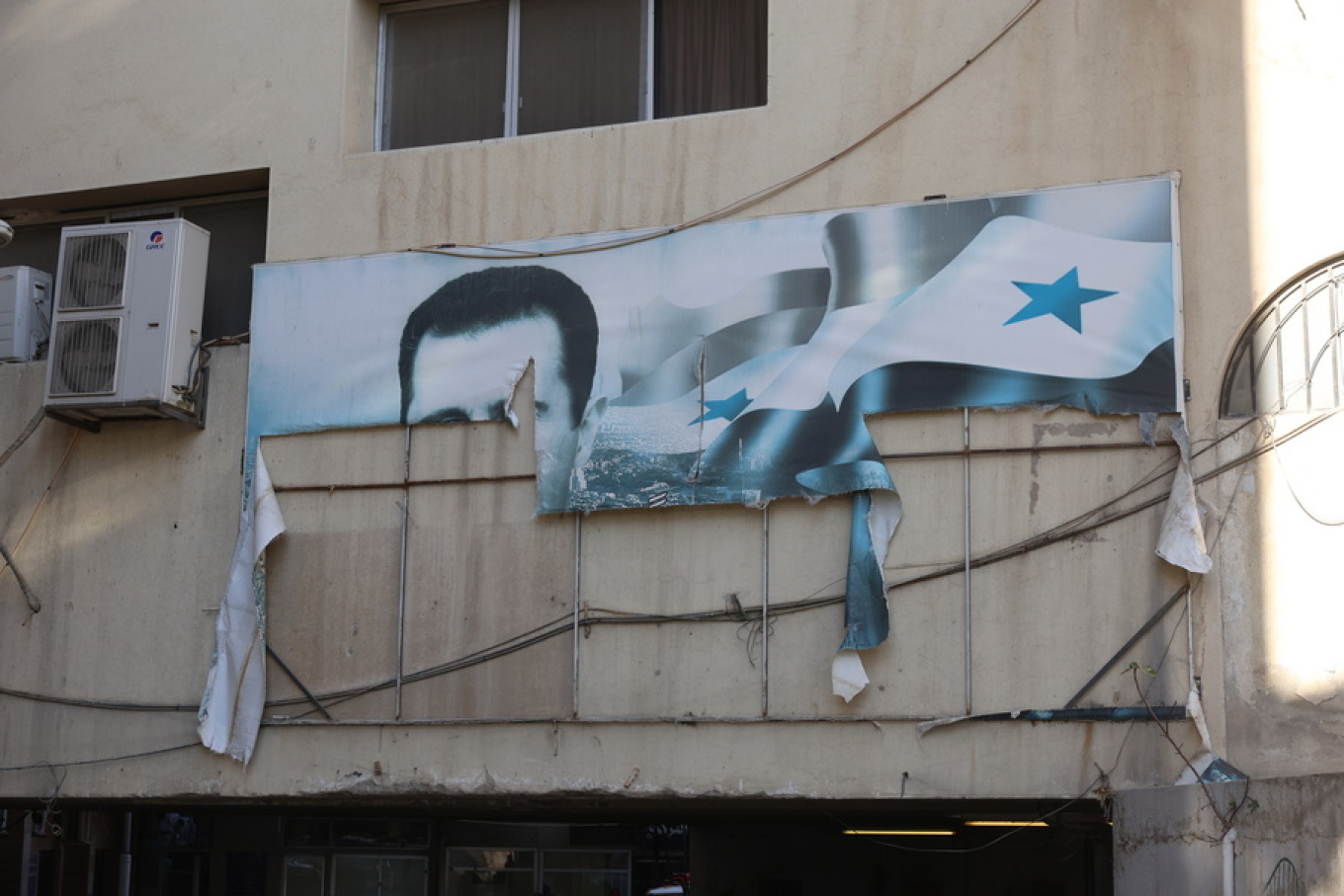
SDF – The Kurds
The Syrian Democratic Forces (SDF) is a coalition of mainly minority groups, including Kurds, Arabs, Turkmen, and Assyrians, playing a key role in Syria’s evolving dynamics. The backbone of the SDF is the Kurdish militia YPG (People’s Protection Units), with around 50,000 fighters trained and supported by the U.S.
Other notable elements include the YPJ (Women’s Protection Units), Kurdish-Yazidi female fighters renowned for their role against ISIS. For ISIS militants, being killed by a woman was particularly feared due to their interpretation of the Quran, which denied them martyrdom.
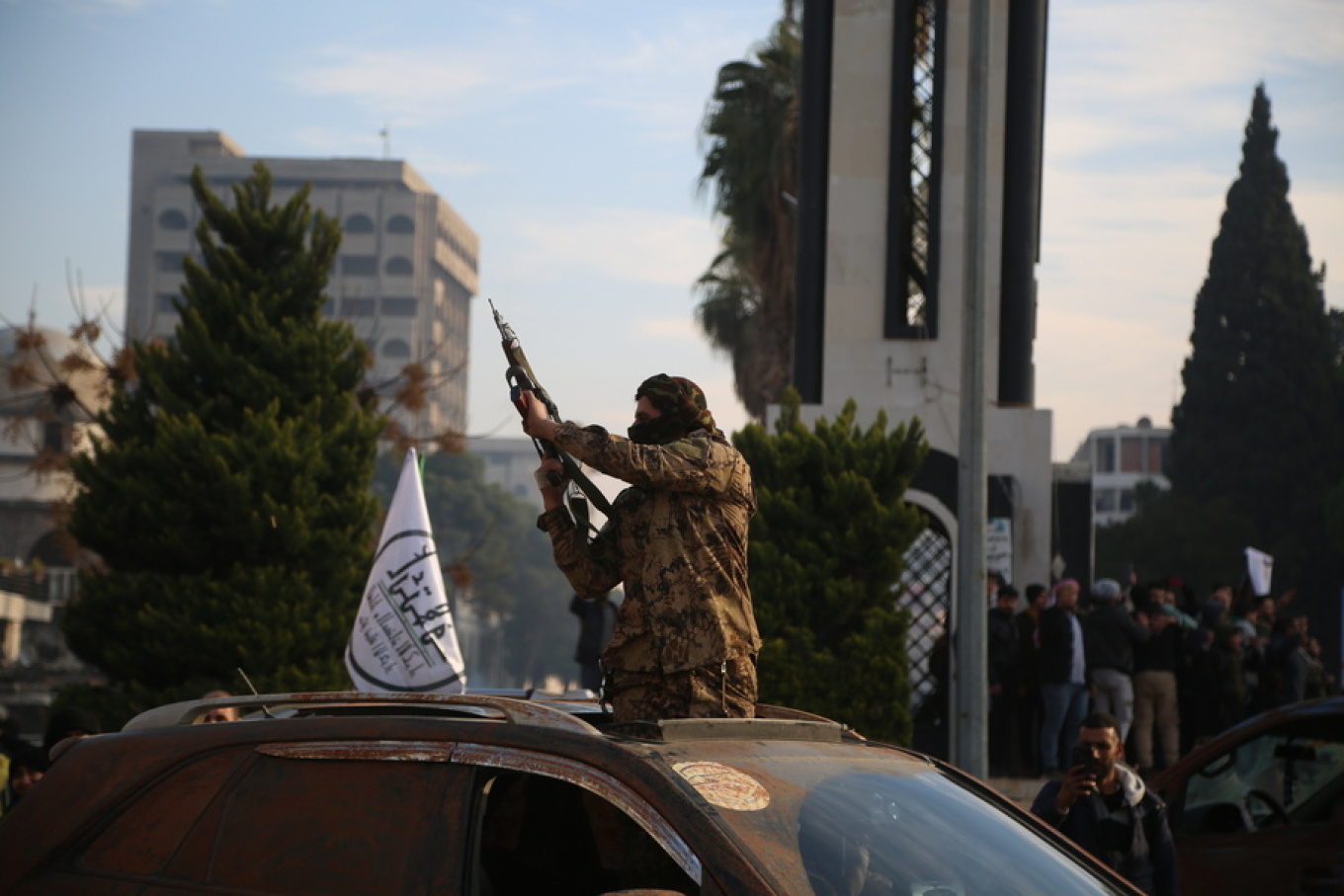
Southern Operations Command – The “Irregulars”
This is a coalition of local rebel groups, mainly Sunni and Druze, in southern Syria. They operate in areas like Daraa, Suwayda, and Quneitra, as well as near the Israeli border. Many fighters previously aligned with the Free Syrian Army during the civil war. However, the presence of jihadist elements in the region adds complexity to the Southern Command’s affiliations and future dynamics.
Ask me anything
Explore related questions




