“Trump means what he says. Tariffs will be imposed; the question for Europe is how significant and targeted they will be.” With this statement, a senior government official conveyed to protothema.gr the government’s assessments regarding the threats by the new U.S. president to impose substantial tariffs on European products due to the massive $350 billion trade deficit, which Trump emphasizes.
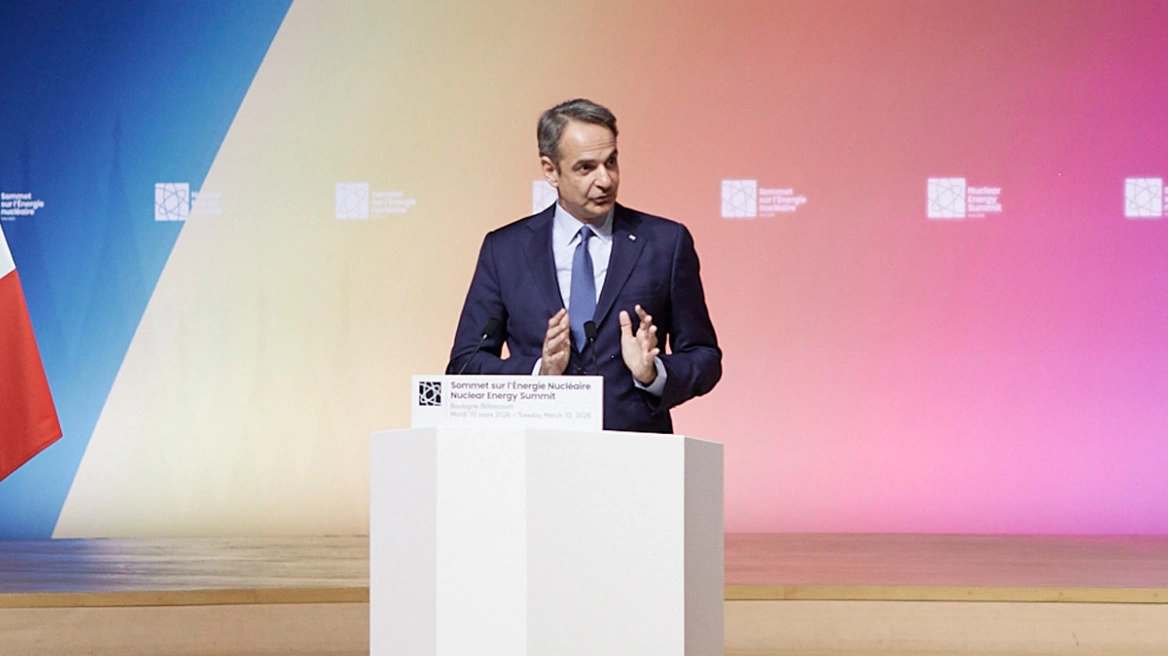
However, as Kyriakos Mitsotakis reportedly noted in conversations with his associates, it remains to be seen how extensive the U.S. action will be, as a scenario of a full-blown trade war does not seem to be the dominant expectation.
In an effort to “map out” the intentions of the new U.S. administration, the government’s team is engaging in readiness exercises. It is clear that Greece might be less exposed compared to Germany, which exports tens of thousands of vehicles, but as the same government source puts it, “Europe cannot be affected without us also being impacted.”
A characteristic example cited is the issuance of a 10-year bond by the Greek government a few days ago, with a 3.6% interest rate. The rate is not bad at all, even lower than other European countries, but it is “elevated” compared to a bond issued three months earlier at a 3.3% rate. Consequently, concerns have already begun to be felt in European markets.
A Clash Without a Winner
A government source estimates that an aggressive tariff policy by Trump would essentially be a “lose-lose” situation and adds that it remains to be seen whether this is more of a negotiating tactic. “If Trump implements the sanctions he has announced, the U.S. economy will experience slower growth and higher inflation. Additionally, his main problem is the large deficit. On the other hand, Europe will also face the prospect of renewed pressure on interest rates, which would affect already weak growth rates,” the same source points out.
The issue of interest rates is not negligible for the government. Throughout the previous period, the European Central Bank (ECB) has implemented interest rate reductions. However, if the Federal Reserve (FED) proceeds with rate hikes in response to Trump’s actions in the coming months, the ECB’s room for maneuver will be limited. Of course, Giannis Stournaras noted in an interview with Nautemporiki yesterday that any imposition of tariffs should accelerate the reduction of interest rates so that they approach 2% by the end of 2025. In any case, the ECB is not “detached” from the international environment.
Greece’s Defenses
According to an economic team member of the government, the Greek economy is inherently in a better position than the European average, judging by growth indicators. Nevertheless, no one harbors the illusion that a U.S.-EU confrontation would leave Greece unscathed, even if Greek exports to the U.S. account for just 1%.
The view among government officials is that Greece will find itself in a better position by improving the share of foreign direct investments as a percentage of GDP, continuing to increase revenues from tax evasion, reducing tax rates, and thus supporting economic activity. Additionally, there is still significant room for improvement in the labor market, while political stability reduces the so-called “country risk,” as Kyriakos Mitsotakis noted during a dinner hosted by the Hellenic-American Chamber of Commerce.
Conclusion
In any case, what the government team also emphasizes is Europe’s unified stance against the threats of the new U.S. president, as everyone seems to understand that such a confrontation would be collectively damaging.
Ask me anything
Explore related questions