





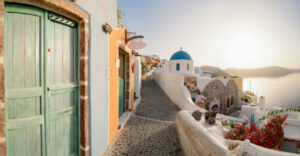
Authorities remain on high alert following intense seismic activity in the Cyclades, particularly in the offshore area near Santorini.
As a result, emergency measures initially imposed on the island of Thira, such as school closures and event cancellations, have now been extended to other nearby islands.
According to reports, Efthymios Lekkas, President of the Hellenic Organization for Earthquake Planning and Protection (OASP) and Professor of Natural Disaster Management, is already in Santorini, while Professor of Geophysics at Aristotle University of Thessaloniki, Kostas Papazachos, is expected to arrive in the coming hours.
Meeting at Maximos Mansion
Meanwhile, an official update confirms that a meeting led by Prime Minister Kyriakos Mitsotakis will take place at Maximos Mansion at 19:00, focusing on the recent seismic activity.
New Emergency Meeting
Due to the increased seismic activity in the offshore area of Anyros, between Thira and Amorgos, OASP President Efthymios Lekkas convened an emergency joint meeting of the Permanent Scientific Committee for Seismic Risk Assessment and Risk Reduction and the Permanent Scientific Committee for Monitoring the Hellenic Volcanic Arc.
The meeting was held at the Ministry of Climate Crisis and Civil Protection, attended by Minister Vasilis Kikilias, Deputy Minister Evangelos Tournas, General Secretary of Civil Protection Vasilis Papageorgiou, and representatives of the Fire Service leadership.
After a thorough review of all available data, the committees unanimously concluded the following:
- Seismic activity within the Santorini caldera remains in decline.
- The seismic sequence has intensified in the last 48 hours, with over 200 recorded tremors in the Anyros area, between Thira and Amorgos, with the largest reaching 4.5 magnitude.
- The ongoing seismic activity in Anyros is due to offshore faults running northeast-southwest and is not linked to volcanic activity.
- The committees recommend the following precautionary measures: a. Schools will remain closed on Monday, February 3, 2025, in Thira, Anafi, Ios, and Amorgos. b. Citizens should:
- Avoid large indoor gatherings.
- Stay away from abandoned buildings.
- Avoid approaching or staying at the ports of Ammoudi, Armeni, Korfos, and Old Port of Fira.
- Secure non-structural hazards in their buildings and drain swimming pools to prevent damage from water movement during an earthquake.
- Use safe routes when traveling in urban and rural areas, especially in regions with steep slopes prone to landslides.
- Immediately evacuate coastal areas in the event of a strong earthquake.
The committees will reconvene tomorrow at noon.
For earthquake safety guidelines, citizens can refer to the websites of the Hellenic Organization for Earthquake Planning and Protection (www.oasp.gr) and the Ministry of Climate Crisis and Civil Protection (www.civilprotection.gr).
Vougioukalakis: Over 200 Earthquakes in 48 Hours
According to volcanologist and researcher of the Hellenic Institute of Geological and Mineral Research, Giorgos Vougioukalakis, the region is experiencing a seismic crisis, with over 200 tremors recorded in the last 48 hours. The epicenters are mainly near Anyros, an uninhabited island close to Santorini, raising concerns.
Based on the available data, authorities have decided to extend safety measures to neighboring islands Amorgos, Anafi, and Ios to prevent panic and ensure public safety.
One of the key recommendations from experts is the evacuation of swimming pools, as water movement during an earthquake can cause structural damage and increase the risk of collapse, according to Vougioukalakis.
Scientists Consider a Potential 6.0-Magnitude Earthquake
The worst-case scenario under consideration by experts is a 6.0-magnitude earthquake.
According to senior researcher Vougioukalakis, seismic activity in the region is volcanotectonic, linked to an active fault running from Amorgos to Christiana.
Current assessments suggest that any earthquake would likely not exceed 6.0 magnitude, with limited chances of widespread destruction.
“The newer buildings constructed under modern earthquake-resistant regulations will not face serious problems. However, older structures are more vulnerable. A 6.0-magnitude earthquake is unlikely to cause catastrophic damage,” notes Vougioukalakis.
Although the situation is being closely monitored, scientists reassure that there is no immediate volcanic threat.
“Santorini’s volcano is in a low state of unrest, while Kolumbo is considered dormant,” the expert adds.
Frequent Tremors
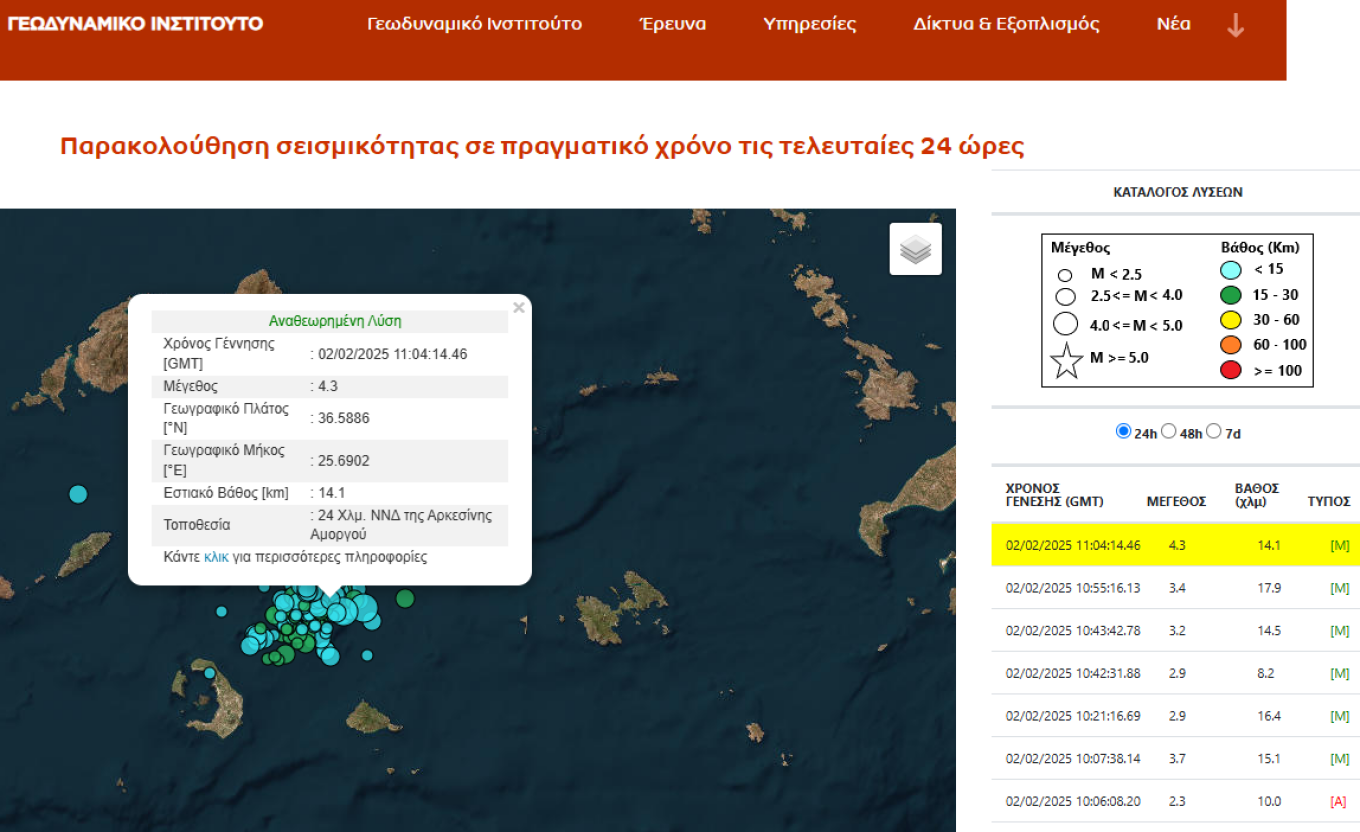
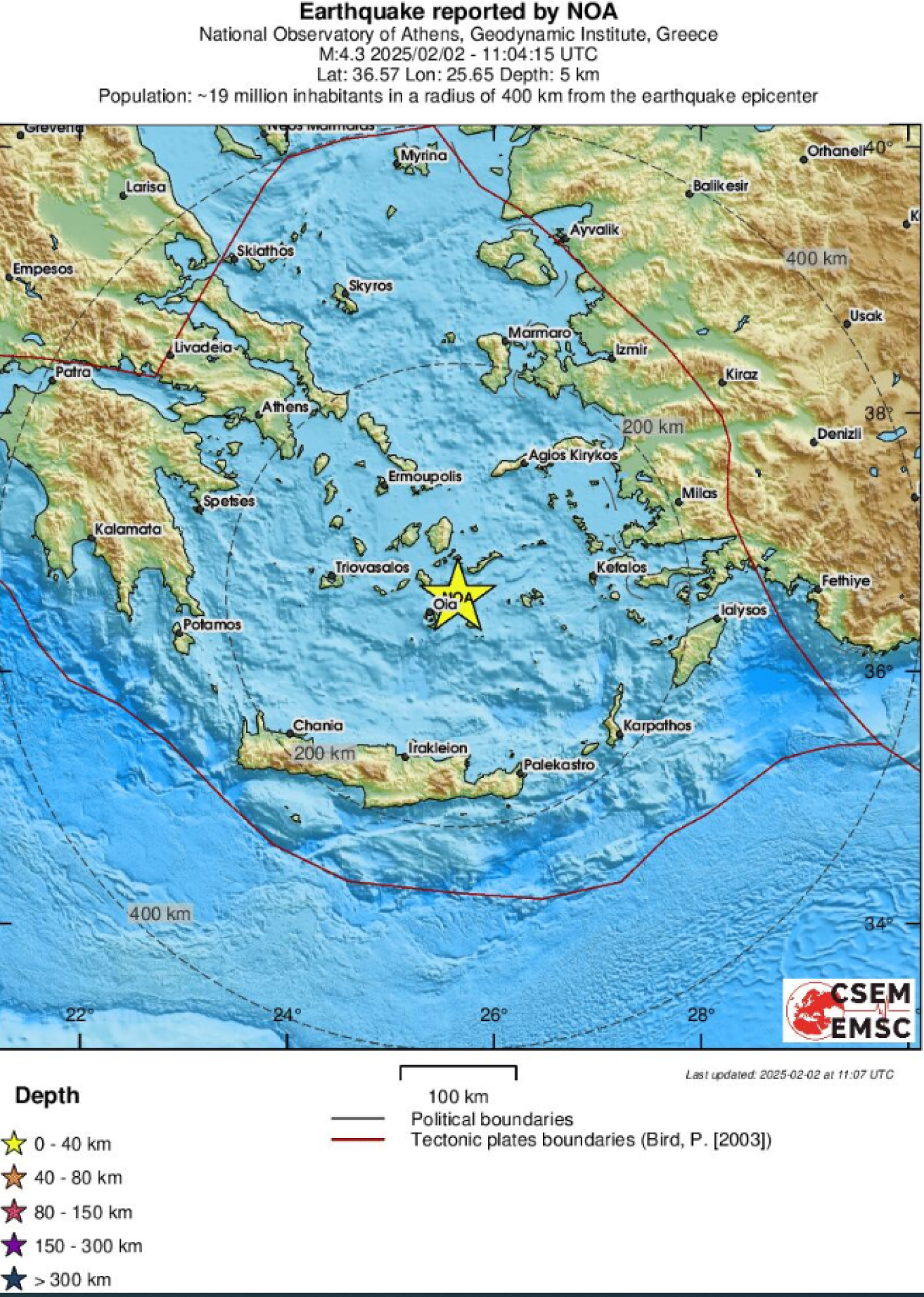
Seismic activity continues, with the most recent significant earthquake measuring 4.3 magnitude in Amorgos.
According to the Geodynamic Institute, the earthquake occurred at 13:04, measuring 4.3 magnitude, with an epicenter 24 kilometers southwest of Amorgos and a depth of 14 kilometers.
Ask me anything
Explore related questions




