





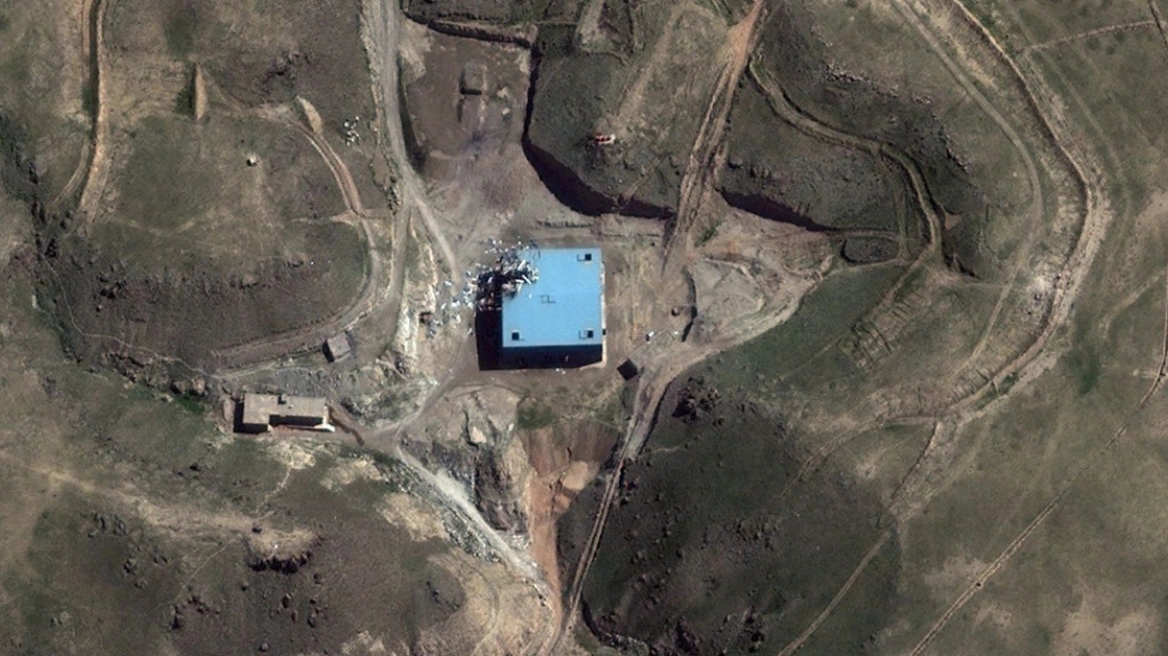
The International Atomic Energy Agency (IAEA) is preparing to remove nuclear material stored at a secret facility in Syria following an agreement reached through consultations involving the Trump administration, Syria, and Israel, according to Israeli and U.S. officials cited by Axios.
The Trump administration and the IAEA engaged in intensive behind-the-scenes diplomacy to secure an agreement on safeguarding the material and preventing a potential escalation surrounding the sensitive site—one that could have involved Israel, Syria, and possibly even Turkey.
U.S. officials argue that the development vindicates Donald Trump’s approach toward Syria and demonstrates how the United States used the close relationship it has developed with Syria’s new government to defuse a potential crisis.
According to Axios, the dramatic exchange of threats and the back-channel diplomatic negotiations surrounding the secret facility lasted for months before a solution was reached several weeks ago. The entire process remained confidential and had not been publicly known until now.
Assad’s secret nuclear program
The regime of Bashar al-Assad had developed a clandestine nuclear program centered on the covert Al Kibar reactor.
After Israel bombed the reactor in 2007, Syria’s nuclear program was largely destroyed. Several research and development facilities, as well as storage sites, nevertheless remained, most of them inactive.
Following the fall of the Assad regime, the IAEA signed an agreement with Syria’s new government allowing it to visit the Al Kibar reactor and several other facilities linked to the country’s past nuclear activities.
Charles Lister, a researcher at the Middle East Institute, said that Syria’s new government wants to resolve sensitive issues inherited from the Assad regime—including files related to nuclear and chemical weapons—which could otherwise undermine efforts to restore the country’s international standing.
The mysterious “Site 99”
One of the facilities Israel has monitored closely over the past two years is known as “Site 99.” According to two Israeli officials, the Assad regime stored nuclear material there that had been part of the Al Kibar reactor program.
A U.S. official told Axios that the materials included yellowcake, a powdered uranium concentrate that can be further processed and ultimately enriched as part of the nuclear fuel cycle.
According to the same official, the Assad regime had also stored other remnants and residual materials from the Al Kibar facility at Site 99.
The material at the site cannot be used to build a nuclear weapon. It could, however, be used to construct a so-called “dirty bomb”—a conventional explosive device designed to disperse radioactive material over an area without producing a nuclear explosion.
Israeli officials said the Israeli military bombed the entrances to the facility shortly after the fall of the Assad regime in order to prevent access to it.
The U.S.–Israel coordination and threats of another strike
For more than a year, Israel and the United States discussed the best way to deal with the Site 99 issue, according to a U.S. official. Senior officials from the White House National Security Council worked closely with their counterparts in the office of the Israeli prime minister on the matter.
According to an official in Prime Minister Benjamin Netanyahu’s government, Israel made it clear to the Trump administration that it would not tolerate the continued presence of nuclear material at the facility.
Israeli officials also said that Israel threatened to bomb the site again if the nuclear material was not removed or if there were signs that Syria was attempting to gain access to it.
A U.S. official maintained, however, that although Israeli officials were concerned about the situation, they never actually reached the point of being on the verge of launching another strike against the facility.
Ultimately, according to a U.S. official, the United States and Israel agreed that the best course of action would be to secure the Syrian government’s consent for the removal of the material.
When the Trump administration raised the issue with Syria’s new leadership, Syrian officials replied that they had not known nuclear material was stored at the facility, according to the same sources.
“Very few people in the United States, Israel, and Syria knew about it,” a U.S. official said.
The same official added that the United States has built a productive relationship with Syria’s post-Assad leadership. “When we work with the Syrians on issues, they are good partners,” he said.
The suspicious activity that alarmed Israel
Tensions flared again several weeks ago when Israelis monitoring the facility detected activity in the area.
According to Israeli and U.S. officials, the movements led Israel to suspect that Syria’s new government was backing away from previous understandings and was attempting to gain access to the nuclear material.
Israeli officials even considered the possibility that Turkey might be helping the Syrian government obtain the material.
“The Israelis always examine every possible scenario to make sure everything looks right, and it’s good that they do,” a U.S. official commented.
The Trump administration asked Israel not to take any action and brought the IAEA to the center of the discussions.
The agreement to remove the nuclear material
The outcome of the behind-the-scenes negotiations was an agreement signed three weeks ago between the IAEA and the Syrian government providing for the removal of the nuclear material from the facility.
The White House, the IAEA, and the office of the Israeli prime minister declined to comment.
The operation surrounding Site 99, however, has not yet been completed. U.S. officials clarified that the nuclear material remains at the facility for the time being and has not yet been removed.
“We believe everyone is satisfied with the outcome. We hope we will soon be able to begin the removal process and complete it before the end of the year,” a U.S. official said.
Ask me anything
Explore related questions




