





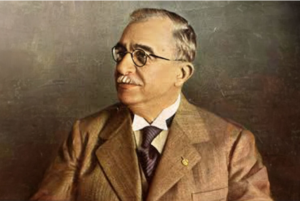
One of the issues that has concerned us in the past is the mysterious death of Ioannis Metaxas, which many have linked to the death of Tsar Boris of Bulgaria two years later (1943, more in our article of 25/4/2020).
A few months ago, at the end of 2024, Ioannis Nasioulas published the book “The Death of Ioannis Metaxas” (PUBLISHERS GREEK FRONTIER). After a thorough study of British and American archives and numerous foreign-language books (in English and German), Mr. Nasioulas concludes that Metaxas died from poison with a slow effect on the body, which was administered by the British during one of the meals he had with them, without him realizing it. Unfortunately, neither the doctors, the leading ones of the time, noticed the reality. The great Austrian doctor Hans Eppinger, a confidant of Hitler, who was urgently called to Greece to examine Metaxas, ultimately never arrived.
What Eppinger did was the autopsy on Metaxas’ body when the Germans had occupied Greece, upon Hitler’s order and with the agreement of the Tsolakoglou government. For unknown reasons, no autopsy was performed on Ioannis Metaxas’ body after his death. The results of the autopsy conducted by Eppinger were handed over to Hitler. Today, it is unknown whether they still exist or where they are located. If they were not destroyed, they are likely in the hands of the Americans, British, or Russians. There is no mention of whether any Greek government in the last 80 years has dealt with the matter or if they have sought the autopsy report. However, we do not believe that even those governments that knew about the issue dealt with it…
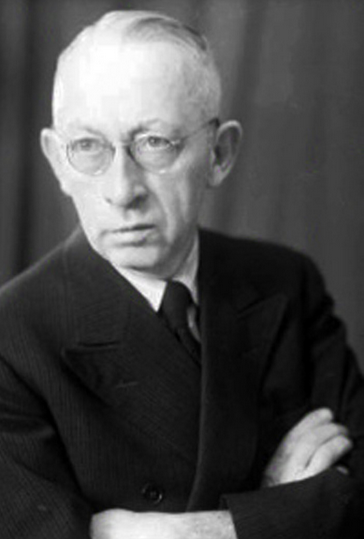
(Hans Eppinger, the renowned Austrian doctor who performed the autopsy on Metaxas’ body)
Why did Churchill want to eliminate Metaxas?
In our recent articles, we referred to the almost certain German proposal for a truce between Greece and Italy, with territorial gains for Greece in Northern Epirus and “in exchange” the removal of all the British from our country. The British were alarmed because the potential advance of Greek forces in Northern Epirus or a truce initiated by the Germans would lead Mussolini to send the 850,000 soldiers he had deployed against Greece to North Africa, against the British (see also our related article with the views of General Kosmas). The British Special Operations Executive (SOE) had as its main directive from the end of 1940 to prepare the ground for the overthrow of Metaxas, should he insist on sending at least ten British divisions to Greece, something that would disrupt the German advance southward and solidify Greek gains in Northern Epirus and central Albania.
On December 14, 1940, the Foreign Office was considering the possibility of provoking a German attack on Greece to ensure that our country would not reach a separate peace with Italy under German auspices (F.O. 371/24922, Foreign Office MEMORANDUM, December 14, 1940 and FO. 371/24921, F.O. MINUTES, December 1940). A secret meeting was held between representatives of the Foreign Office and the SOE to organize a coup against Metaxas.
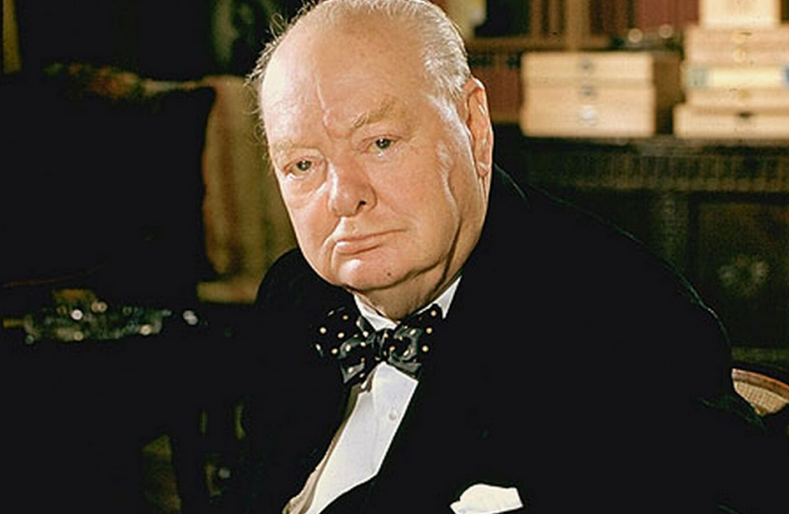
Metaxas’ “No” to Churchill
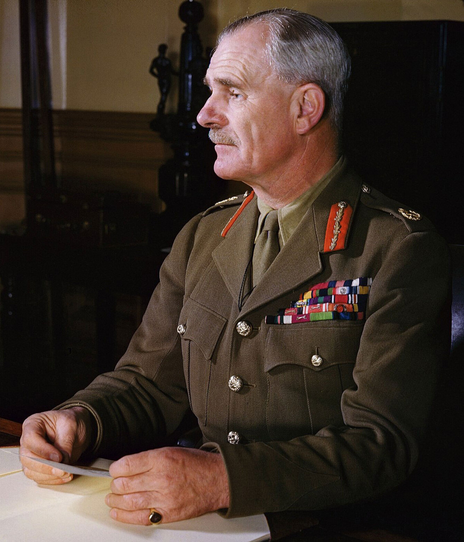
On January 3 and 4, 1941, Metaxas was informed by the Ambassador in London, Simopoulos, and the Military Attaché in Berlin that the Germans would unexpectedly invade Greece via Yugoslavia to capture Thessaloniki. On the same day, he wrote in his Diary: “From the English, abandonment, from the Germans, attack – The winter threatening – Courage! Courage! Let us fall like men… Have we been abandoned? For the sake of the African campaign (i.e., the British). What shall we do? – We shall manage! But with what struggle and what sacrifices!” On January 16, 1941, Churchill telegraphed Roosevelt that all Italian resistance in Libya had been broken, and in fact, the British had captured 45,000 opponents. Churchill now had the ability to send several troops to Greece, but he wanted only a few Australians and New Zealanders (British Commonwealth men) to be sent as a “bait” for the Germans, something which the British Commander-in-Chief of the Middle East, Wavell, did not want. On January 9, 1941, Metaxas received a proposal from Eden to meet Wavell in Athens. On the same day, he wrote in his “Diary”: “Eugenios (Fokas, his personal doctor and son-in-law) gives me Sebiol injections. And I feel stronger.” On January 11, 1941, Wavell received the assurance from Churchill that “we (the British) are fully responsible.” On January 12, Metaxas met the British Ambassador in Athens, Palairet, who conveyed Churchill’s self-interested proposal for Wavell to visit the front, which Metaxas rejected. That same evening, Metaxas met with Wavell. On January 14, he dined with Wavell, Palairet “and others” at the Naval Club, while on January 15, he had breakfast at Palairet’s house. We mention these meetings because, as we will see later, they may have been decisive for Metaxas’ life… On January 17, Palairet and Heywood (the new British Military Attaché to Greece) met again and reiterated the need for the immediate acceptance of British aid. However, Stalin had vetoed Hitler, with whom he was allied at the time (early 1941), regarding the Germans’ advance into the Balkans, as already announced by the Tass news agency on January 12.
The British insisted on sending insufficient military aid to Macedonia: 48 guns, 32 heavy weapons, approximately 40 anti-aircraft guns, 24 anti-tank guns, and 65 light and medium tanks. In a telegram to Churchill, Metaxas wrote, among other things: “Therefore, while the transfer of this force to Macedonia would be a provocation that would lead to the immediate advance of the Germans and possibly the Bulgarians against us, the inadequacy of this force will make the failure of our resistance certain… For these reasons, we prefer the solutions we suggested during our discussions with General Wavell. To study and proceed quickly (Greece) with the necessary preparations for the transfer of British forces so as not to attract the attention of the Germans, which is also possible. On the other hand, the transfer of this British force to Macedonia would only take place if the German forces, crossing the Danube or the borders of Dobrudja, entered Bulgaria…” This was also the last telegram Metaxas sent to Churchill, through Palairet, on January 18, 1941, at 10:30.
How the efforts to overthrow Metaxas failed
The British had been planning to overthrow Metaxas much earlier. In the summer of 1940, Australian Lieutenant Colonel George Francis Taylor, head of SO2 (Special Operations 2, formerly Section D), unsuccessfully organized an attempt to overthrow Metaxas with a movement of Venizelist agents in Crete. Taylor was a person of absolute trust to Churchill. It is noteworthy that the British files on Taylor’s activities remain closed to this day. In December 1940, the first executive head of the SOE in London, Frank Nelson, gave Taylor (code name D/H) new instructions to visit the Balkan capitals and Athens again, with the ultimate aim of removing (through a coup or other means) Metaxas from power. According to Ioannis Nasioulas, Churchill became Prime Minister of the UK, succeeding Chamberlain, thanks to the support of a “secret circle of influence,” known confidentially as “The Focus.” The head of Churchill and Taylor was Sir Robert Waley – Cohen, the director of a large British-Dutch oil company, still known today. Taylor first visited Wavell in Cairo, where he received weapons, explosives, communication devices, and equipment necessary for his operations in Greece and Yugoslavia, the government of which he also sought to overthrow.
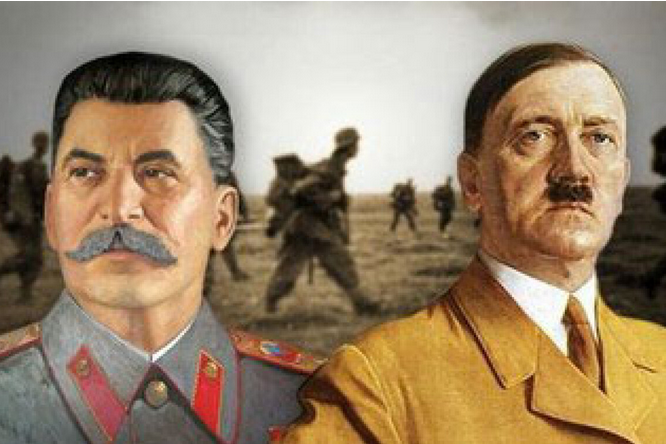
As mentioned, Stalin, likely unaware of the plans being made, vetoed Hitler’s desire to attack Thessaloniki in January 1941 with two Panzer divisions. According to the Molotov–Ribbentrop Pact, the Balkans were within the Soviet sphere of influence, and Stalin made use of this provision at a very difficult moment during the Greco-Italian War by informing Hitler that the Soviets would not cover for the Germans in case of an attack from the Turks or the British from Turkey if they were to launch an attack on Thessaloniki. Thus, Taylor did not need to take any action. However, Churchill’s problem with the independent policy of the Greeks remained, and the provocation of a German attack now had to be carried out by any means necessary. His victory over Mussolini in Libya freed up forces from the Commonwealth army and aircraft. A surprise landing in Thessaloniki with the aim of destroying Romanian oil fields was operationally feasible, and Hitler was preparing to prevent it. The only obstacle to such a British landing in Thessaloniki, which would undoubtedly provoke the Germans’ entry into Greece, was Ioannis Metaxas,” writes Ioannis Nasioulas.
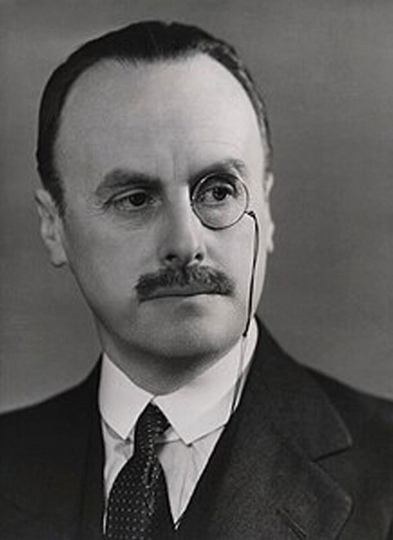
(Michael Palairet, the British Ambassador to Greece in 1940-41)
The illness and death of Ioannis Metaxas
We have already referred to the brief illness and death of Ioannis Metaxas in detail in the article of April 25, 2020. However, we will once again mention the main details of his illness, which first appeared on January 18 and ultimately led to his death at 6:20 a.m. on January 29, 1941. Shortly after the telegram with the “No” to Churchill, Metaxas left for the Headquarters where a Cabinet meeting was supposed to take place at 3:00 p.m. The ministers went to the Headquarters, but the meeting did not take place because Metaxas began to feel unwell and returned home to Kifisia. According to the newspaper Vradyni on January 30, 1941, a purulent inflammation of his tonsils was diagnosed. A specialist laryngologist, N. Georgopoulos, was called, and in cooperation with Metaxas’ son-in-law, University Professor Eugenios Fokas, it was decided on January 19 that Metaxas’ tonsils should be removed immediately. However, due to his age and the strain he had endured, it was determined that crushing the tonsils would be a more suitable approach…
Metaxas on the same day got up from his bed alone, arbitrarily, and collaborated with King George II, the ministers, and senior military officials. However, on the evening of Sunday, January 19, 1941, the countdown for Metaxas began. He remained at his home in Kifisia and did not go down to Athens for the usual nighttime meeting with his ministers. On the morning of Monday, January 20, he developed a low fever. He was very distressed and called the ministers to his home to give them instructions. Doctor Georgopoulos advised him to avoid fatigue and prohibited the influx of visitors. At noon on Tuesday, January 21, Georgopoulos performed a tonsil crushing procedure, which had excellent results. Over the next three days (January 22, 23, and 24), no minister visited Metaxas at the request of his family. On Saturday, January 25, meetings were scheduled between Metaxas and the deputy ministers of Public Security and Military Affairs. However, on the evening of Friday, January 24, Metaxas developed a particularly concerning fever. The necessary medical measures were taken, and the fever subsided. On Saturday, January 25, and Sunday, January 26, Metaxas appeared to recover, and it was decided that on the morning of Monday, January 27, he would leave his house, as the doctors believed he would be completely healthy. However, around 16:00 on Monday, Metaxas developed a high fever and was diagnosed with an infection. His blood suddenly deteriorated due to absorption. A blood transfusion was imperative, which was performed. “The night was horrific,” wrote “Vradyni.” On Tuesday, January 28, Metaxas’s health began to deteriorate rapidly, and he was holding on only thanks to his indomitable constitution. At 1 p.m., a second blood transfusion was performed, and in the evening of the same day, a third. Until 8 p.m., Metaxas’s heart endured. His doctors saw that his end was near and informed King George II to make arrangements for finding a new prime minister.
On the evening of Sunday, January 26, Metaxas’s doctors contacted the distinguished Viennese pathologist Hans Eppinger, a friend and doctor of Hitler, and asked him to come urgently to Athens. After hearing Metaxas’s medical history, he agreed with the treatment being followed and set off for Belgrade, where a Greek plane piloted by Charalambos Potamianos was to pick him up. When he arrived in Belgrade, Eppinger called the attending doctors on the night of Tuesday, January 28. They informed him that Metaxas was dying. Eppinger canceled his visit to Athens but insisted that the second blood transfusion be carried out without fail. Metaxas’s doctors had also contacted another foreign colleague who lived in Nunchheim. The distance was too great, and this doctor never came to Athens. On the night of Tuesday, January 28, the director of “Evangelismos” hospital, N. Lorandos, called a friend of his, an English doctor from the directors of the British Military Hospital in Greece, who had a gas-pressure oxygen inhalation device. The use of this machine, the blood transfusion performed by a different method as suggested by the Englishman, the serum infusion, and the cardiotonic injections administered to Metaxas led to a temporary improvement in his condition. Nana Foka (1912–2002), Metaxas’s daughter, said in an interview with Giorgos Leontaritis published in the newspaper “Akropolis”: “In the afternoon, they brought an English doctor. I don’t know who brought him. A military hospital had been set up in Kefalari. Maybe from there. The English doctor brought an oxygen cylinder and stayed beside him. I remember that he was constantly drunk. At one point, he even stumbled and fell with his oxygen cylinder into the garden! He slept here, on a couch next to Metaxas’s bed, and at the same time, you could hear both the death rattle of the dying man and the snoring of the drunk Englishman.”
At 6 a.m. on January 29, 1941, Ioannis Metaxas, who had been in a comatose state throughout the night, briefly woke up. By his side was his close friend and collaborator, Konstantinos Maniadakis. To him, Metaxas uttered his last words: “So, there is no longer any hope? You understand, Kostas, I do not care for myself. But I have my hope in the Greeks.” A little later, at 6:20 a.m., Ioannis Metaxas peacefully took his last breath.
The previous night, he had received Holy Communion. The medical bulletin on Metaxas’s death was as follows: “The President of the Greek Government presented ten days ago, that is, the previous Saturday, a pharyngeal inflammation which resulted in a peritonsillar abscess. Despite its timely incision and appropriate postoperative treatment, he subsequently developed toxemia-related symptoms and complications such as gastrointestinal hemorrhage and uremia, and he passed away today at 6:20 a.m. Athens, January 29, 1941. The attending physicians: M. Geroulanos, I. Chrysikos, V. Bensis, G. Karagiannopoulos, M. Georgopoulos, D. Komninos, M. Makkas, N. Lorandos, E. Fokas, G. Oikonomidis, D. Dimitriadis, N. Georgopoulos.” Doctors M. Geroulanos and V. Bensis had been appointed by Eleftherios Venizelos in 1920 as part of the team responsible for treating King Alexander, who had fallen ill from a monkey bite and ultimately died from toxemia.
How were the British involved in Metaxas’s death?
From the very first days following Metaxas’s death, various theories emerged implicating other parties. K. Maniadakis blamed the doctors, accusing them of negligence, and confided to close friends that “if we had taken the leader to a hospital, even in third class, he would certainly have survived.” Suspicion was raised over an injection administered by the English doctor Harveg, who accompanied Air Marshal Henry D’Albiac and had with him a respiratory device. Who authorized Harveg to give Metaxas the injection? His close advisor, Ioannis Diakos. If his name does not ring a bell, it was mentioned in the article about the “suicide” (?) of Koryzis. Diakos was a dark and enigmatic figure. A journalist, he published “The Newspaper of the Greeks.” As Metaxas’s closest advisor, he participated in all ministerial councils. He clashed with ministers Theodoros Skylakakis (grandfather of the current minister) and Alexandros Papachelas (grandfather of journalist Alexis Papachelas), both of whom resigned and were exiled.
On April 18, 1941, King George II sent Diakos to the home of Metaxas’s successor, Alexandros Koryzis, after a heated argument between them. Diakos found Koryzis’s wife, and together they went upstairs to where the prime minister had locked himself in. As they reached the door of Koryzis’s room, they heard two consecutive gunshots. Upon entering, they found the right-handed Koryzis dead, holding a revolver in his left (!) hand, with an icon of the Virgin Mary on his chest…
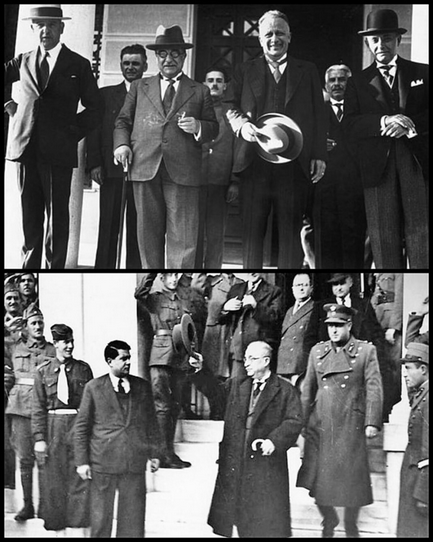
Ioannis Nasioulas is categorical: Metaxas was poisoned by the British under Churchill’s orders.
The poisoning was carried out using the bacterium Clostridium botulinum, which produces a neurotoxic protein, botulinum toxin, causing botulism. This toxin, also known as “snake venom” due to its paralytic effect, acted slowly so that the resulting illness would not be immediately recognized as poisoning. The poisoning occurred through food or drink consumed by Metaxas between January 13-15, 1941, during his meetings with the British, leading to foodborne botulism or, more likely, intestinal toxemia.
According to the attending physicians’ report, “the conducted blood culture yielded negative results.” However, the culture was performed after Metaxas had been administered antibiotics (sulfonamides), which inhibited the growth of any pathogens in the blood, preventing the doctors from detecting the poisoning. (Penicillin, which might have saved Metaxas, was not produced industrially until 1943.) Eppinger, over the phone, made the correct diagnosis: “Sepsis.” The toxin had been absorbed by Metaxas’s body, causing a slow death, and was later expelled through the “purging” of his intestines.
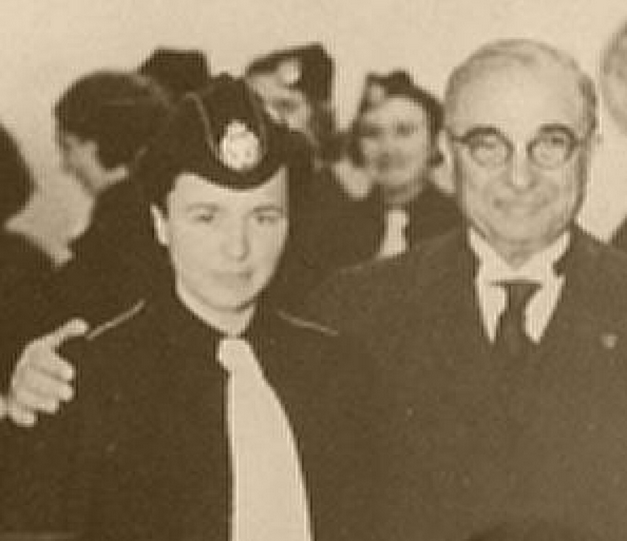
(Ioannis Metaxas with his daughter Nana)
Epilogue
It was not only Metaxas and Koryzis who met a “peculiar” end, but also: William Rhodes Davis, an oil magnate (1/8/1941), Prince Jean, Duke of Guise and heir to the French throne (25/6/1940), Lord Lothian, the British ambassador to the U.S. (12/12/1940), Admiral François Darlan (24/12/1942), Reinhard Heydrich, Deputy Head of Abwehr (4/6/1942), Władysław Eugeniusz Sikorski, Polish military leader and politician (4/7/1943), Tsar Boris of Bulgaria (28/8/1943), Benito Mussolini (28/4/1945), as well as the distinguished doctor Hans Eppinger on 25/9/1946, shortly before the Nuremberg Trials!
All of these individuals, in some way, had been targeted by Churchill and his superiors at “The Focus.”
Spyridon Paxinos, head of Athens Security, made the mistake of telling a British diplomat at a reception at the British embassy in Cairo in 1942 that he knew everything about Metaxas’ death and was writing a book on the subject—one that would not be at all pleasing to the British, as he emphasized. The next day, he was arrested by the British as a collaborator of the Germans and imprisoned in Syria! After the war, he moved to Pakistan. There, specifically in Karachi, he was murdered under mysterious circumstances by unknown assailants in October 1958. He never returned to Greece…
Source: Ioannis Nasioulas, The Death of Ioannis Metaxas, Hellenic Pioneer Publications, 2024.
We sincerely thank Mr. Nasioulas for his invaluable assistance.
Ask me anything
Explore related questions




