





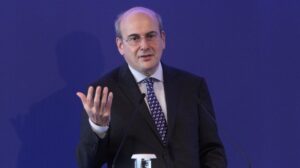
Increasing retirement savings, addressing the impact of climate change and containing the cost of health services are three areas in which insurance companies can play an important role, Deputy Prime Minister Kostis Hatzidakis, speaking tonight at the general convention of the Insurance Redness Greece.
“Private insurance is a vital cog in the smooth functioning of the economy and our daily lives. It provides protection to individuals, businesses and organisations, ensuring the sustainability of investments and business initiatives. It shields citizens against unforeseen situations, reducing the cost of economic disruptions,” Mr Hatzidakis said. While in relation to the industry’s requests for the extension of tax incentives, he noted: “I think you will recognize that the government has an obligation to maintain fiscal balance. We are looking at the possibilities of further tax relief, always in the context of our fiscal policy.”
Referring to the challenges that insurance companies can help to address, Hatzidakis said:
-The sustainability of social security systems in the light of demographic ageing, a problem that, as he noted, almost all European countries are facing. “In the first four years we have proceeded with the top reform of the supplementary insurance system with the individual piggy banks and the creation of the TEKA,” he noted and added: “In the first three years, 533,000 employees and 200,000 employers have been insured in the fund, who pay contributions at the individual level. Already the funds that have flowed into the TEKA reach 283 million euros and very soon it will become the largest institutional investor in the country. In December 2023 we took another step forward with the adoption of the law on the reform of the Occupational Funds.
“These reforms, he said, benefit the insured who will enjoy higher pensions in the future. But they also benefit the national economy as a whole by using the pension savings portion to boost new investment.”
-Coping with the impacts of climate change and natural disasters. “A new framework for cooperation between the state, insurance companies and citizens is needed, he stressed, to create a more effective risk management model.” Hatzidakis underlined the initiatives adopted by the government, such as the introduction initially and subsequent doubling to 20% of the reduction of the ENFIA for safe houses. Also, mandatory insurance against natural disasters for properties worth more than 500,000 euros, as otherwise they are not compensated by the state, for large companies with a turnover of more than 500,000 euros and for all cars. “We are monitoring changes in this area inspired by international good practices. And having as a main concern to arrive at an outcome that is in favour of citizens and their properties and not against them,” he said.
-To address the rising costs in the health sector. “There is significant scope for the development of private health insurance in Greece by transferring resources from the informal – grey part. This would be to the benefit of government revenues. But also for the benefit of private citizens who would be able to enjoy better and cheaper services – and feel less uncertainty,” the deputy prime minister said. The abolition of the 15% tax on health insurance policies for children up to 18 years of age is moving in this direction. Also, the regulation to calculate the amount of health insurance premiums in relation to the cost of services provided. “The truth is that the annual increases, especially in life policies have been unbearable for people. The government’s aim is to ensure consumer protection on one hand and the capital business of the companies on the other,” he said.
Hatzidakis also made special reference to the adoption of the “right to be forgotten” by insurance companies, noting the following: “The voluntary application of the Code of Conduct a self-evident humanity gesture for about 400,000 of our fellow citizens, survivors of their burden of cancer, so that they do not exist. And they too can no longer make their decisions about loans and life insurance, free from the shackles of their relevant medical history. I would like to thank the NCAE and the industry companies for the constructive role they have played.”
“The Government,” Hatzidakis concluded, “recognizes the substantial contribution of insurance companies, and considers them to be in line with the effort to lift the Greek economy even higher. We remain committed to our commitments to expanding the market for private insurance services, while enhancing transparency and competition, and ensuring effective consumer protection.”
Ask me anything
Explore related questions




