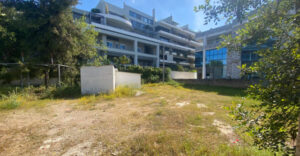
In the heart of Glyfada, on Tsitsani Street – where real estate prices are at record highs and every square meter is considered gold – lies a forgotten 1,164 sq.m. plot of land. Just steps away from Agios Konstantinos church and bustling avenues, this empty lot has no building, no sign, and no ownership title in the Land Registry. According to official records, the plot belongs… to no one.
Or, more accurately, to whoever manages to convince the court first.
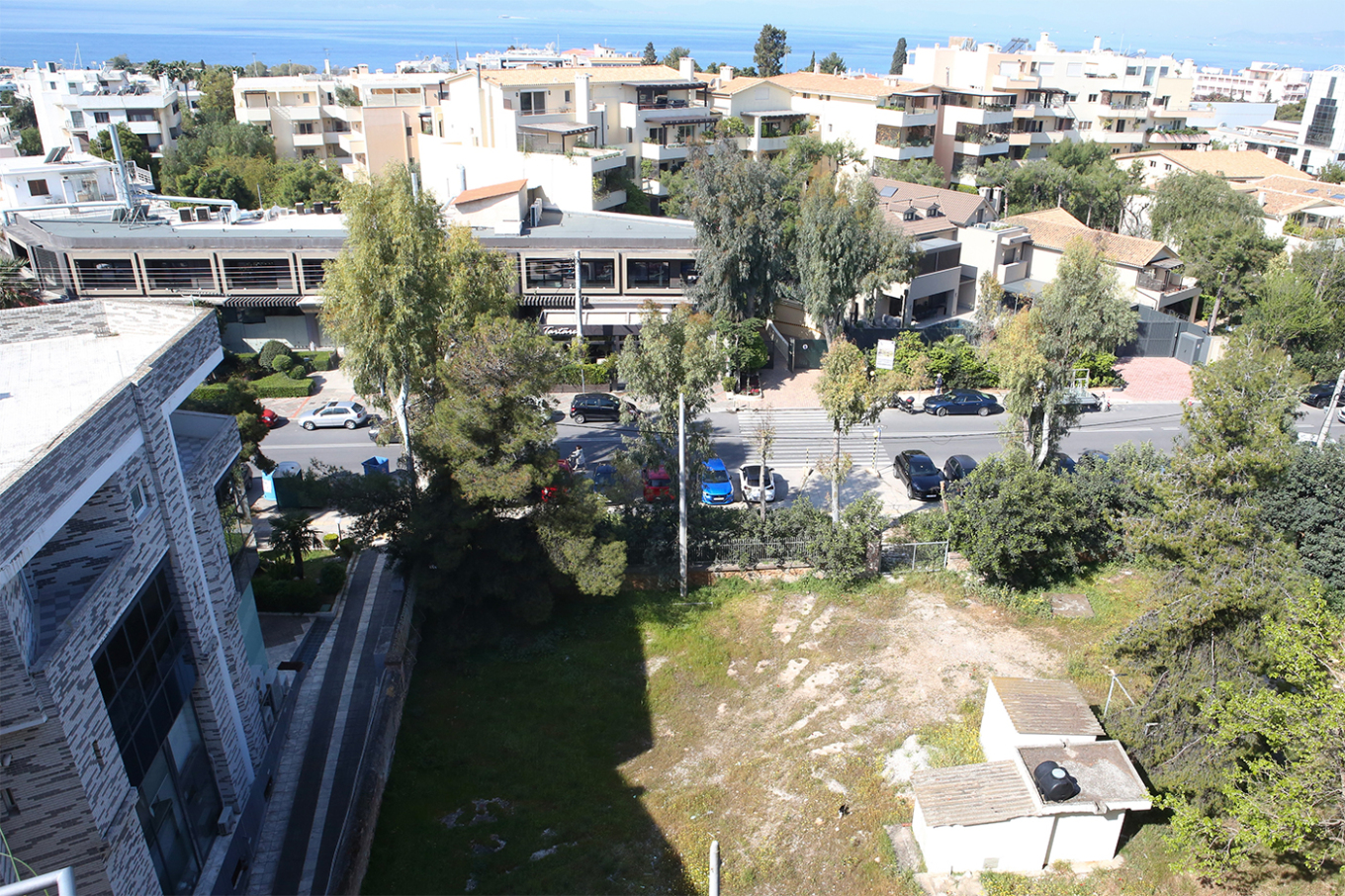
Because in just a few months, this land has become the center of an unusual legal thriller. Two private citizens have each filed lawsuits against the Greek state, both claiming ownership of the plot. Both cite “years of care,” “possession,” and “maintenance” by family members. Both claim their families have occupied the land since the 1950s. Both present wills, testimonies, and narratives that—interestingly—have no points of intersection.
Claims Born of Time and Forgetfulness
The first claimant, a resident of Attica, has filed not one but two nearly identical lawsuits: one for a property in Marousi and another for the disputed plot in Glyfada. In both, he claims that his father—a grocer known as “Uncle Kostas”—had been occupying and maintaining the properties since 1956, fencing them off and legitimizing them through continuous presence. The odd part? No one in either neighborhood seems to remember such a person—neither in Marousi nor in Glyfada.
The second lawsuit, concerning the Glyfada plot, was filed by an individual from Corinth. His version is different, yet equally inventive: he claims ownership via a will from his grandmother, who allegedly cared for, cultivated, and fenced in the land for decades. According to his documents, this same grandmother also supposedly left him properties in Voula, Vrilissia, Kifisia, Spata, and even 150 acres in Mykonos. A “silent” heiress who left behind neither tax records nor witnesses—but apparently a vast estate.
Both lawsuits lean heavily on the legal concept of adverse possession—a legitimate legal mechanism, when proven. However, in this case, nothing seems to align with the documented history of the property.
Historical Ownership Paints a Different Picture
According to a 1936 deed, the plot originally belonged to Pyrrhos Karapanos, a historical MP and senator from the prominent Karapanos and Zografos families. He had inherited large land areas in southern Athens and began selling them to building cooperatives and private individuals. Upon his death, the estate passed to his wife Kalliopi Karapanou, who died in 1960 and reportedly bequeathed the property to the Hellenic Red Cross and the then Municipality of Evryali (now part of Glyfada).
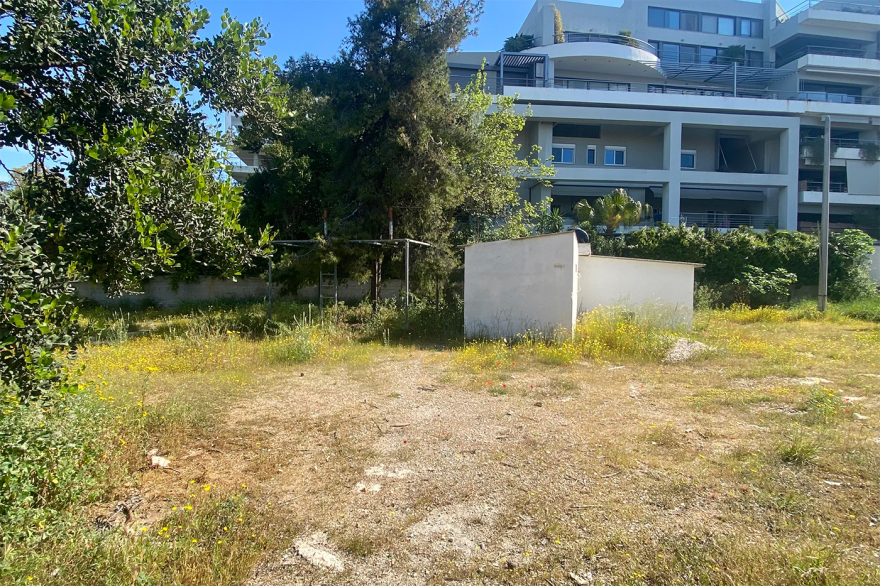
There is no record of “Uncle Kostas” or “Grandma Maria” anywhere in the official documents. In contrast, neighbors—some living next to the property for decades—state they never saw anyone maintain or claim the land. Many assumed it belonged to a government agency, possibly the Civil Aviation Authority, as the lot contained infrastructure, including a small building not mentioned in either lawsuit.
Further investigation into the titles of neighboring plots reveals no mention of the current claimants or their supposed predecessors. The adjacent properties were owned by well-known Athenian families such as Loulis, Pappas, Varvitsiotis, Zepos, and Fandridis.
The only common thread between the two claimants? Silence. A prolonged silence surrounding a highly valuable asset that went unnoticed—not because no one wanted it, but because no one ever officially declared it.
Now, the lawsuits are in the hands of the courts. Both individuals claim the law is on their side. But opposing them stand not only the legal institutions—but also history, documented deeds, witness testimonies, and, most crucially, the truth of time.
“There’s No Way It Belongs to Them” – What a Neighboring Businessman Says
As part of its investigation, protothema.gr spoke with a local businessman near the contested plot. He is a long-time figure in the shipping industry, and although he has no personal claim to the land, he and other neighbors regularly maintained it.
They cut the weeds, removed garbage, and ensured the plot remained in good condition—not for personal gain, but to preserve the aesthetics of the neighborhood. This is an area of luxurious residences, low building density, and high visual standards, where a neglected plot would be a clear eyesore.
Speaking with protothema.gr, the businessman clarified that he has no ownership interest, but he does have historical insight. According to him, the plot once housed light beacons from the former Elliniko airport—special lighting equipment used to guide planes during landing or takeoff. This, he claims, proves the land served aeronautical purposes and was under the oversight of the Greek state.
A million-euro mystery unfolds in the courtrooms—with two claimants chasing a golden plot and the past standing silently in their way.
Ask me anything
Explore related questions