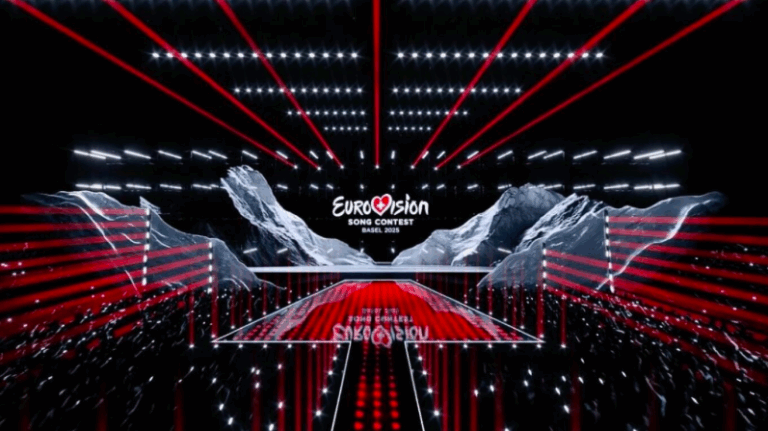
According to a new policy by Eurovision for 2025, artists and their delegations will only be permitted to bring the official flag of their country to all related events of the contest, effectively banning LGBTQ+ flags from the stage. This policy, established by the Swiss broadcaster SRG SSR in cooperation with the EBU, applies to venues such as the Main Stage, the Green Room, and the Opening Ceremony.
This decision particularly affects LGBTQ+ participants in this year’s contest, such as Maltese singer Miriana Conte, Austrian artist JJ, and Finnish performer Erika Vikman, who will not be able to display any flag related to the Pride community during their performances.
It is recalled that in last year’s contest, the winner from Switzerland, Nemo, who identifies as non-binary, revealed that he was prohibited from raising the non-binary flag on stage. “I had to smuggle it in because Eurovision said no, and I did it anyway. I hope others did the same,” he stated at the time.
This year, during the “flag parade,” participants will only be allowed to carry the national flag provided by the Swiss public broadcaster SRG SSR. Additionally, it is forbidden to hold flags of other countries as a form of solidarity, such as, for example, the flag of Ukraine.
Although the EBU (European Broadcasting Union), which coordinates the contest, refused to clarify what the consequences would be for violators, it was indicated that there would be “consequences” for anyone who does not comply with the new regulations.
A spokesperson for the contest, responding to PinkNews, explained: “The official policy regarding flags for Eurovision 2025 was drafted by the Swiss broadcaster SRG SSR, with the involvement of the EBU, primarily for the official venues of the contest, in order to provide clarity for the audience and delegations. Together, we aimed to find a balance that allows artists and audiences to express their enthusiasm and identity while also providing greater clarity for delegations regarding the official spaces. Similar to what is applied in other international events, only one national flag is allowed in official spaces, including the stage, the Green Room, the Eurovision Village stage, and the Turquoise Carpet.”
However, outside these official spaces, delegations are subject to the same rules as the audience, meaning they can use any flag permitted by Swiss law, which offers opportunities for expressing identities. While the rules for participants are becoming stricter, restrictions for spectators are being relaxed. Those attending Eurovision 2025 in person, including the semifinals and the final, which will be held at St. Jakobshalle in Basel, Switzerland, will be able to bring “all flags and banners,” provided they do not pose a safety or production risk and comply with the country’s legislation. Thus, flags with racist or offensive content, hate symbols, or those associated with terrorist organizations are prohibited.
The issue of flags was also a point of intense controversy last year, as only the flags of the 37 participating countries and the general multi-colored “Pride” flag were permitted. Many spectators reported being denied entry to the Malmö Arena in Sweden with flags representing individual LGBTQ+ identities, and there were also reports of difficulties entering with the European Union flag.
The Palestinian flag was also banned due to the decision to allow Israel to participate despite the war in Gaza. However, according to DR, the flag of Palestine will be permitted inside the arena in 2025. The Eurovision semifinals will take place on May 13 and 15, while the grand final will be held on May 17 in Basel, Switzerland.
Ask me anything
Explore related questions