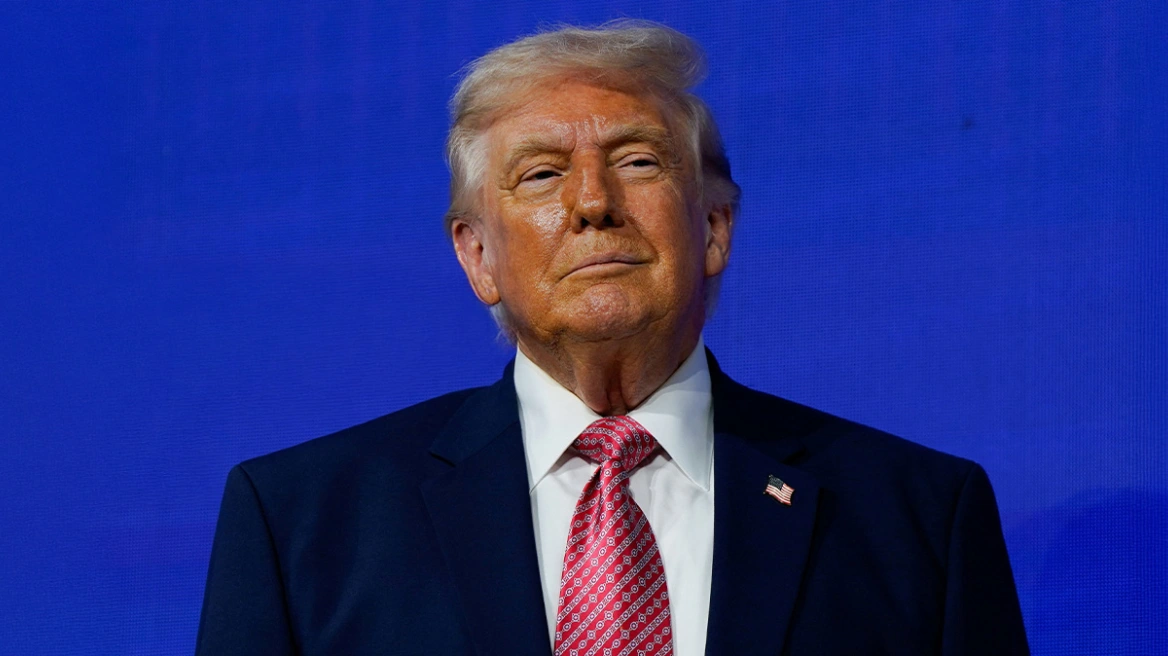
In three months, Donald Trump has managed to keep his campaign pledges and to risk sacrificing more than 80 years of alliances on the altar of this particular cause. Both Trump himself and the two key members of his administration, Vice President Vance and Defense Secretary Hegseth, made it clear from European soil a few months ago that the US is not the ally that Europe “has come to know and get used to”.
100 days later despite the turbulence Trump’s decisions have brought at all levels, this issue seems to be “solidified” for Trump. The American “you are on your own”, which the US President has been careful to “punctuate” many times with “remember there is a big beautiful ocean separating us”, comes today to bring a whole new dimension to the affairs of our own continent. If tariffs, which for the US is indeed a weapon against China but practically no one has been left untouched and the US President has talked about “European theft” as many times as he has talked about “Chinese exploitation”, then we have in our hands an outline from which the only “encouraging” thing for now is the “awakening” – albeit belated – of the Old Continent.
But what does “alone” really mean for Europe?
Since the end of the Cold War, the US has maintained a significant military presence on Europe. According to NATO figures, the US has more than 80,000 troops on European soil and this number may seem like a “drop in the ocean” separating us from the other side of the Atlantic, but few countries have a stronger military presence today. In particular, only Poland (216,000 troops), France (205,000 troops), Germany (186,000 troops), Italy (171,000 troops), the United Kingdom (138,000 troops), Spain (117,000 troops) and Greece with 111,000 troops have in the Union numbers greater than those of the United States on European soil.
Trump’s intentions are clear. Those forces must and will leave as the cost of European defense is no longer at what Washington is interested in paying. This particular gap may seem small but the numbers – which may not always tell the truth but never lie – show that it will be a gap that countries on the continent will be asked to fill. After all, the gaps in defense especially with the war in Ukraine raging for more than three years and the Russian threat more evident than ever, must and ought to be filled.
Defense spending
Since the Russian invasion of Ukraine in 2022 defense spending has increased significantly across Europe. Specifically, again based on North Atlantic Treaty Organisation data, the Union from 2022 to 2024 has increased spending on defence equipment and force training by almost 55%.
If we even include Ukraine in this spending, then this figure skyrockets as Ukraine due to the Russian invasion has spent 41 billion dollars in one two-year period in 2022 alone, as much as the country spent in the last 8 years before the war. Clearly the biggest defence spending after Ukraine is in Poland, the country that several years before the Russian invasion was sounding the alarm about the Russian danger all over Europe, while the big European powers, France – Britain and Germany have decided to multiply the funds in this direction until 2030.
Along with the countries, the Union has realized that the American “bye” is not a pretext and has decided on the one hand to exclude from the balance sheets these large expenditures and in a second year to allocate 100 billion for the unified defense of the zone. But funds alone cannot deliver immediate results in the fields. Analysts and military experts point out that investment is a start but results require at least 2 to 3 years to be felt. The European military industry, for example, may have put the machines back in gear after more than 80 years, but this does not mean that we now have the numbers and technology to support Kiev as a sole partner on the one hand and on the other hand to have the possibility of collective or individual defence in an extreme – but you can never be sure – new war zone in our region.
The unknown X of nuclear weapons
Without question and with a long tradition in this field Russia and the US are the two nuclear superpowers. Specifically, based on data from The International Campaign to Abolish Nuclear Weapons, Russia has 5,889 nuclear weapons and the US has 5,224. France has 290 in its arsenal and the UK has 225. But in the Union there are countries that may not have nukes of their own but are stockpiling US nuclear warheads for which there is no word today from Washington on what will happen. In particular, Italy has 35 US nuclear weapons, while Belgium – Germany and the Netherlands have 15 US nuclear warheads.
In any case, the disengagement of the US from Europe, beyond what it will produce diplomatically, now seems to be Europe’s big gamble. An extremely complex gamble, with high costs but also a “nightmare” in terms of organisation and logistics. If, at the end of the road, Europe stands on its own feet, it will have taken its own steps for the first time since the Second World War and will certainly be a distinct partner and ally.
Ask me anything
Explore related questions