






The Hellenic National Public Health Organization (EODY) is pushing back against local authorities in Attica, Thessaloniki, Serres, and Crete that have chosen to close schools in response to reported cases of streptococcus. According to EODY President Christos Chatzichristodoulou, such measures are unnecessary and could even be harmful.
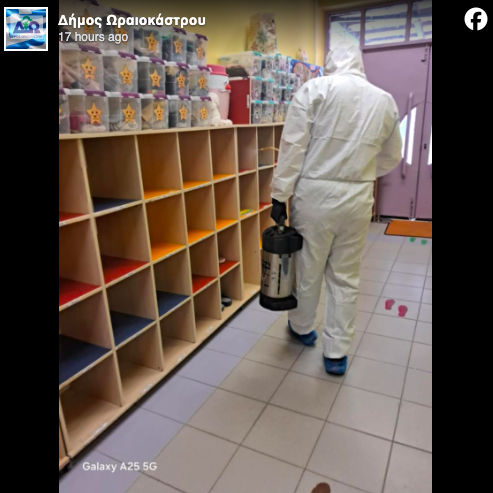
EODY Stance: No Need for School Closures or Disinfection
“While it’s understandable that municipalities and parents want to protect their children, closing schools or disinfecting them for streptococcus doesn’t help—and may even expose children to more risk,” said Chatzichristodoulou in an interview with Greek public broadcaster ERT. “We urge everyone: stop closing schools and stop disinfecting. These actions are not beneficial.”
A Surge in Precautionary School Closures
Despite EODY’s guidance, several schools across Greece have temporarily shut down:
- In Athens, the Municipality of Vyronas announced that the 1st and 5th kindergartens will remain closed on Monday due to multiple strep cases.
- In Thessaloniki, the 2nd Primary School and 9th Kindergarten of Kalamaria were closed after a confirmed infection in a student, and facilities underwent full disinfection.
- In Oraiokastro, a case at the 6th Kindergarten led to precautionary cleaning. The school will reopen the following day.
- In Crete, the Kastelli Kindergarten in the Municipality of Minoa Pediada was closed after three students tested positive. Mayor Vasilis Kegeroglou emphasized that children with symptoms or positive tests should consult a pediatrician or health facility. A similar closure occurred at the 2nd Kindergarten of Atsipopoulo in Rethymno.
- In Serres, the municipality temporarily closed several schools including the 4th, 17th, 8th, and 25th Primary Schools after confirmed group A strep (GAS) infections. Local authorities are coordinating with EODY and educational leaders for preventive sanitation.
What Should Be Done Instead?
According to EODY:
- Children diagnosed with strep must remain at home for at least 24 hours after beginning antibiotics to stop being contagious.
- Schools should focus on enhanced personal hygiene:
- Frequent hand washing
- Avoiding sharing personal items (e.g., water bottles)
- Increased classroom cleanliness
Two Types of Streptococcal Infections
EODY tracks invasive (severe) forms of group A streptococcus, which surged across Europe after COVID. Greece reported:
- 90 cases in 2023
- 68 cases in 2024
- 24 cases by May 22, 2025
The mortality rate for invasive infections is high—about 25%, or one in four affected individuals. Most other cases, however, are milder and non-invasive.
Warning Signs for Parents and Teachers
In severe cases, a child may appear extremely weak, often starting with a sore throat and high fever. Immediate medical attention is advised if a child shows:
- Persistent fever
- Severe throat pain
- Difficulty swallowing
- Fever with rash
- Noticeable fatigue
What Is Group A Streptococcus?
Group A Streptococcus (GAS), or Streptococcus pyogenes, is a common bacterium that can cause mild or serious infections. It is not routinely monitored through mandatory disease reporting in Greece. However, due to rising cases in the UK and Europe, EODY has requested health services report confirmed cases.
Some individuals carry the bacterium in their throat or skin without being ill, acting as asymptomatic carriers.
How Is It Transmitted?
GAS spreads through:
- Respiratory droplets from coughing or sneezing
- Contaminated surfaces
- Contact with infected wounds
- Close contact with sick individuals
It is more easily spread by those who are symptomatic, not carriers.
Who Is Most at Risk?
While anyone can be infected, high-risk groups include:
- Young children
- Elderly
- Immunocompromised individuals
- People with chronic illnesses
- Individuals living in crowded or unhygienic conditions
GAS is one of the most common causes of pharyngotonsillitis in school-aged children.
No Vaccine—Yet
Currently, there is no vaccine for group A streptococcus, though several candidates are under development.
Treatment
Timely administration of appropriate antibiotics is essential, especially in severe cases.
EODY urges calm and evidence-based responses to strep cases. Instead of closing schools or extensive disinfecting, efforts should focus on hygiene practices, prompt treatment, and vigilance for serious symptoms.
Ask me anything
Explore related questions




