This development has garnered significant regional attention and concern among military analysts, who are closely monitoring Ankara’s evolving defense capabilities.
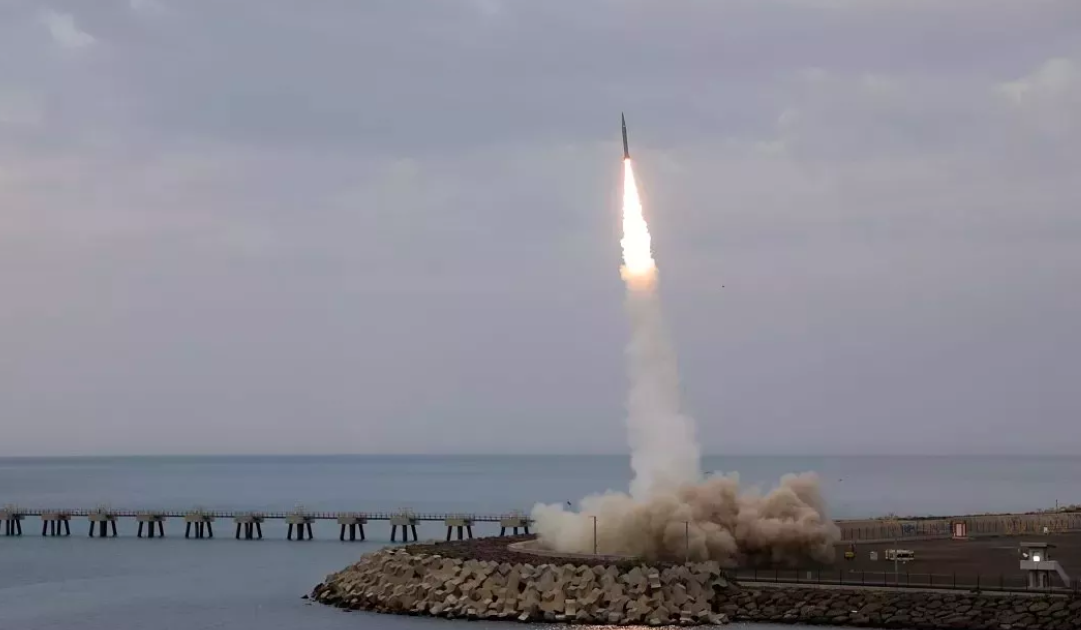
The Tayfun missile—translated as “Typhoon”—represents Turkey’s most advanced ballistic missile to date. According to reports from Turkish media, it is capable of striking targets up to 561 kilometers away with precision from land-based platforms, and preparations are underway to enable launches from submarines.
A Strategic Game-Changer in the Eastern Mediterranean
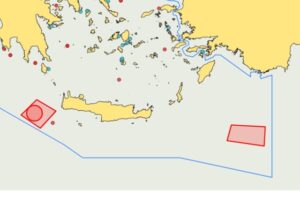
The existence of a submarine-launched missile capable of reaching targets at such distances fundamentally alters the regional security landscape. Turkish sources indicate that the Tayfun is not solely intended for targeting Greece; maps displayed on Turkish television suggest its operational range extends to Israel, Egypt, and other Middle Eastern countries.
This development has sparked both strategic interest and regional anxiety. Experts note that deploying such a missile from submarines—likely based on the German Type 214 design with Air-Independent Propulsion (AIP)—marks a significant technological milestone. According to Turkish officials, the construction phase for these systems is already underway, with the challenging first iteration being the most complex, highlighting the project’s ambitious scope.
Implications of Testing and Regional Tensions
The capability to launch a missile from a submarine that can strike at such distances shifts the strategic dynamics in the Eastern Mediterranean. Turkish media emphasize that the Tayfun “is not only for use against Greece,” with maps showing potential reach extending toward Israel, Egypt, and broader regional targets.
However, statements from Turkish officials often verge into provocative territory. A notable quote from a popular television program states: “You don’t need to know exactly where your target is. You launch, and it hits. It’s a message. It’s deterrence.”
Turkish military analysts and retired generals—frequent figures on Turkish media—continue to amplify these claims, underscoring Turkey’s “deterrent power” and openly discussing military advantages over neighboring countries. These assertions are accompanied by a broader nationalist rhetoric, emphasizing Turkey’s “historic responsibility” to defend its interests in the Aegean and Mediterranean, with explicit criticisms directed at Greece.
A Militarized Narrative and Rising Tensions
Simultaneously, a military-themed narrative seeks to bolster internal cohesion and national pride, but it also risks fueling regional tensions. In some instances, public discourse has crossed into hyperbole: the Tayfun missile is portrayed as “the weapon that will restore balance in the Aegean.”
Advanced Submarine Arsenal and Strategic Deterrence
Turkey appears to be pursuing a doctrine of deep deterrence, leveraging its submarine fleet as platforms for deploying strategic weapons. The Tayfun missile system is not alone; Turkey now manufactures torpedoes with a range of 50 kilometers, alongside developing domestically produced guidance and target detection systems.
The prospect of Turkish submarines operating with long-range missiles—particularly in environments where detection is challenging due to AIP and stealth technologies—confers a significant strategic advantage. Ankara is actively projecting this capability both internationally and domestically.
Implications for Regional Security
The deployment of such missile systems from submarines marks a serious evolution in the regional balance of power. While enhancing Turkey’s military posture, the use of nationalist rhetoric and the display of these weapons as symbols of power—rather than purely as measures of deterrence—introduces considerable risks.
The Tayfun missile may transcend its role as just a weapon; it could become a symbol of a new phase in the arms race and regional geopolitics in the Eastern Mediterranean—potentially impacting the security and stability of the entire region.
Ask me anything
Explore related questions