





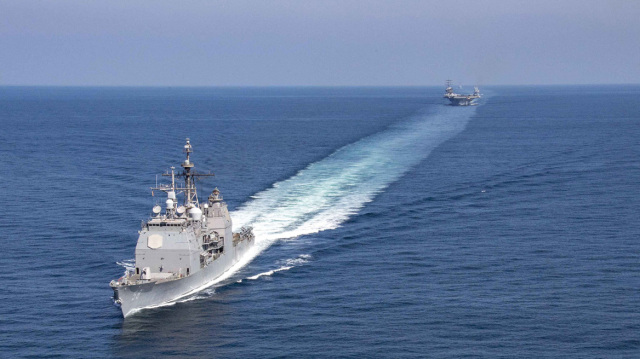
The recent escalation in tensions between Iran and the West, following the Israeli attack on Tehran’s nuclear facilities, has brought back into focus the worst-case scenario: the blockade of the Strait of Hormuz. This narrow passage, through which more than 20% of global oil passes daily, is the most critical artery of international energy trade.
If Iran were to close the Strait, the first immediate consequence would be a surge in oil prices. Analysts estimate that the price per barrel could exceed $150, triggering a global wave of inflationary pressures. The increase in fuel prices would affect supply chains, transportation, and essential goods, directly impacting living standards, especially in emerging economies that are more vulnerable to such shocks.
The military dimension of a potential blockade is even more dangerous. The United States, which maintains a strong presence in the region, has warned that it would not accept any closure of the passage. Any Iranian action could lead to direct military confrontation, including attacks on naval forces and critical Iranian facilities. Moreover, the involvement of Iran’s regional rivals, such as Saudi Arabia and the United Arab Emirates, could escalate the crisis into a full-blown conflict in the Gulf.
Although some Gulf countries, like Saudi Arabia and the UAE, have developed pipelines bypassing the Strait, these routes are insufficient to handle the region’s total oil exports. Conversely, countries like Kuwait, Qatar, and Bahrain remain entirely dependent on the Strait of Hormuz.

In the event of escalation, the U.S. and the European Union would be forced to draw from their strategic reserves to limit the shock to the market. At the same time, countries such as China and India, which import large quantities of oil through the Strait, would be pressured to intervene actively in the diplomatic management of the crisis.
In any case, Iran’s threat to close the Strait of Hormuz is not new, but today’s international circumstances — with Europe’s energy crisis, the war in Ukraine, and fragile economic recovery — make it more dangerous than ever.
The question now is whether Tehran will use the threat as leverage for negotiating advantages or if it will risk triggering an unprecedented global crisis.
In contrast to the grim assessments of analysts at international agencies such as Reuters and AFP, oil market observers who spoke to CNBC emphasized that a full disruption of global oil flows by closing this waterway is not only unlikely but perhaps even physically impossible.
“There really is no clear benefit to blocking oil transit through the Strait of Hormuz, especially since Iran’s own oil infrastructure has not been directly targeted,” said Ellen Wald, president of Transversal Consulting, emphasizing that any such action would likely trigger further retaliation. The significant rise in oil prices caused by closing the passage would also provoke reactions even from Iran’s largest oil customer: China.
“Beijing does not want the flow of oil from the Persian Gulf to be disrupted in any way, nor for oil prices to rise. Therefore, it will exert the full weight of its economic influence on Iran,” Wald explained. China is by far the largest importer of Iranian oil, accounting for more than three-quarters of Tehran’s oil exports, while at the same time being Iran’s largest trading partner.
“Their friends would suffer more than their enemies… Therefore, it is very difficult to imagine such a scenario,” said Anas Alhajji, CEO of Energy Outlook Advisors, in turn. He clarified that closing the passage would be more of a disaster than a blessing for Tehran, since, in addition to oil, most of Iran’s daily consumer goods also arrive via this route.
Ask me anything
Explore related questions




