





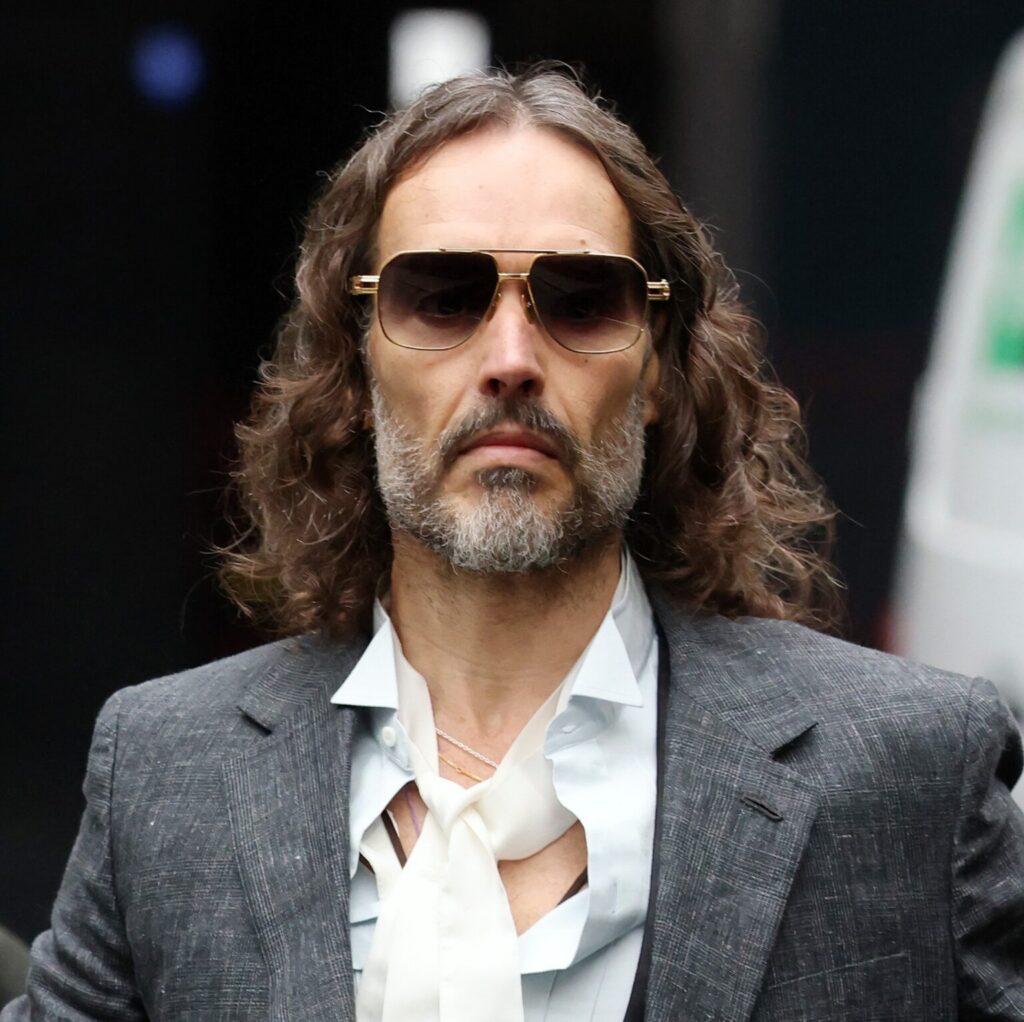
Nearly 20 years after the events that she says profoundly affected her teenage years, Mia Latter has decided to waive her right to anonymity and speak publicly about her relationship with Russell Brand. Until now, she had been known only by the pseudonym Alice, following a major joint investigation by The Sunday Times, The Times and Channel 4’s Dispatches programme in 2023.
Now 37, Latter has chosen to reveal her identity just days after the 51-year-old comedian was sentenced to ten years and six months in prison for rape and sexual assaults involving four women.
How they met when she was 16
Her account begins in 2006 in London’s Leicester Square. Latter was just 16 and returning from a shopping trip, while Brand was 30 and enjoying considerable fame as an MTV presenter. In a new interview with The Times, she describes how he approached her, looked through the bags containing the clothes she had bought and selected a dress, telling her that she would wear it on their first date.
A few hours later, he sent her a message. She immediately told him her age, assuming that he would end all contact once he discovered she was only 16. Instead, he suggested that they go out for dinner the following evening, apparently without hesitation.
Following that dinner, she reluctantly accompanied him to his flat, where, according to her account, he initiated sexual intercourse despite her attempts to resist and her wish to take things more slowly.
During their three-month relationship, Brand allegedly kept their involvement hidden from her friends and family, while frequently introducing her to people in his own circle as “the child”. He arranged for cars to collect her during hours when she was supposed to be at school, disregarding her parents’ attempts to end their relationship.
Latter says she came to believe that he was not interested in her personality, but rather in the fact that she was 16 and a virgin.
The rape allegation and its consequences
Towards the end of their relationship, Latter alleges that Brand raped her at his home, ignoring her resistance and tears. She claims he subsequently told her that he had simply wanted to see her mascara run.
Their relationship ended permanently when she discovered another woman at his flat, but she says the experience left her with lasting psychological trauma. She dropped out of school before completing her examinations and was diagnosed with depression, struggling for a considerable period to regain a sense of normality.
Although Latter cooperated with the Metropolitan Police, prosecutors decided not to include her allegations in the criminal trial that resulted in Brand’s conviction on 5 November. They concluded that the comedian’s previous public statements about her claims could distract the court from the evidence being considered.
Latter says the decision initially devastated her. Nevertheless, she now expresses deep gratitude towards the women who testified and endured intense public scrutiny.
She says she had waited since the age of 16 for Brand to be held accountable and believes that, even though her own allegations were not included in the trial, justice has finally been served.
Brand has denied all the allegations made against him since the investigation began.
Campaign to change Britain’s age of consent laws
Beyond her personal experience, Latter’s decision to speak publicly is connected to the Close the Consent Gap campaign, which is calling for changes to British legislation governing the age of sexual consent.
The campaign advocates a graduated legal framework that would make sexual relationships between adults over 20 and teenagers aged 16 or 17 illegal where the age difference exceeds three years.
Its objective is not to criminalise consensual relationships between teenagers of similar ages, but to introduce stronger safeguards against significantly older adults who may exploit the vulnerability and relative immaturity of adolescents.
For Latter, speaking openly about what happened is therefore about more than securing personal recognition. It is also an attempt to prevent other teenagers from experiencing similar situations and to challenge a legal framework that campaigners believe leaves young people insufficiently protected.
Ask me anything
Explore related questions




