





Israel’s strikes on strategic targets in Iran are only one piece of the problem for Tehran’s regime. More critical, as it turns out, is how Israeli intelligence has essentially turned not only Tehran but also the entire Iranian border—and especially the sensitive points of its notorious nuclear program—into Tel Aviv’s back yard.
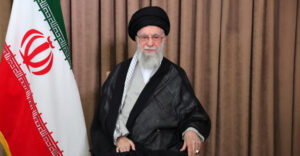
Iran’s response so far indicates certain things, but it is still unclear exactly what the country plans to do—this country that since 1979 has drawn a clear line against the West and its “ways.” For Iran’s Supreme Leader and the Revolutionary Guards — a special military corps originally created to protect the regime primarily from the country’s own national army — the situation is now, for the first time, truly difficult.
For Iran as a state, there are several possible paths that could, under certain conditions, lead it to a different—if not better—future. For the “Mullahs,” however, the range of options is far more limited.
The Dangerous Balance of Survival…
If Tehran’s leadership, having assessed the damage sustained by its nuclear and military facilities, believes there is still room to pressure the U.S. into restraining Israel — even at the cost of signing a deal with Washington — then it may proceed in that direction while continuing to strike or attempt to strike Israeli targets to satisfy its domestic audience.
If the damage to the nuclear program has merely set back the “completion” envisioned by the ruling theocracy by a few years, then Trump’s proposal may be seen as an ideal “lifeline.” But if the damage to infrastructure and personnel renders the program effectively unfeasible, then Tehran faces only two choices: fight or perish.
Ironically, this very narrative was echoed by Benjamin Netanyahu in a recent meeting with a group of U.S. senators who visited him in Jerusalem and tried to persuade him to delay once again the plan he has followed since October 7, 2023.
If, on top of this precarious balance, a new mass uprising were to erupt in Iran, then the theocracy would have no option but to fight to the bitter end. Should the odds become overwhelmingly unfavorable, the opening of Iran’s arsenals — the exact scale of which remains uncertain even to well-informed American political and military circles — becomes a real possibility. This is precisely the scenario that Israel itself fears: that if, after yesterday’s strikes, it suffered three fatalities — the first in the history of this long conflict — then a “heroic” final stand by the regime could lead to hundreds of casualties and severe damage to Israel’s urban centers.
The U.S. Must Step In — and Netanyahu’s Relentless Course
The current Middle East crisis is clearly unprecedented, and it is equally clear that once it ends, the region will be reshaped for at least the current century. The stakes are enormous and global, requiring a forceful, multi-layered re-engagement by the U.S. If rumors in Washington are true — that the President was aware of the attack and was the only one fully informed — then this raises serious concerns.
Managing the situation demands heavy diplomacy and an awareness that failure will have far-reaching consequences, not merely local ones. Decisions cannot be left to a small group; future regional stability must not again be put at risk, regardless of the evolving developments.
Trump cannot settle for a short-term commitment; he must seek—or if necessary, demand—a long-term solution. To achieve this, Washington will need not only Iran’s consent or desperation but also Israel’s cooperation.
Netanyahu, after dealing with Biden, has also managed in a different way to “play ball” with Trump. U.S. maneuvers never shook him; political games never frightened him. He continues to follow the plan he laid out himself, without reversals or deviations. Circumstances change, but his stance does not—and this consistency is essential if the U.S. wants not just another devastated country, but a genuine and lasting normality in the region.
Israel will emerge from this much stronger and far more confident that any future threats to its existence will not resurface for decades. However, it must also recognize that time and circumstances eventually catch up with even the most powerful. Through this lens, Israel must sit down and engage in meaningful talks — including making its own commitments — for the post-crisis future.
Ask me anything
Explore related questions




