

Update: IDF: Four Senior Iranian Intelligence Officials Eliminated
In a targeted airstrike in Tehran, the Israeli Air Force eliminated four top officials of Iran’s intelligence services, according to the Israel Defense Forces (IDF).
The officials killed were:
- Mohammad Kazemi, head of the IRGC Intelligence Organization,
- Mohammad Hassan Mohaghegh, his deputy,
- Mohsen Bakri, head of Intelligence for the Quds Force,
- Abu al-Fadl Nikoui, Bakri’s deputy.
According to the IDF, these senior Iranian officials played a key role in Iran’s strategic planning and terrorist operations against Israel, Western countries, and regional states.
Update: Erdogan to Pezeshkian: Ankara Ready to Mediate Between Iran and Israel
Turkish President Recep Tayyip Erdogan expressed Turkey’s readiness to act as a mediator to help end the conflict between Iran and Israel as soon as possible and to restart negotiations over Iran’s nuclear program.
According to Turkish media, Erdogan and Iranian President Masoud Pezeshkian held a phone call during which they exchanged views on the escalating tensions in the region, as well as broader regional and international issues.
Update: IDF Claims Major Strike on Iran’s Missile Capabilities
The Israeli Air Force (IAF) says it dealt a severe blow to Iran’s military infrastructure during a large-scale operation, claiming to have destroyed more than 20 surface-to-surface missiles just minutes before their planned launch against Israeli targets. According to the Israel Defense Forces (IDF), the strikes focused on the Isfahan region, targeting around 100 military sites, including missile depots and launchers. About 50 Israeli fighter jets and support aircraft took part in the mission. The IDF stated that, as a result of the operation, “one-third of the Iranian regime’s missile launchers have been neutralized.”
Kremlin Offers to Mediate Between Iran and Israel
Russia has expressed its readiness to mediate between Iran and Israel to help resolve the ongoing conflict, Kremlin spokesperson Dmitry Peskov announced. He confirmed that contacts have already taken place on the matter, adding that Russian President Vladimir Putin has held several important phone calls in recent days related to the crisis.
Update: Israel Struck Hospital in Kermanshah, Iranian Media Report
According to Iran’s Tasnim news agency, Israeli forces struck a hospital in the city of Kermanshah around 9 a.m. local time. The attack reportedly caused significant damage to the Farabi Hospital, with medical equipment destroyed and windows shattered, resulting in injuries to patients in the wards. Damage was also reported in the ICU, while rescue teams are currently operating at the site.
Update: Israeli Defense Minister Israel Katz clarified that the IDF does not intentionally target Tehran’s civilian population, walking back earlier remarks suggesting otherwise. He stated, “There is no intent to harm civilians in Tehran, unlike the murderous dictator who deliberately targets Israeli citizens.” Earlier, Katz had warned that “Tehran’s residents will pay the price” for Iran’s missile attacks.
Meanwhile, the IDF announced it has destroyed roughly one-third of Iran’s ground-to-ground missile launchers in ongoing strikes, claiming air superiority over Iran. In a separate development, the U.S. aircraft carrier USS Nimitz unexpectedly departed the South China Sea due to an “urgent operational need,” canceling a planned port visit to central Vietnam.
Update: Israel claims full air control over Tehran following Iranian missile barrage
After Iran launched a barrage of missiles targeting locations across Israel, Tel Aviv asserts it has achieved full air control over Tehran and destroyed one-third of Iran’s ground-to-ground missile launchers. Earlier, Israel warned that the residents of Tehran would pay the price for Iran’s missile attacks.
Iran claims to have developed a method causing Israeli defense systems to target each other, while reports indicate Supreme Leader Khamenei is sheltering in an underground bunker north of Tehran. At least eight people were killed in central Israel due to the strikes, and nearly 300 were hospitalized following explosions in cities including Tel Aviv and Haifa.
The Iranian attacks came shortly after Israeli strikes on missile launcher sites in Iran and the assassination of the head of Iran’s military intelligence. Amid fears of further Israeli attacks, large traffic jams were reported on roads leading out of Tehran as many citizens fled the capital. According to Iran’s Health Ministry, at least 224 Iranians have died since the start of hostilities on Friday, with roughly 90% of casualties being civilians.
U.S. President Donald Trump expressed hope for a deal between Israel and Iran but noted that sometimes states must “settle their differences through conflict.”
Drone shot down near Caesarea, home of Netanyahu
The Israeli Air Force recently shot down a drone launched “from the east” toward Israel, triggering alarms across the northern region, according to the Israeli military. Sirens for the drone were first sounded near Beit She’an, close to the Jordanian border, before the drone moved gradually westward to the coastal city of Caesarea—about 64 kilometers away—where Prime Minister Benjamin Netanyahu’s residence is located.
Update: The Israeli military says it has full air control over Tehran
A spokesperson for the Israeli military stated that Israel “has achieved full air control over Tehran.”
“We have destroyed one-third of the Iranian regime’s ground-to-ground missile launchers,” added Lieutenant Effi Defrin during a briefing with journalists.
Update: Iran Prepares Bill to Exit the Nuclear Non-Proliferation Treaty
Iran’s Foreign Ministry spokesperson, Esmaeil Baqaei, announced today that the Iranian parliament is preparing a bill for the country’s withdrawal from the Nuclear Non-Proliferation Treaty (NPT), while emphasizing that Tehran remains opposed to the development of weapons of mass destruction.
Baqaei also urged European countries to stop Israeli attacks on Iranian territory amid the ongoing military escalation between the two hostile nations. “Germany, France, and the UK should clearly condemn the crimes of the Zionist regime,” he said.
Tehran also called on the International Atomic Energy Agency (IAEA) today to condemn Israel for strikes on Iranian nuclear facilities.
Since Friday, Iran has launched approximately 350 ballistic missiles at Israel, most of which were intercepted, according to the latest Israeli military reports. Around 40 missiles were fired in the latest attack at about 4 a.m., hitting central Israel and the Haifa area. So far, 24 people have been killed in the Iranian ballistic missile attacks since Friday.
Update: French authorities have shut down key Israeli pavilions at the Paris Airshow, a move that Israel condemns as politically and commercially motivated. The closure affected four main booths of Israeli defense companies at Le Bourget, reportedly ordered after Israeli firms refused to remove offensive weapons and kinetic energy arms as demanded by French security officials.
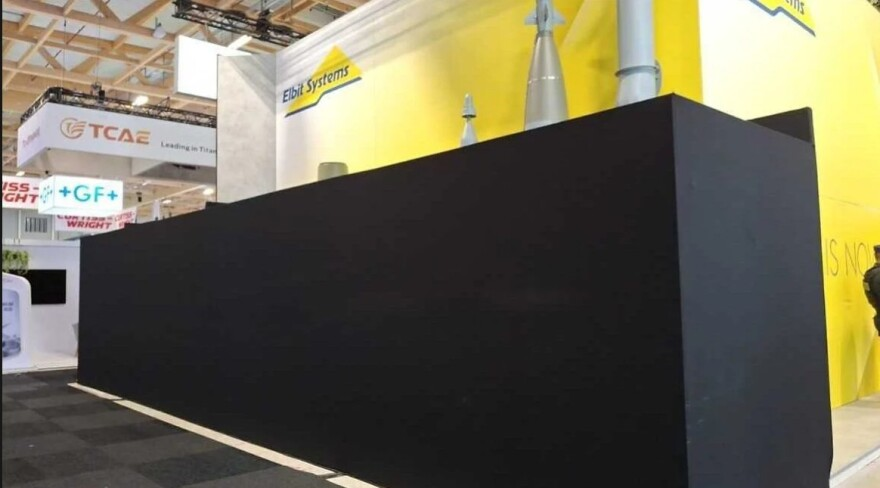
Smaller Israeli booths and the Israeli Defense Ministry’s pavilion remain open. Israel’s Defense Ministry strongly rejected the removal order, criticizing the decision as “outrageous” and “unprecedented,” accusing French authorities of sidelining competitive Israeli defense systems to protect domestic industries. Organizers confirmed some Israeli booths were closed but declined further comment.
Update: A missile launched from Yemen fell before entering Israeli airspace, according to the Israeli military, which confirmed that sirens had sounded across several regions prior to the incident. Meanwhile, the International Atomic Energy Agency (IAEA) has convened an emergency meeting in Vienna to assess the fallout from Israeli strikes on Iranian nuclear facilities—an initiative requested by Iran and backed by Russia, China, and Venezuela. In response to the escalating tensions, China has urged both Israel and Iran to take immediate steps toward de-escalation, warning that continued conflict risks destabilizing the broader region and undermining efforts toward dialogue and resolution.
Update: A building belonging to the U.S. diplomatic mission in Tel Aviv sustained minor damage during Iran’s overnight missile strikes on Israel, according to U.S. Ambassador to Israel Mike Huckabee. In a post on X, he confirmed that vibrations from nearby Iranian missile impacts caused “some light structural damage” to an embassy annex. Meanwhile, Israel’s Health Ministry reported that 287 people were hospitalized overnight due to the attacks in northern and central parts of the country. One person remains in critical condition, with 14 others moderately injured, including two children currently being treated at Schneider Pediatric Hospital in Petah Tikva.
Most of the injuries were either light or related to shock. The attacks come as Iran’s Revolutionary Guards claim to have used a new method that caused Israel’s multilayered defense systems to misfire on themselves, despite the backing of Western allies and advanced defense technology. The Israeli military has yet to comment officially but has acknowledged the limitations of its defense shield. The death toll in Israel has now reached eight, with nearly 100 injured, while Iran reports at least 224 deaths and over 1,000 wounded since hostilities erupted on Friday. In Washington, reports emerged that former U.S. President Donald Trump recently vetoed an Israeli plan to assassinate Iran’s Supreme Leader Ayatollah Ali Khamenei, although Israeli Prime Minister Benjamin Netanyahu refused to confirm or deny the claim. Trump has praised Israel’s actions while warning Tehran not to expand its retaliation to include American targets.
Update: Tensions in the Middle East have escalated dramatically as Iran launched a massive wave of missile strikes across Israel, described by foreign correspondents as the largest to date. At least eight people were killed and around 100 injured in major Israeli cities, including Tel Aviv and Haifa. In a stark warning, Israel’s Defense Minister threatened the civilians of Tehran, declaring they would “pay the price.” In response, Iran claimed it used advanced methods to make Israel’s layered defense systems target each other, while reports from Iran International indicate that Supreme Leader Ayatollah Ali Khamenei has taken shelter in an underground bunker in northern Tehran.
Meanwhile, chaotic scenes unfolded in the Iranian capital as thousands fled the city, fearing Israeli retaliation. Iran’s Health Ministry reports at least 224 deaths, 90% of them civilians, since hostilities began Friday. In Washington, two U.S. officials told Reuters that former President Donald Trump vetoed an Israeli plan to assassinate Khamenei. Trump, while praising Israel’s actions, warned Iran against expanding its retaliation to include American interests, emphasizing that sometimes “nations must settle differences through conflict.” As both sides brace for further escalation, Israel’s military admits its defenses aren’t foolproof and warns of “difficult days ahead.”
Update: Tensions in the Middle East have escalated dramatically as Iran launched a massive wave of missile strikes across Israel, described by foreign correspondents as the largest to date. At least eight people were killed and around 100 injured in major Israeli cities, including Tel Aviv and Haifa. In a stark warning, Israel’s Defense Minister threatened the civilians of Tehran, declaring they would “pay the price.” In response, Iran claimed it used advanced methods to make Israel’s layered defense systems target each other, while reports from Iran International indicate that Supreme Leader Ayatollah Ali Khamenei has taken shelter in an underground bunker in northern Tehran.
Meanwhile, chaotic scenes unfolded in the Iranian capital as thousands fled the city, fearing Israeli retaliation. Iran’s Health Ministry reports at least 224 deaths, 90% of them civilians, since hostilities began Friday. In Washington, two U.S. officials told Reuters that former President Donald Trump vetoed an Israeli plan to assassinate Khamenei. Trump, while praising Israel’s actions, warned Iran against expanding its retaliation to include American interests, emphasizing that sometimes “nations must settle differences through conflict.” As both sides brace for further escalation, Israel’s military admits its defenses aren’t foolproof and warns of “difficult days ahead.”
Update: In a dramatic escalation of hostilities, Iran launched a massive barrage of ballistic missiles across Israel overnight, in what is being described by foreign correspondents as the most extensive attack to date. At least five people were killed and over 90 injured, with strikes hitting central cities including Tel Aviv, Haifa, and Bnei Brak. The attack followed Israeli airstrikes on Iranian missile sites and the targeted killing of Iran’s top military intelligence official. Panic gripped Tehran, where thousands of residents fled the city amid fears of further Israeli retaliation. Iran’s Health Ministry reports at least 224 deaths since the start of the conflict on Friday—most of them civilians. Amid the chaos, Iran’s Supreme Leader Ayatollah Khamenei was reportedly moved to an underground bunker in northeast Tehran, along with close family members. The U.S. Embassy in Tel Aviv was temporarily closed due to nearby damage, though no injuries were reported. With diplomatic channels strained and military operations intensifying, the region teeters on the brink of a broader war.
Update: Tensions in the Middle East reached a new peak overnight as Iran launched a barrage of ballistic missiles across Israel, in what foreign correspondents are calling the most extensive attack of its kind to date. The strike comes in direct response to Israeli air raids earlier targeting missile launch sites in Iran and the reported assassination of the head of Iranian military intelligence.
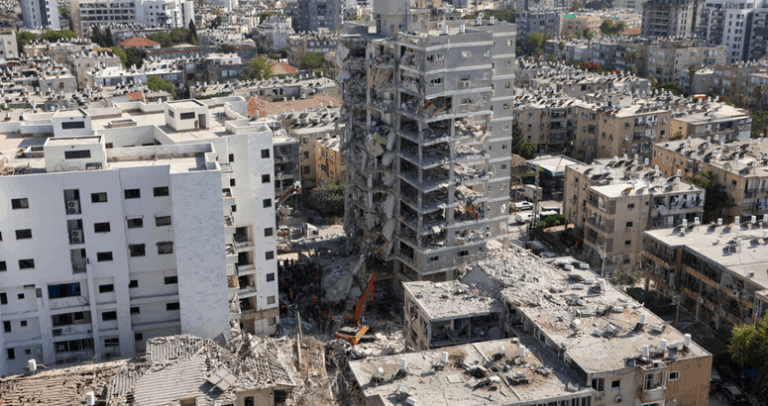
At least four people were killed and dozens injured in central Israel as explosions rocked major cities including Tel Aviv and Haifa. One of the fatalities, an 80-year-old man, was pulled from the rubble of a damaged building in Bnei Brak. Two women and a 70-year-old man were also confirmed dead in overnight attacks, bringing Israel’s death toll from recent hostilities to at least 20.
Update: The Israeli military responded by striking command centers of the elite Quds Force in Tehran. The Quds Force, a powerful wing of Iran’s Revolutionary Guard, is known for orchestrating Iran’s overseas operations and supporting militant groups such as Hezbollah. According to the Israel Defense Forces (IDF), the air raids were based on precise intelligence and targeted facilities allegedly used to coordinate terrorist operations against Israel through proxy groups across the Middle East. Ten targets were reportedly hit in the operation, footage from the IDF showed.
Meanwhile, panic gripped the Iranian capital as long lines of vehicles flooded roads leading out of Tehran, with civilians fleeing in fear of further Israeli retaliation. Iran’s health ministry reported that since the outbreak of hostilities on Friday, at least 224 Iranians have been killed by Israeli airstrikes—90 percent of them civilians, according to local sources.
In a statement that stirred controversy, former U.S. President Donald Trump expressed hope for a future agreement between the two nations but added that “sometimes countries must resolve their differences through conflict.”
The situation remains volatile, with both sides showing no signs of de-escalation. The international community watches with growing concern as the prospect of a broader regional war looms.
In the early hours of Monday, a new wave of missile attacks between Iran and Israel marked a dramatic escalation in the ongoing conflict. Israel conducted airstrikes on Iranian weapons and missile facilities, prompting Tehran to retaliate with a barrage of ballistic missiles.
The strikes resulted in the deaths of three people and left dozens injured in central Israel, with additional casualties reported in Haifa and a fire at a power station. Emergency services confirmed that 74 people were taken to hospitals, including one woman in serious condition and several others with moderate or psychological injuries. Israeli Prime Minister Benjamin Netanyahu warned Tehran that it would “pay a heavy price,” while Iran vowed a “devastating response,” declaring that soon “Israel will no longer be inhabitable.” The situation has triggered mass panic in Iran, with residents fleeing Tehran after reports of Israeli strikes and the killing of at least 14 Iranian nuclear scientists. Tensions remain at a critical level, with both sides signaling a readiness for further escalation.
Ask me anything
Explore related questions