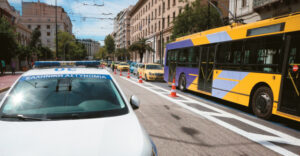
On Poseidonos and Vouliagmenis avenues, officers from the Traffic Accident Prevention and Control Teams (OEPTA) of the Attica Traffic Directorate have closed all lanes and conduct breathalyzer tests on everyone passing through. On Syngrou Avenue, officers remove plates from illegally parked cars.
At the entrance of Nea Smyrni, checks focus on those not wearing helmets or seatbelts. On Kifisias, they fine those driving while holding mobile phones, and on the National Road and Attiki Odos, radar slows down speeders. On Athens streets, buses capture on camera drivers entering bus lanes.
Just one week after the new Highway Code (KOK) was passed, we see an unprecedented shift in traffic police operation and control doctrine. It is a zero-tolerance policy toward violations like drunk driving, with operations that could be described as a “sieve,” literally stopping everyone.
In just five days (June 12-16) in Attica alone, over 16,000 checks were conducted, and more than 1,600 violations recorded. On average, this means two drivers are checked every minute across Attica, and one violator is detected every 4 minutes.
This is not a temporary campaign but a new reality that has just begun and will intensify with the deployment of thousands of cameras until the chaos on the roads is addressed and the bloodshed on Greek asphalt stops.
Task forces on the islands
The Ministry of Citizen Protection has planned to expand and intensify breathalyzer checks for all drivers (not just along the coastal road) and enhance summer checks, especially on islands where statistics show higher accident rates. For this reason, special traffic task forces will soon be sent to islands for targeted controls.
Municipal involvement
Municipalities are also joining in implementing the new Highway Code. The Ministry of Interior will soon hold a meeting with the Union of Greek Regions (ENPE) and the Central Union of Municipalities of Greece (KEDE) to brief local government representatives on the new Code’s provisions and the areas where their contribution will be required.
Surveillance by cameras
Alongside traffic police checks, government plans call for surveillance of roads via cameras. What’s innovative is that in the coming days, some drivers will receive the first fines from cameras installed on city buses.
Since June 16
Since last Monday (June 16), the pilot installation of cameras on 10 new low-emission buses of OSY S.A. has started generating data, targeting bus lane violations, road condition monitoring, and traffic load. Initially, violations detected include driving or parking in bus lanes, speeding, stopping at pedestrian crossings, etc.
The operation of cameras on buses is just a small part of the Integrated Road Safety Information System, which will be the backbone for digitally recording, managing, and enforcing traffic violations.
The system will feature automatic integration with surveillance cameras, electronic recording and notification of violations, automatic updates to the Driver Behavior Control System (SESO), license revocations, electronic fine payments, and monitoring of repeat offenders.
The tender for the system opened on June 13, with contractor selection expected by July, and initial integration with existing cameras by September. The connection to all Attica Region cameras is planned for late 2025 and early 2026.
The tender for the Surveillance Camera Development and Installation Program will soon be announced, aiming for over 2,500 cameras at key road points nationwide, to be integrated into the system. Rollout will start in early 2026 and complete by the end of the year.
Digital Map of Road Accidents
The Digital Road Accident Map is live at accidents.maps.gov.gr, letting citizens see specific data points for the first time. Previously, reports were at the municipal or regional level, which prevented targeted action. This starts with Attica and will expand nationwide.
Municipalities are encouraged to use this data to identify problematic roads and take local measures (e.g., barriers, mirrors, signage changes, clearing blind spots).
Coordination for road safety
All ministries with any responsibility for road traffic are mobilized:
- Infrastructure and Transport: upgrades to dangerous road sections, especially on Crete’s Northern Road Axis.
- Digital Governance: digital checks for uninsured vehicles, unpaid road tax, overdue MOTs; creation of a unified camera system and digital fine delivery; 2,500 cameras by 2026; new Highway Code integrated into the gov.gr AI assistant.
- Justice: tougher criminal penalties; certain driver violations now felonies, e.g., drunk driving, speeding, red-light running; leaving an injured person at the scene is now a felony.
- Education and Religion: road safety education in kindergartens and primary schools; teaching guides to be sent to educators.
- Health: upgrades to the national health system, modernization of the ambulance fleet, pilot tracking of ER patients.
The Ministry of Health is already implementing a series of reforms to strengthen the National Health System, including the modernization of the EKAV ambulance fleet and a new patient-tracking system in Emergency Departments, currently piloted in 15 public hospitals.
Kyranakis: “It’s not just a law”
The new Highway Code has come into effect, with 10 city buses in Athens now issuing fines to private vehicles.
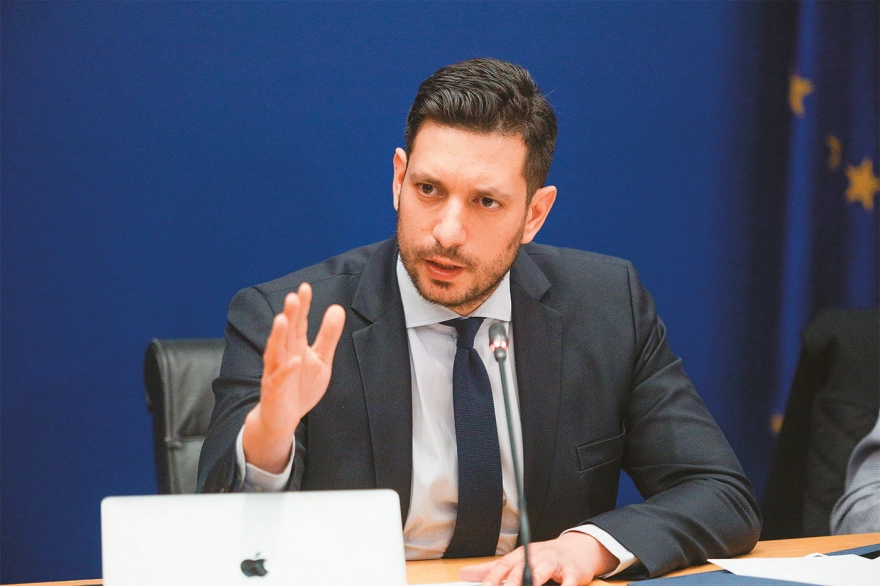
Deputy Minister of Infrastructure and Transport Konstantinos Kyranakis stated:
“The new Code is not just legislation—it’s a political decision to save lives lost on the roads. But rules alone aren’t enough; enforcement is key. The era of impunity is over. With fair penalties and technology on the state’s side, we’re sending a clear message: we won’t stand idly by—we owe it to the victims’ families.”
According to the Ministry of Citizen Protection, following the code’s enactment, 7,900 alcohol checks were carried out in high-traffic nighttime areas. Over 600 violations were recorded in one weekend alone, with 166 offenses for drunk driving between June 12–16. Prior to the law, 352,000 checks led to 8,000 fines. Checks resulting in violations rose by 70%.
On average, police conduct 3,250 checks daily, identifying around 340 offenses. Over a four-day period, authorities conducted 16,270 checks, detecting 1,688 total violations—166 for drunk driving, 1,222 for speeding, no seatbelt/helmet use, and mobile phone use, plus 300 other offenses. Authorities warn that enforcement will intensify in the coming weeks.
Ask me anything
Explore related questions