





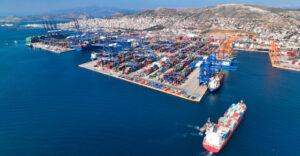
There is no end to the revelations surrounding the multi-pronged customs clearance ring, which allegedly systematically defrauded the Greek State and the European Union with falsified documents, fake recipients and fake imports from Asia.
New evidence within the case file reveals the full x-ray of the network, while the judiciary is proceeding with a global asset freeze, identifying bank accounts, real estate and investments that may be hiding the “black money” of the multi-million fraud. At the heart of the case are 13 companies set up in either Greece or Bulgaria – or both countries at the same time. Most of these companies were established shortly before they started their activities.
They had minimal capital – in some cases as little as €5 – no staff, no offices, no proven commercial activity in the past. Nevertheless, within a short period of time they started bringing containers of electric bicycles and scooters to Greece, coming from factories in China.
The trick they used was simple but ingenious: when the goods entered the country, they declared that the products were not destined for the Greek market, but for another European country – mainly Italy. On this pretext they avoided paying VAT, as European legislation allows for tax exemption when a product is not intended for consumption in the importing country but will ‘pass through’ another Member State.
Except, in this particular case, the products never left Greece. They either stayed in the country and were sold black, or they went abroad without ever being taxed. Thus, the State lost money from all links in the chain: no duties were paid, no VAT was paid, and the original value of the products was obviously undervalued. The invoices showed the electric scooters cost much less than the actual prices, so that the final loss was many times higher.
The total loss to the Greek government exceeds 92 million euros in lost VAT, while other estimates suggest at least two million in lost customs duties. And all this, without a single actual payment from these companies to their alleged Chinese suppliers being traced anywhere.
The most striking element of the dossier is that behind all these imports is a small group of individuals who appear to ‘pass’ from company to company, changing titles and creating successive new legal entities. The legal representatives are usually unknown to the general public, with some of them having a criminal record or no professional experience. However, there is one person who appears consistently in dozens of cases: an experienced professional, active in the field of customs clearance.
A professional who has been working in the field of customs clearance.
He is the one who took care of the paperwork, submitted the documents, mediated the procedures and was allegedly the person who facilitated the entry of the cargo into the country without ringing any bells with the authorities. The European agency OLAF started to unravel the tangle in 2023. By cross-checking bank details, documents and customs declarations, it found that the final recipients of the goods were often non-existent.
“Ghost” companies in Italy, Spain and elsewhere that were either closed or never had any activity. In effect, that is, no one paid anything at any stage of the movement of goods.
Thus, in less than a year, a powerful circuit was set up. It imported goods from Asia, cleared them through Greek customs with false information, paid no taxes, and the goods were channeled to Greece and Europe without a trace. It was a fraud “factory” that operated in silence – until the first suspicions were identified and an international investigation was launched.
How the profits were laundered
But beyond the import fraud, authorities are now focusing on the “second act” of the ring: how the huge sums of money gained from the illegal transactions were moved and where they ended up. According to the latest evidence in the case file, the key person involved in the customs sector is alleged to have played a decisive role not only in the implementation of the scheme, but also in turning the illegal profits into legal investments.
As reported, there is strong evidence that he was involved in repeated smuggling and cross-border VAT fraud, with total losses to the Greek State and the European Union exceeding €10 million. At the same time, prosecutors are investigating the possibility that benefits were offered to public officials to avoid audits.
Investigators’ attention is now also focused on the money trail after the fraud: bank accounts, successive transfers, cash withdrawals and asset purchases indicate, according to the authorities, a web of movements that points to money laundering. The man involved is alleged to have used the money to acquire numerous properties in various areas of Attica and the region, both in urban centres and in mountainous or coastal locations.
The inventory of his assets is impressive: apartments, houses, warehouses, plots of land and parcels of land in Athens, Nikaia, Megara and wider rural areas of the Peloponnese, some of which appear to have particular commercial value. According to the findings, many of the properties were acquired after 2021, when suspicious import activity had already begun.
Some of the money was reportedly moved through bank accounts, while other times cash withdrawals or investments were made to make it appear that the funds were of legitimate origin. The money was allegedly used to pay for operating expenses, cover other transactions or even be returned to third parties – possibly as “percentages” or reimbursements.
At the heart of the multi-pronged criminal organization is identified, according to judicial authorities, a woman of Chinese nationality known by the nickname “Kelly”. She is alleged to have both a leading and organizational role in the management of the ring, which, as revealed through a cross-border investigation in cooperation with Italian authorities, imports illegal goods from China, systematically avoiding the payment of customs duties and VAT.
As the case file shows, “Kelly” allegedly coordinates, together with a Greek accomplice and his partner, the shipment and “clearing” of thousands of containers every month, mainly through the port of Piraeus. False and understated documents are used for this purpose. Many of the shipments were presented as transit shipments, with the final – alleged – destination being Italy.
The amount of VAT estimated not to have been paid to the Italian side alone exceeds €44 million. The Chinese woman alleged to be the leader has acquired real estate in Piraeus, while her accomplice, according to the material in the case file, appears to own a number of properties in high demand areas of Glyfada. Members of the ring are also alleged to have acquired luxury cars, boats and movable assets with money derived from illegal activities.
Order for the universal freezing of properties, accounts and investments
Against the backdrop of serious indications of involvement in a multi-layered fraud scheme with international connections, the authorities are taking the next decisive step: freezing all the assets of the key suspect who allegedly managed critical customs procedures on behalf of the ring.
The Prosecutor’s Office, assessing that there is a high risk that an attempt to transfer or conceal assets in order to frustrate their future confiscation will be attempted, requested and obtained an order freezing not only specific properties, but every form of property associated with the person involved – from bank accounts and safe deposit boxes to investment products and intangible assets. According to the reasoning of the decision, this freeze is considered absolutely necessary to safeguard both the financial interests of the European Union and the Greek State, as the alleged amount of tax evasion and duties evaded exceeds €90 million.
In addition, it is believed that this action will also help at the level of the investigative process, as it may reveal new information about the money trail and the key person’s contacts with other members of the ring.
The decision covers in detail dozens of properties – including apartments, residences, warehouses and plots of land in areas of Attica and in semi-rural and rural areas of the province – while an order is given to locate and freeze any other property that has not yet been registered but is directly or indirectly linked to the suspect. At the same time, all bank accounts, including those shared with third parties, safe deposit boxes, financial products and securities held in Greek credit and financial institutions are frozen for a period of nine months.
The overall picture formed by the prosecution’s order reflects a clear intention of the judicial authorities to exhaust every means to ensure that no traces of the movement of money linked to the fraud under investigation are lost and, at the same time, to prepare the ground for any confiscation of property, should the final findings of the investigations confirm criminal activity. This is, according to legal circles, one of the most extensive freezing orders issued in recent years in the context of a preliminary investigation with European implications.
Ask me anything
Explore related questions




