





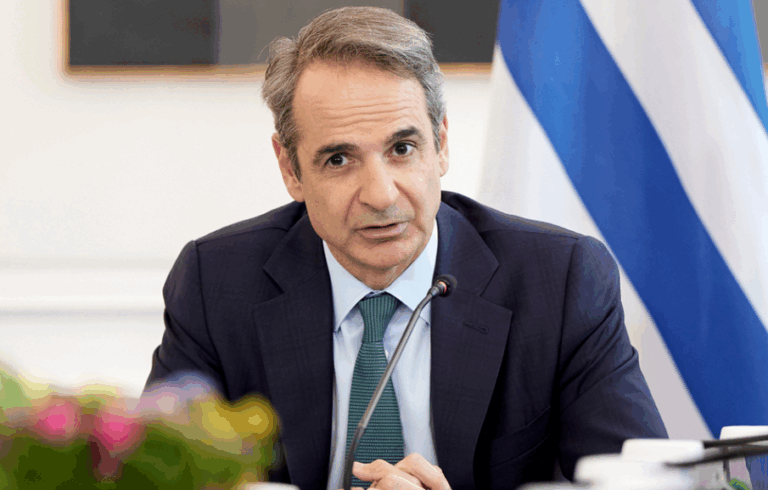
The cabinet meeting began with Kyriakos Mitsotakis’s address, during which the Prime Minister also spoke on the OPEKEPE case.
Earlier, Mr. Mitsotakis attended the swearing-in ceremony of the new Minister of Migration and Asylum, Thanos Plevris, along with the three new deputy ministers: Haris Theoharis, Giannis Andrianos, and Christos Dermetzopoulos.
Mr. Mitsotakis set the tone with his Facebook post yesterday, admitting a governmental failure in the management of the organization over the years—up until the decision was made to dissolve OPEKEPE and incorporate it into the Independent Authority for Public Revenue (AADE) starting next year.
“We failed. The conversations coming to light spark indignation and anger. The time has come to burst the abscess. Our decision to abolish OPEKEPE and transfer its functions to the AADE reflects this. We’ve already implemented many successful reforms in critical sectors. We will do the same now, with the same determination and efficiency,” said Mr. Mitsotakis, who is expected to maintain this stance today as well. According to government sources, direct self-criticism is a necessary condition, especially now that New Democracy has completed six years in power—meaning citizens expect more than just announcements of new interventions to fix systemic issues.
At the same time, Mr. Mitsotakis—contrary to yesterday’s statement by the Minister of Agricultural Development, Kostas Tsiaras, who admitted that the state budget would be burdened by the case—committed that all individuals who received subsidies they were not entitled to will be required to return them.
The “Mini Recovery Fund”
Meanwhile, the Maximos Mansion is attempting to promote a more positive agenda with new support measures. Today at the cabinet meeting, three new funds with a total scope of about €10 billion will be presented by Deputy Prime Minister Kostis Hatzidakis and Minister of Environment Stavros Papastavrou: the Social Climate Fund, the Modernization Fund, and the Islands Decarbonization Fund.
Essentially, this acts as a “new RRF” (Recovery and Resilience Facility), with a smaller budget but a similar impact. It aims to complement the original Recovery Fund by supporting vulnerable households, very small businesses, and the upgrading of critical infrastructure and sectors of the economy. A key focus is addressing the social and geographic inequalities that may be exacerbated by the expanded implementation of the “carbon tax” on emissions from fossil fuels used for heating buildings and in road transportation.
Ask me anything
Explore related questions




