





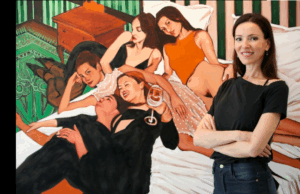
She studied at the Athens School of Fine Arts and Chelsea College of Arts in London. In 2024, she was awarded a Fulbright Scholarship and was responsible for the design of the visual identity of the 65th Thessaloniki Film Festival.
He was also responsible for the design and implementation of the project of the Thessaloniki International Film Festival and the design of the Thessaloniki Film Festival of Thessaloniki.
Stella Kapezanou’s new exhibition, Bad Girls, Big Dragons at the Athens City Gallery, combines old and new works in a dreamlike universe where mythical creatures and unruly female figures tell stories of empowerment, pleasure, and resistance.
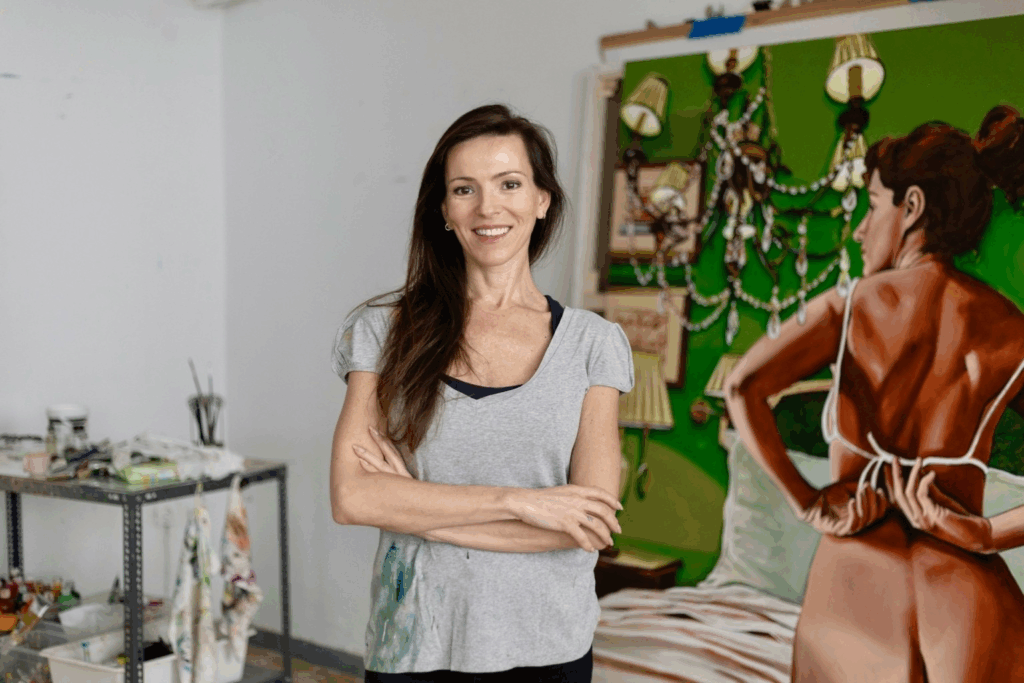
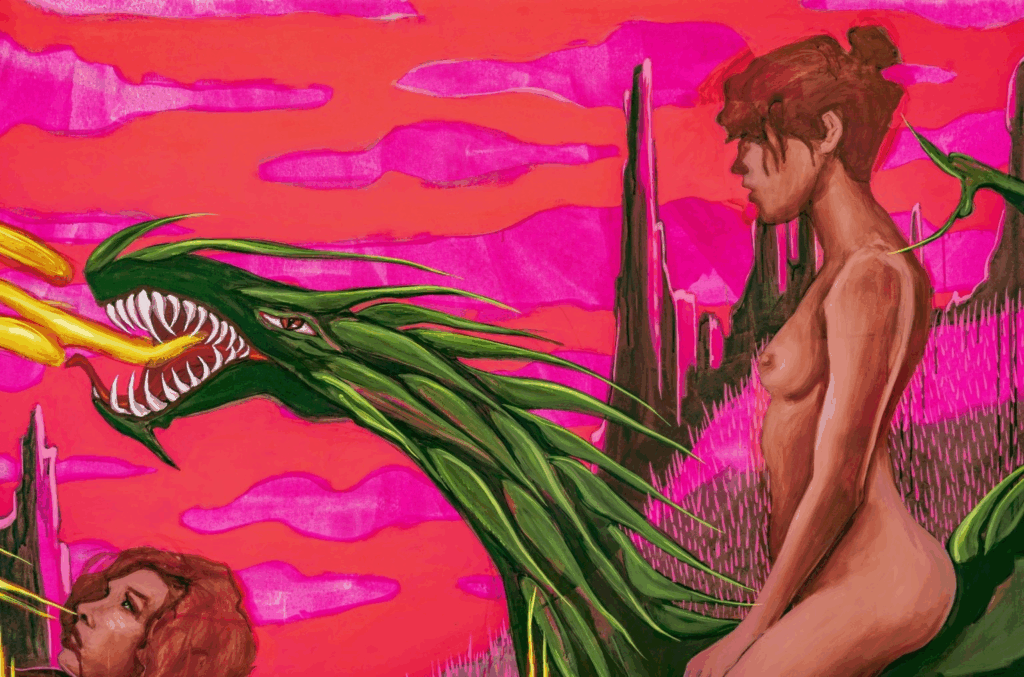
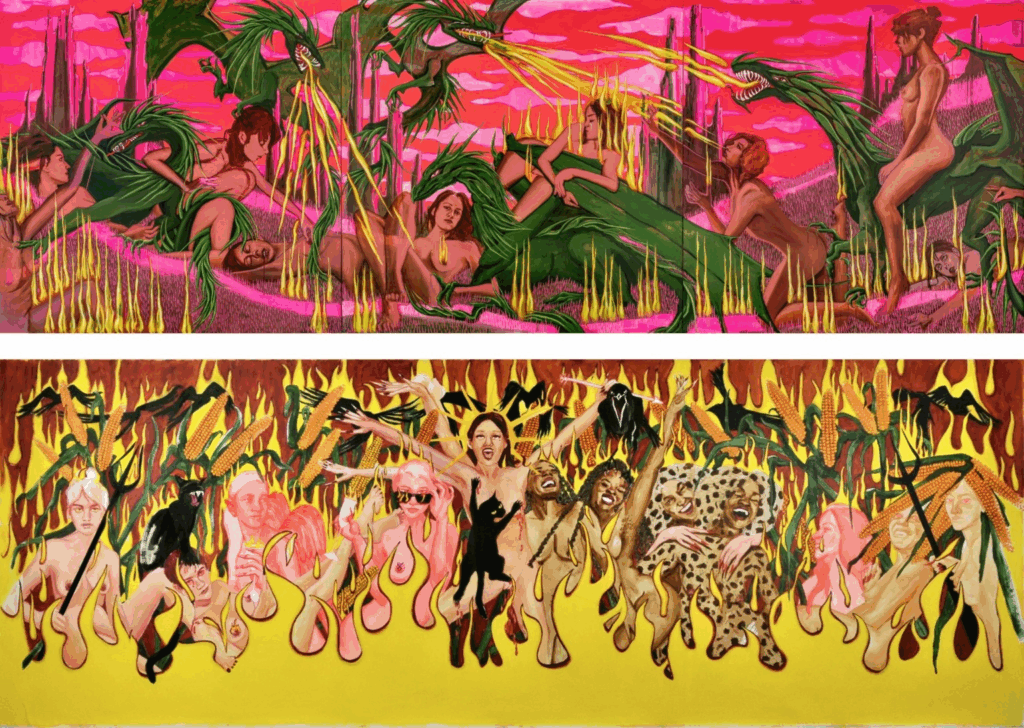
Stella Kapezanou’s latest exhibition, Bad Girls, Big Dragons, presented at the Athens Municipal Gallery, offers a spellbinding blend of new and earlier works, forming a dreamlike realm where mythical creatures and defiant female figures narrate stories of empowerment, pleasure, and resistance. At its entrance, a monumental 2 x 6 meter triptych featuring a dragon acts as both threshold and declaration — a call to reimagine the non-normative not as deviance, but as strength. Kapezanou invites us into a world that is untamed, ablaze, and fiercely feminine.
The exhibition title, Bad Girls, Big Dragons, pays homage to unruly women — “bad girls” who were forged through strength, mistakes, and desire, who never had their place given but claimed it. The dragons, both real and imagined, represent the trials that seemed insurmountable but taught survival. The exhibition becomes a celebration of feminities long demonized for their refusal to obey, honoring those who could not be tamed and the dragons — seductive, dangerous — that stood beside them.
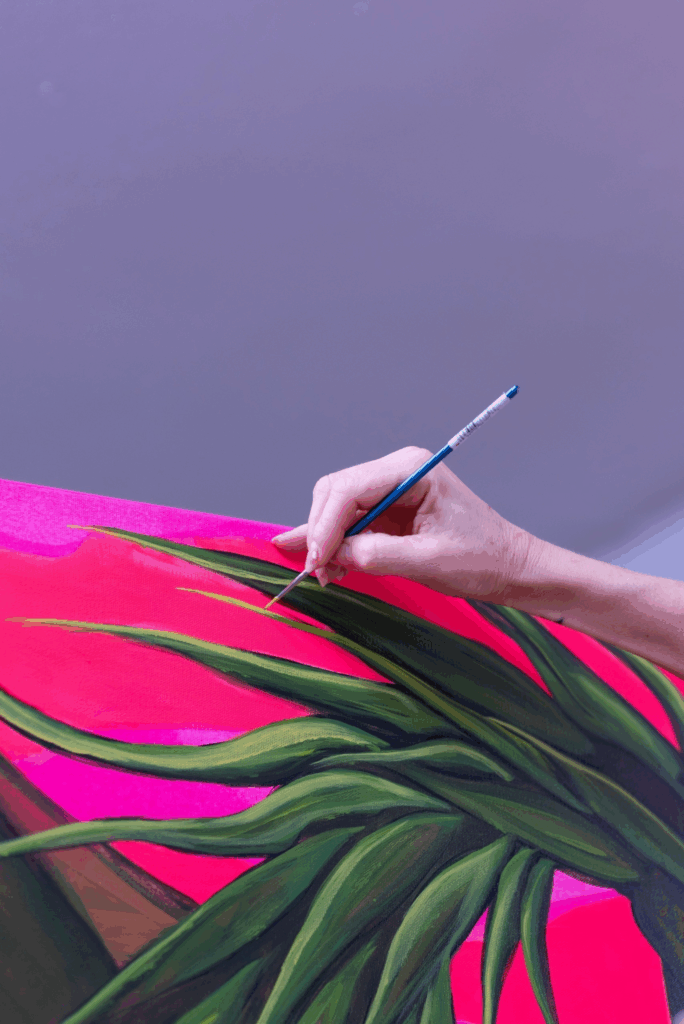
The focal triptych, created specifically for the gallery, draws inspiration from the Parthenon frieze, particularly the scene of Centaurs abducting Lapith women — a moment of violent mythological drama that often renders the women silent and nameless. Kapezanou reverses the narrative: here, women are not victims, but autonomous beings. They are not rescued — they desire. They are not described — they exist, with all the ghosts and dragons surrounding them.
Her canvases are populated with mythical archetypes: dragons, ravens, snakes, and the recurring figure of the black cat. Far from mere fantastical embellishments, these creatures function as allegories — emblems of trauma, survival, instinct, and transformation. The dragon is not a beast, but a gaze; the snake, a survivor; the raven, a witness to the unspeakable. These figures are cracks in the linearity of narrative, where the familiar and the uncanny coexist — not to lull us into fantasy, but to illuminate the shadows we already carry.
Throughout her work, Kapezanou continuously interrogates femininity, desire, and power, rooted deeply in lived experience. Growing up in a world that dictated how women should appear, act, and desire — or not desire — she speaks of reclaiming the gaze that objectified her. Her small painting Sit Still, Look Pretty (2024), created during her Fulbright residency in the U.S., encapsulates this defiance: a cowboy gently strokes a black cat while readying a lasso — tenderness laced with control. Her painting rejects this submission. Her women don’t explain themselves. They seduce, provoke, repel, and remain unrepentantly present.
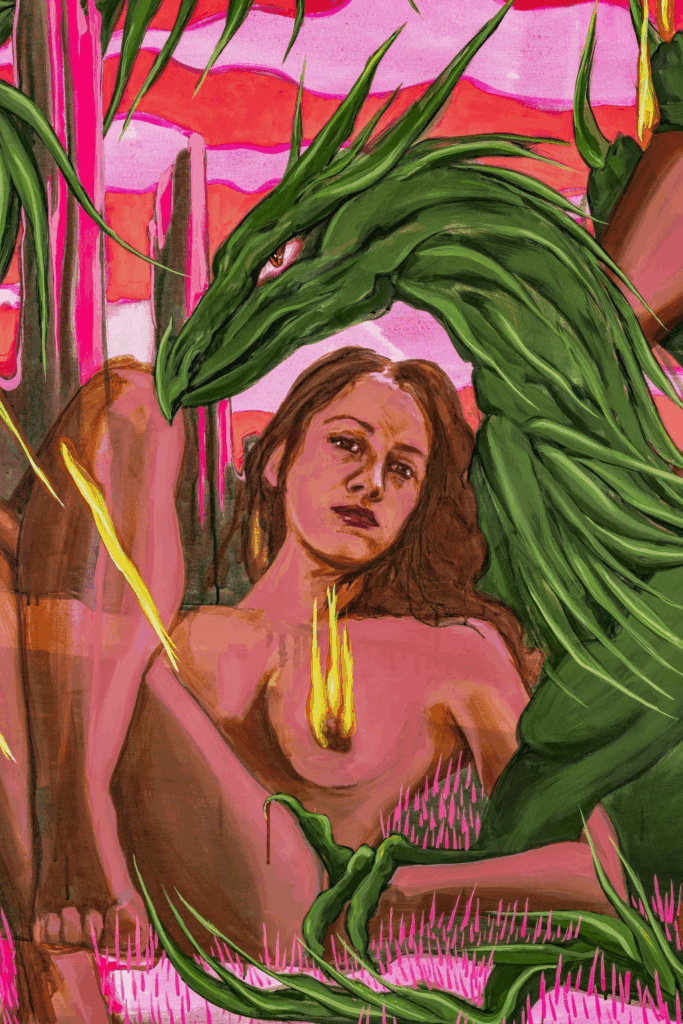
Curatorially described as evoking a “seduction that resists normalization,” Kapezanou’s aesthetic is one of confrontation rather than comfort. Seduction in her work is not allure but assertion; not beauty, but tension. Visually, this translates into unapologetic postures, unflinching gazes, and color palettes that defy flattery. Her seduction has no purpose but its own — radical in its autonomy.
With a background in fashion and media, Kapezanou brings an acute understanding of image construction and consumption to her practice. Having occupied both the gaze and the object of the gaze, she now reclaims authorship: framing the body, dictating the pose, controlling the context. The perfect image no longer interests her — she seeks the urgent, the raw, the unresolved. Her artistic identity is shaped not by where she once belonged, but by the question: What does it mean to exist in an image never meant for you — and what happens when you take it back on your own terms?
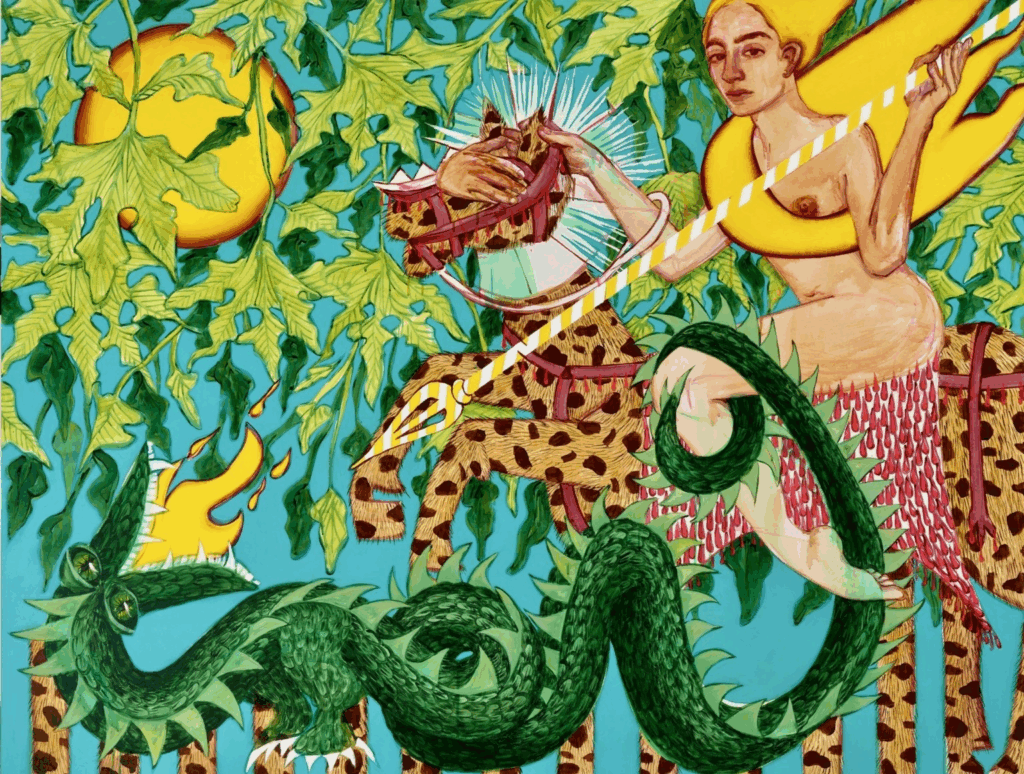
Her time at the Santa Fe Art Institute, under the thematic umbrella of “sovereignty,” proved transformative. In the silent, snowy desert, she contemplated the myth of Saint George slaying the dragon — a tale of masculine salvation. Her painting Here Be Dragons (2024), created in response, flips the narrative: the princess needs no savior. She slays her own dragons — adorned not in armor, but with a fire emoji. The residency uprooted her, she says, and replanted her anew, resulting in works like Corn Maidens (2024), which also formed the visual identity of the 2025 Thessaloniki Film Festival.
Looking ahead, Kapezanou is already deep into her next body of work, On Cherries and Satin Bows — a sugar-dusted exploration of sweetness, desire, and danger. With cherries, stilettos, snakeskin, pink fluff, and undercurrents of fire and blood, the series promises to continue her investigation into stylized seduction and the shadows that flicker beneath.
Bad Girls, Big Dragons runs at the Athens Municipal Gallery through September 7, 2025 — a dazzling, dangerous rite of passage into a world where femininity stands unbowed, and every dragon becomes an ally.
Ask me anything
Explore related questions




