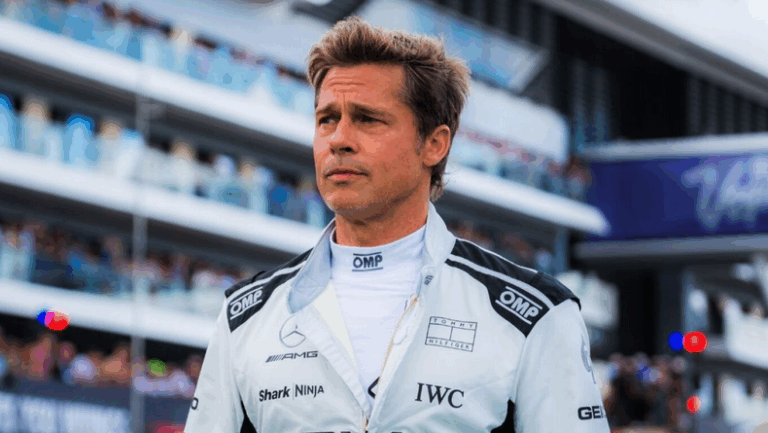
“I still don’t know how we pulled it off,” says Oscar-winner Brad Pitt, reflecting on how he, producer Jerry Bruckheimer, and director Joseph Kosinski created what he describes as “the most visceral driving experience ever captured on film.”
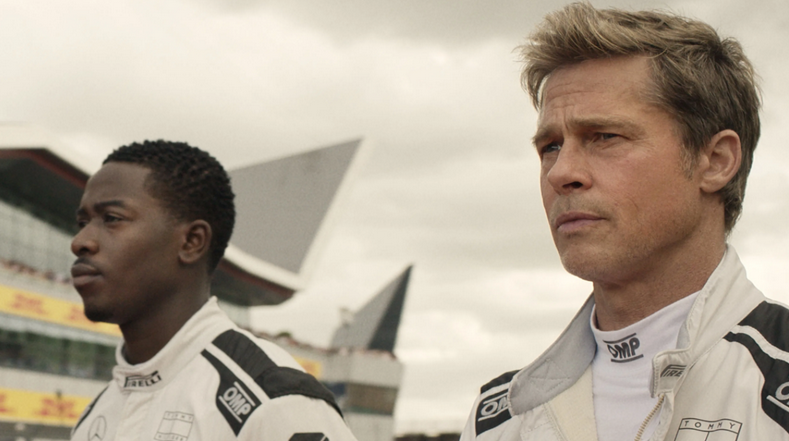
He’s referring, of course, to the highly anticipated F1: The Movie, just released in theaters by Tanweer. Essentially, they managed to put Pitt and his co-star Damson Idris into professional Formula 1 race cars and filmed them at high speeds. “The forces in those race cars, the high-speed turns—in other words, the physics of it all—feel like they’re trying to rip your head off. It’s staggering what these machines can do. And the experience elevates you in a way nothing else can. We couldn’t have captured it any better,” Pitt says enthusiastically.
He adds that the magic of the film lies in its ability to appeal equally to long-time fans of the sport and to those who’ve never even heard of F1. “It was a huge challenge to strike that balance, but I think we managed to make something enlightening and accessible, even for the uninitiated, without dumbing it down for the experts. It’s funny, aggressive, full of racing, and surprisingly emotional. I love all these characters. I think it’s an incredibly entertaining film on many levels.”
Watch the F1 Trailer
It All Started with Top Gun
Before Pitt and Idris learned to drive at nearly 200 miles per hour and before the production fully committed to following multiple global races across one of the most expansive sports in the world, F1: The Movie began when Top Gun: Maverick director Joseph Kosinski pitched the idea to legendary producer Jerry Bruckheimer.
“What Joe wanted was to do something authentic. He wanted to make the best racing movie ever made,” says Bruckheimer. “To do that, though, you have to put your actors in the cars. It’s thrilling and dangerous, but it’s the only way to shoot it. And he pulled it off. When you see the movie, you’ll feel the explosiveness of their driving. You’re in the car with them. It’s such a visceral experience, just like Brad calls it, watching these actors handle these powerful machines.”
But having the idea for a Formula 1 movie is one thing—actually pulling it off is another. Bruckheimer says that Joseph Kosinski is one of the few filmmakers who could make it happen. Kosinski himself admits that the idea was sparked by two thoughts. The first was his love for Drive to Survive, the hit F1 docuseries.
“What really struck me in the first season was how it didn’t focus on the biggest names or top teams, but on the underdogs. That alone is a powerful story—about a team struggling just to make it into the top ten, or even just to survive.”
The second idea was even more intriguing: it revolved around a driver who’s a category of his own. “By chance, I had Lewis Hamilton’s email,” Kosinski reveals. “Hamilton, a seven-time world champion and a legendary figure on and off the track, had once considered a role in Top Gun: Maverick. So I emailed him, saying, ‘I want to make the most authentic movie ever made about this world. Would you be interested in helping me do that?’ And he said yes. That’s when the real race began.”
With Hamilton on board and working with acclaimed screenwriter Ehren Kruger, the creators went to their top choice for the role of Sonny Hayes: Brad Pitt.
Kosinski says the superstar brought everything they needed in a lead actor to portray a Grand Prix legend who was forced to retire after a serious injury in 1995 and ended up making a living as a cab driver in New York and a gambler. “Brad is an icon, and I wanted Hayes to be one, too,” says Kosinski. “Brad fully inhabits a role and evolves it. He had a very strong sense of what he wanted Sonny Hayes to be. He’s also a fantastic producer, involved in every aspect of the script and production. And most importantly, he’s a naturally gifted driver who genuinely loves the sport. If Brad didn’t have all those qualities, I don’t know if we could’ve done it.”
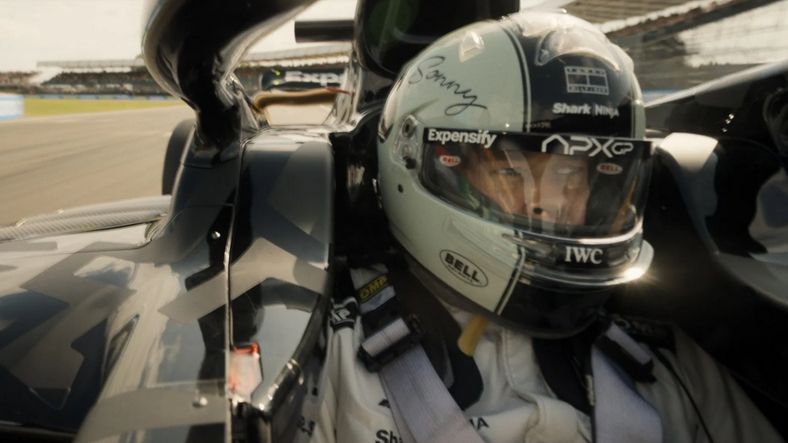
Brad Pitt himself says of the character Sonny Hayes: “He’s a pure racer, and I’m glad to be playing him. He stepped away from F1 at a young age, and even though he thought he had made peace with that demon, a new opportunity arises years later—brought to him by an old friend. Everyone loves a second chance.”
Pitt also admits that he and Kosinski shaped the character through conversations with real F1 drivers. “We had the luxury of interviewing drivers while developing this story of a team stuck at the bottom,” he says. “You can be one of the best drivers in the world, at the pinnacle of racing, and still be dead last in the standings—which is even more disheartening.”
Through those discussions, Pitt built a character humbled by his past but full of confidence in his skills and experience. A man determined to challenge the system and squeeze out every advantage he can, pouring every drop of racing prowess he’s gained over the years into a team at the very bottom.
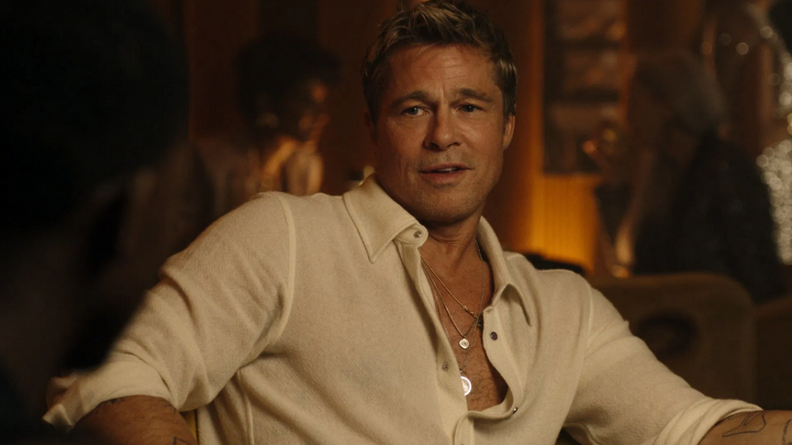
Despite all the excitement the film promises, Bruckheimer—drawing on his unparalleled career spanning over half a century—knows the real reason people go to the movies. “It’s always about the characters,” he says. “The character Pitt plays is truly compelling: he’s a guy living in a van, addicted to gambling, with multiple divorces. He’s aging, had his shot, and lost it. But he’s still brilliant at what he does—which is why the character played by Javier Bardem wants him on the team. He’s coming back for his second chance.”
In other words, as Kosinski emphasizes, “It’s a redemption story. And it’s one you don’t have to be a racing fan to appreciate. In his younger days, Hayes had a lot of promise—but also a lot of pressure on his shoulders. Things didn’t go well, his life went off track for a while, but he found a way to come back. It’s a powerful, relatable story, whether you follow racing or not.”
Ask me anything
Explore related questions