





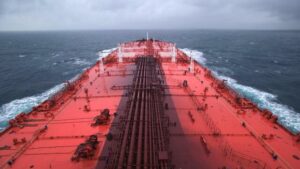
A floating warehouse under the control of Houthi has been converted into a tanker purchased by the United Nations for $55 million.
The tanker, which had been purchased with donation money to prevent an environmental disaster in Yemen, is now being used by the Houthis as a floating storage facility for Russian oil products.
According to an exclusive report by Lloyd’s List, the tanker VLCC Yemen (formerly Nautica) has received at least three shipments of Russian-origin oil via ship-to-ship (STS) transfers since 2023, when it was purchased.
It is noted that the tanker was purchased as part of the operation to remove oil from the crumbling FSO Safer which was threatening major ecological disaster in the Red Sea.
Under Houthi control in Yemen
However, both Yemen and FSO Safer are now under the full control of the Houthi – the armed group that has launched over 100 attacks on ships since November 2023.
Despite repeated objections from the United Nations Development Program (UNDP), which maintains an advisory role and pays $450,000 a month for the ship’s maintenance, the transfers have continued. In fact, one of the shipments was unloaded at the port of Ras Issa, which is under Houthi control.
The Yemen tanker was purchased in 2023 by Euronav from the UNDP to transport 1.1 million barrels of oil from the abandoned FSO Safer, with funding coming from states, companies and even civilians.
The project raised a total of over $129 million.
However, as experts have complained, the operation was not properly planned. “Essentially, the UN asked the world to fund a gift to the Houthis, who are now using the ship to circumvent sanctions and collaborate with Russia and Iran,” said naval security expert Ian Ralby.
The ship is owned by SEPOC, Yemen’s state-owned oil company, which is formally under the recognized government but in practice controlled by the Houthis.
Russian cargo on a UN ship
Lloyd’s List tracked the ship’s movements and revealed that the first STS (ship-to-ship transfer) of Russian cargo took place on the ship Valente, which was loaded with some 410,000 barrels of Russian gasoil.
Other STS followed with the ships Savitri, Star MM and possibly the Shria.
The first discharge from Yemen was recorded on June 10, 2025, when part of the cargo was transferred to the Sea Star 1, which then unloaded at the port of Rush Issa.
The Houthis appear to be utilising the Yemen ship as their main floating tanker, as the onshore storage facilities have been destroyed by US and Israeli airstrikes in 2024 and 2025.
Middle East conflict and security expert Nadwa Al-Dausari said: “The Houthis are holding both ships – the Safer and the Yemen – hostage. The UN has no authority to stop them.”
They are holding the OSEF (United Nations hostages) and the U.N. has no authority to stop them.
The UN stresses that the intervention on the FSO Safer has averted a huge ecological disaster. However, the Houthis have managed to turn this humanitarian operation into an economic and political advantage while continuing to operate unchecked, circumventing international sanctions and benefiting from infrastructure funded by the international community.
As Ralby highlights: “UN good intentions, combined with poor planning, ultimately led to more damage, more conflict and a new funding tool for the Houthis in their war against the West.”
Ask me anything
Explore related questions




