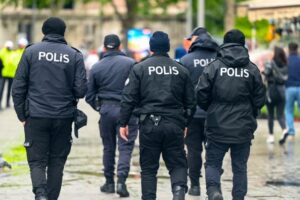
The 9th anniversary of the failed coup in Turkey in July 2016 coincided today in the early hours of the morning with simultaneous sweep operations against suspected members of the deceased imam’s Gülen, in 60 provinces of Turkey. 371 detention warrants were issued Twenty-six people, including the managers of two major supermarket chains, were arrested. Administrators were appointed to the two companies on charges of providing funding to the Gülen organisation. The two chains operate about 800 branches in Istanbul.
The background to the coup attempt
But what happened on the night of July 15, 2016 that threatened the unity of the Turkish state and the power of President Erdogan?
According to the Turkish government’s official narrative, members of the US-based Imam Fethullah Gulen’s organization, who had infiltrated the ranks of the Turkish armed forces, attempted to overthrow the government in a military coup. The attempt failed because of the resistance of the people, who had taken to the streets, mainly in Istanbul, and the army forces. That night 63 policemen, 6 soldiers and 184 civilians were killed. 286 policemen, 47 soldiers and 2,407 civilians were wounded, while 34 coup plotters were killed and 49 wounded.
According to official figures, 390,354 suspects have been arrested since July 2016 and 3,000 life sentences have been handed down in 289 cases. Of the 1,891 convicted for “participation in an armed terrorist organization,” 26 were generals and admirals and 776 were officers.
Many unanswered questions
But despite the passage of nine years and ongoing operations by authorities against suspects on July 15, 2016, many unanswered questions remain about what actually happened that night and how Gülen’s followers infiltrated the Turkish armed forces. There are many dark spots concerning the troops themselves and the role played by their leadership.
The key question is why, while the attempt was learned hours before, the attempt was not properly briefed. The then Chief of General Staff, General Houloussi Akar, was held hostage by the coup plotters at Akinci Air Base in Ankara, asked to sign a declaration of martial law, but refused, even when physically coerced. Pro-government forces rescued him in the early hours of 16 July 2016. But both Hulusi Akar and the then MİT deputy minister, Hakan Fidan, refused to answer questions before the committee set up by the Turkish Grand National Assembly to investigate the coup attempt.
However, Hakan Fidan, as foreign minister now, said in a message today: “Our state, which revealed FETO’s insidious agenda, is pursuing this terrorist organization wherever it has taken refuge and is resolutely taking every step in every corner of the world to bring the perpetrators to justice.” “Any attempt to harm Turkey is doomed to failure in the future, just as it has been in the past,” he said.
Ask me anything
Explore related questions