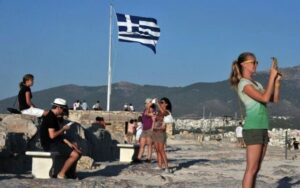
Investors continue to view tourism as a key pillar of Greece’s economic growth and a sector attracting significant investment. However, in recent years, its image within the investment community appears to be gradually weakening.
According to estimates, Greek tourism is expected to maintain an upward trend in 2025, with arrivals projected to rise by 3%–5%, supported by an increase in air arrivals and scheduled airline seats for the May–October period.
However, the market faces high uncertainty due to geopolitical and economic developments, with tensions between Israel and Iran already beginning to affect the tourism sector’s performance. The overall impact will depend on the duration and possible escalation of hostilities.
The data come from the major EY Greece survey on the country’s attractiveness as an investment destination (EY Attractiveness Survey Greece 2025), which finds that international investor sentiment toward Greece remains broadly positive—even in a year when foreign direct investment (FDI) in Europe declined by 5% in 2024, reaching its lowest level since 2017.
The survey was conducted by FT Longitude on behalf of EY, based on a sample of 250 investors, between March 10 and March 28, 2025.
Investor Views on Tourism
Specifically, in terms of how the investment community views tourism (sample of 250 respondents—167 based in Greece, 83 not based in Greece), investors continue to regard tourism as a fundamental pillar of Greece’s future economic development.
- 26% of respondents believe tourism will be the primary sector driving Greece’s growth in the coming years.
- 38% include it among the top two key sectors.
“However, as the country’s evolving production model becomes more apparent to the investment community, tourism’s dominance in the responses is gradually weakening,” the EY Greece report notes.
Back in the first year of the survey, in 2019:
- 69% of businesses surveyed included tourism among the top two key sectors.
- 57% selected it as their top choice, while the second sector, logistics, received only 8% of mentions.
This year, the digital economy sector (IT, AI, technology, telecoms, media), which ranks second for the first time, captured:
- 17% of top-choice mentions
- 22% in total responses.
Following are two more sectors that have gained notable momentum in recent years:
- Health, wellness, and pharmaceuticals (20% total)
- Professional and business services (18% total)
The logistics and distribution sector (16% total) fell to fifth place from second over the past two years—a drop of 10 percentage points since 2023—despite opportunities stemming from disruptions in global supply chains.
Mentions of the energy and utilities sector also declined (14% total, down from 20% in 2023), now on par with clean tech and renewable energy, despite the rapid growth of renewables in recent years.
By contrast, financial services (banking, insurance, asset management) saw an increase in mentions—from 4% in 2023, to 10% last year, and 12% this year—reflecting the sector’s recovery and recent activity in mergers and acquisitions.
The Need for a New Model
While participants still see tourism as Greece’s central growth pillar, they believe a new tourism development model is necessary—one that integrates technology, sustainability, and visitor experience. This model would transform Greece’s traditional tourism product into a more innovative and competitive framework, promoting regional development, attracting higher-quality tourism, and extending the tourism season.
Additionally, a major challenge for Greek tourism remains the shortage of skilled labor, especially in sectors of national importance such as tourism, manufacturing, construction, and agriculture.
Specific Recommendations:
- Investment in alternative forms of tourism, such as ecotourism, agritourism, medical, religious, and cultural tourism.
- Strengthening sustainability in the tourism sector: a new environmental rating/ranking system for hotels and rental/accommodation units based on sustainable practices.
- Leveraging social media for promoting Greek tourism—an approach already producing strong results among market participants.
- Measures to address overtourism, including:
- Incentives and infrastructure to extend the tourist season
- Promotion of alternative destinations
- Boosting tourism in mountainous regions and support for winter tourism.
Ask me anything
Explore related questions