
With the help and active participation of Sakellaropoulos, identified was the ingredient DMB (3,3-dimethyl-1-butanol) in extra virgin olive oil, which acts against the harmful compounds TMA and TMAO, through the gut microbiome.
A significant discovery that may prove to be of exceptional importance for the prevention of diseases in the modern world, was recently made by Greek and Turkish scientists studying the components of extra virgin olive oil.
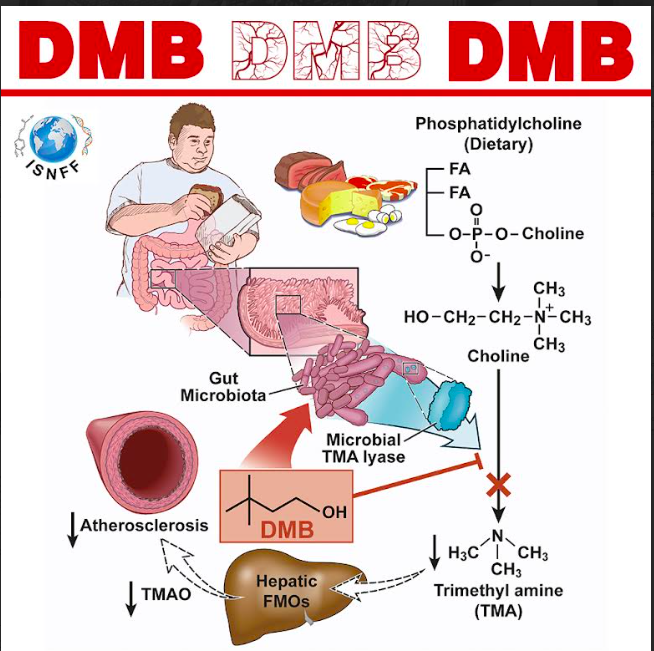
After years of collaboration, they managed to implement in the laboratory an innovative method that determines the presence of the component “3,3 dimethyl-1-butanol”(hereinafter referred to as DMB) in extra virgin olive oil, a component beneficial for human health that acts against harmful compounds (TMA and TMAO) that are associated with the cause of atherosclerosis and the appearance of inflammation in various cardiovascular diseases.
Until now, there have been few and mostly fragmentary reports in the international literature on the importance of DMB, and no method has been published that can determine, safely and in the laboratory, DMB concentrations in extra virgin olive oil. As participants in the study note, this is “the first time that the presence of the DMB component in olive oil has been confirmed in the laboratory based on a reliable scientific method and its values have been determined with impressive results.”
On June 30, 2025, the international scientific team consisting of 4 Greeks, 3 Turks and a Canadian (namely: Rifat Gimatdin, Hasan Yavuz Gören, Nikos Sakellaropoulos, Konstantinos Kiritsakis, Charalampos Anousakis, Fereidoon Shahidi, Ahmet Ceyhan Gören), led by Emeritus Professor of the International Hellenic University (I.H.U.) Apostolos Kiritsakis, published in the international scientific and prestigious Journal of Food Bioactives (JFB) of the International Society for Nutraceuticals and Functional Foods (ISNFF) the impressive results of the pioneering study under the general title “Quantification of 3,3-dimethyl-1- butanol(DMB) in olive oil: a rapid and novel method”. This research also provided a definitive answer to two basic questions of the global scientific community of olive oil: “whether DMB actually exists in olive oil” and “whether this component gives it even greater value”.

Searching for DMB in olive oils and laboratories around the world, Professor A. Kyritsakis, who was the first to speak in Greece in the 1980s about the value of polyphenols, having determined their change in the olive fruit as it ripens, noted that “since 2014 the detection and determination of the important component DMB that may be present in extra virgin olive oil has been their major concern.”
The professor had previously only found a report on the presence of DMB in olive oil and its therapeutic properties in a study from the University of Syracuse, but beyond that, no other evidence. At every opportunity over the years, in his interactions with other scientists, at global conferences and scientific meetings, he raised the question of the existence of DMB in olive oil and the method of its detection, having also developed relevant correspondence with researchers in Germany, Italy, Taiwan and other countries, but the results both at home and abroad were discouraging. “We searched the bibliography and more than 200 papers on olive oil, but the method of determining the DMB component appears nowhere,” Mr. Kyritsakis characteristically stated.
Finally, in the last two years, on his own initiative and in collaboration with the well-known and multi-awarded for his international distinctions in olive oil and olives, George Sakellaropoulos from Sparta and the also well-known Professor Ahmet Ceyhan Gören of Gebze University in Istanbul, professor Kyritsakis mentions that ”we succeeded for the first time internationally in detecting and identifying this important compound in samples of organic olive oil from Greece and Turkey.”
The pivotal role of Sakellaropoulos Organic Farms from Sparta “Sakellaropoulos Organic Farms”, as the production manager-Chemical Engineer M.Sc. Nikos Sakellaropoulos stated, ”having at their core the scientifically proven health-protective value of the organic olive oils and table olives they produce, they actively and consistently participate in clinical studies and research conducted at renowned university institutions, such as Harvard, Yale, Temple and Auburn in the USA, as well as the Department of Pharmacy of the National and Kapodistrian University of Athens.
So, here too, they were helping from the beginning and actively monitored the entire effort. Having already done a lot of experimentation, testing and analysis, they produced multi-varietal extra virgin olive oils with significant concentrations of DMB, which they offered for use in this specific research, while at the same time scientifically supporting the background and direction of this synergy.”
Thus, most of the samples analyzed in a laboratory in Istanbul and in which the highest presence of DMB was determined, come from Sakellaropoulos Organic Farms in Sparta. Specifically, and according to what the study published in the Journal of Food Bioactives reports, the DMB values in the nine (9) olive oil samples from Greece and Turkey are: N1 “Plus Health Blue” multivarietal: 9.7 mg/L, N2 “Plus Health DMB” multivarietal: 11.4 mg/L, N3 “Fyllikon” First Harvest Organic: 8.3 mg/L, N4 “Plus Health Green Multivarietal”: 7.8 mg/L, N5 “Agourelaio” Early Harvest Organic: 6.8 mg/L, N6 (unknown) 4.8 μg/L, N7 “Armonia” Monovarietal Organic: 4.8 μg/L, N8 (Edremit-type olive oil from Kırkağaç, Manisa) 8.8 μg/L and N9 (product purchased in Turkey) 1.5 μg/L. N2 was even given the designation Plus Health DMB Multivarietal evoo because it showed the highest values in the analyses.
“We are the first to determine the values of the DMB component,” commented Mr. Kyritsakis, “and now we are taking the next step: to examine the effectiveness of this component, which is unique and is not a phenol….The component that we have identified and determined seems to be able to inhibit the action of the enzymes that create the TMA and TMAO compounds, which are associated with many diseases of our time, such as atherosclerosis and cardiovascular diseases,” added the emeritus professor. “One of the next steps in our study,” Mr. Nikos Sakellaropoulos said, “is to see the role of conditions, methods, varieties, harvest and olive oil production dates and how much they affect DMB concentration values. It is a component whose usefulness we had not extensively investigated. However, from the existing literature we know that it is beneficial for health, but probably we face the same situation that we faced with phenols, where at first we did not know much about their beneficial characteristics, and we learned about them later through studies, research and analysis. However, the method we applied for the analyses of our organic samples is reliable, safe, fast and can now be used by any laboratory…” The development of the new gas chromatography/mass spectrometry (HS GC/MS) method, Mr. Kyritsakis stated, “Will soon find broad applications in research on olive oil as a biofunctional food and in the prevention of diseases such as cardiovascular, Alzheimer’s and others.”
Mr. Apostolos Kyritsakis and Nikos Sakellaropoulos emphasized that contacts and processes have already begun and that extensive studies (and clinical trials) will follow very soon to investigate the role of the DMB component in olive oil and its mechanism of action, as well as how it can act protectively in various diseases. It is a remarkable fact that all the efforts and developments to date are being closely monitored by Dr. Tassos Kyriakides, researcher in Epidemiology, Biostatistics and Clinical Studies, Assistant Professor at the School of Public Health of Yale University in the USA, where he will actively participate and play a leading role in future relevant research and clinical studies that will follow.
Ahmet Ceyhan Gören: A new path has been opened for research When asked to comment on the significance of the recent study on the determination of DMB in Greek and Turkish olive oil samples, participating Professor Ahmet Ceyhan Gören concluded that “a new path has been opened for olive oil research”. He also emphasized that “We continue our work to develop new methods in addition to the
existing method”. He added that “This study not only provides us with new information but also demonstrates that the richness of the olivetree is greater than we previously believed. It has also served as proof of the possibilities for even greater cooperation between Turkish and Greek researchers. Both groups have now launched new calls for projects and aim to further strengthen their cooperation. We express our sincere gratitude to our cultural heritage, the olive tree, for providing this opportunity”.
Olive Oil Antioxidants, cardiovascular disease, cancer “Studies have been conducted both in vitro and in vivo in humans and animals to better understand the metabolism and bioactivity of olive oil phenolic compounds. Antioxidants from olive oil are not only absorbed by the body but can also be binded to the mucosa of the digestive tract, contributing to its health benefits. Consumption of extra virgin olive oil (EVOO) through the diet is associated with the prevention of cardiovascular disease (CVD) and certain types of cancer. This is associated with the balanced fatty acid composition, with main
component the oleic acid, as well as the presence of secondary compounds such as polar phenols, tocopherols and sterols. These characteristics make olive oil a premium functional food….”
What studies have shown about TMA and TMAO To highlight the overall importance of olive oil and the key role of DMB in the provocation of TMA and its derivative TMAO, the members of the Greek Turkish scientific team note in the same study “the crucial dietary role that this has played in Mediterranean culture for thousands of years and in recent years worldwide”. Numerous studies have highlighted olive oil as an important source of antioxidants based on its phenolic profile, which includes phenolic acids and alcohols, polyphenols, lignans, secoiridoids, oleacein and oleocanthal. The biological effects of olive oil components include protection against cardiovascular diseases, anti- inflammatory action and neuro- and endothelial protection.
Regarding TMA, the scientists highlight that it is “produced by the gut microbiota, derived from foods such as red meat, and then absorbed into the bloodstream and oxidized to TMAO in the liver. TMAO appears to facilitate the development of atherosclerosis in animal models that feed a diet rich in animal protein. TMAO, a gut microbiota-dependent metabolite, is associated with inflammatory diseases such as atherosclerosis, the immunological processes of which mirror those of
rheumatoid arthritis (RA).
DMB a guide to new strategies for disease prevention “…The gut microbiota-derived metabolite TMAO is associated with poor prognosis in pulmonary arterial hypertension,” the study notes, citing the case of researchers at the Cleveland Clinic, Ohio, USA, and the University of California, Los Angeles, USA, “who conducted experiments on mice, reported that dietary supplementation with DMB safely inhibited atherosclerosis (the known plaque buildup in the arteries) and significantly reduced TMAO production. A preclinical study by Wang (2015) showed that DMB reduced TMAO levels, inhibiting atherosclerosis in animal models. Thus, DMB is an orally active inhibitor of trimethylamine (TMA) and TMAO. Gut microbiota-derived metabolites, including TMA, TMAO, and short-chain fatty acids, have been linked to hypertension.” “…Treatment with DMB during pregnancy and lactation has been shown to alleviate hypertension, providing insight into the therapeutic potential of DMB as a microbiota-based metabolite for the prevention of developmental hypertension.
The researchers have suggested that if future human studies show similar results, DMB could lead to new strategies for preventing or even treating heart disease and stroke, two of the leading causes of death worldwide. TMAO has also been linked to aging, cognitive decline, and other brain disorders. A 2021 study provided for the first time direct evidence that repeated exposure to DMB, significantly impacts social dominance in adult mice without any effect on anxiety, depression-like behaviors, or memory formation.”
Ask me anything
Explore related questions