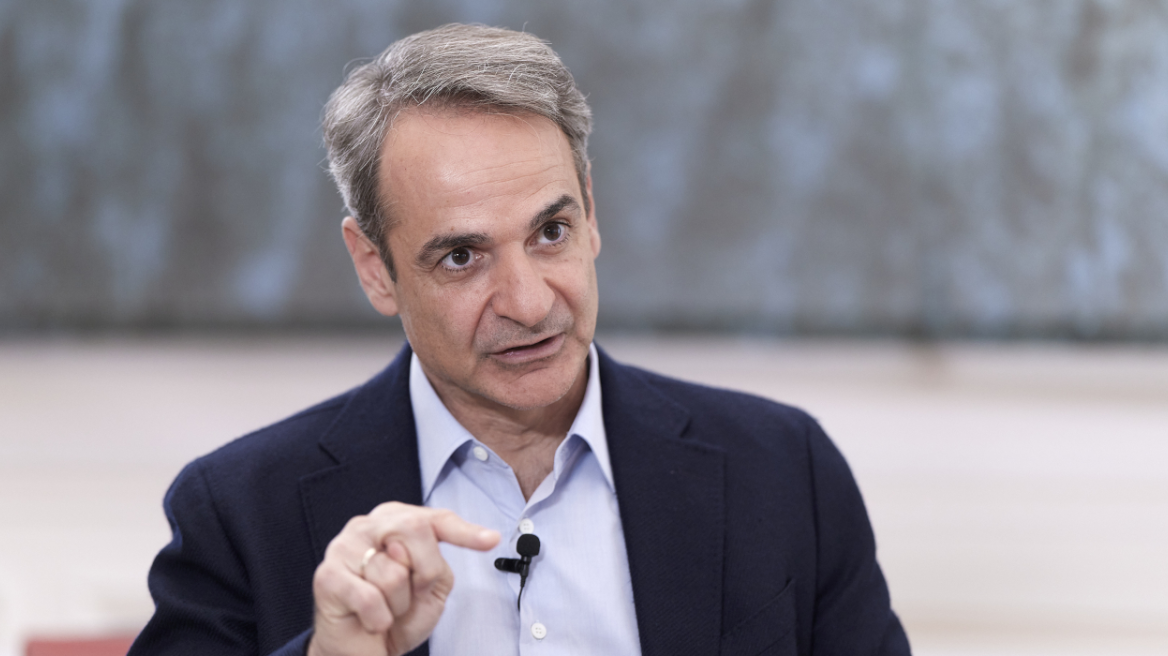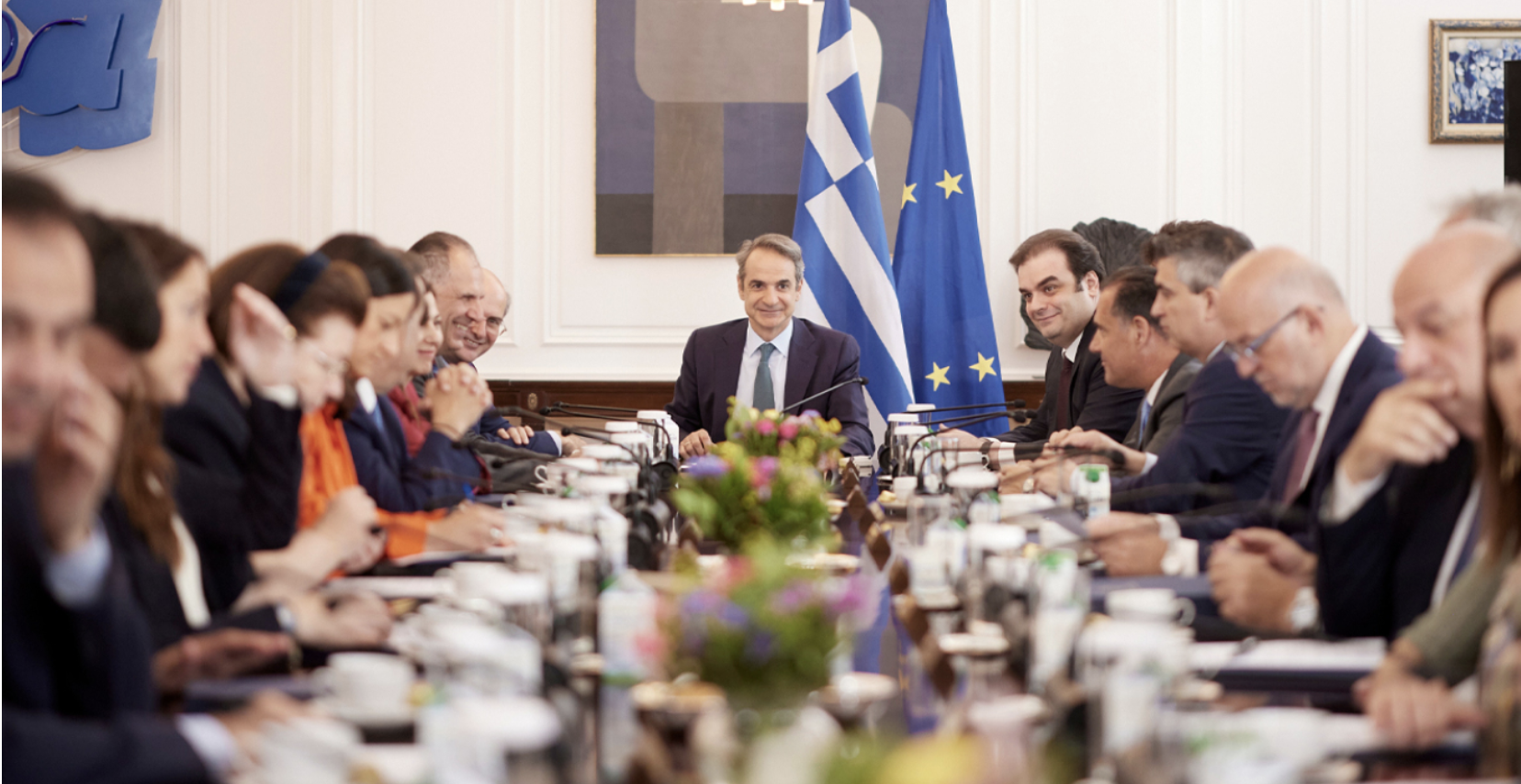
While many are off on vacation seeking rest and relief, Prime Minister Kyriakos Mitsotakis and his cabinet are finalizing their last obligations before taking a short break — and bracing for what promises to be a challenging autumn and winter, both politically and electorally. After completing two years of its second term, the government now has less time remaining until the next elections than it has already served.
The recent parliamentary confrontation over the vote on the proposals by PASOK and SYRIZA to establish a preliminary investigation committee made one thing clear: New Democracy is alone, with no prospects of forming alliances. The rhetoric exchanged and the overall political climate signal that a solo path forward is not just a choice but a necessity for the ruling party.
Finding common ground with other party leaders, as confirmed by their recent forced gathering at the Presidential Mansion, seems nearly impossible. With that in mind, New Democracy will need to intensify its political efforts starting in September, using the Thessaloniki International Fair as a pivotal moment to reconnect with key social groups and repair the damage caused by the OPEKEPE subsidy scandal.
The Vote in Parliament
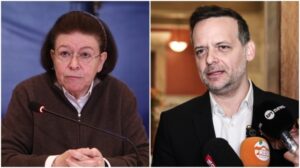
Before Parliament adjourned, the government faced difficult choices regarding the proposed referral of Voris and Avgenakis to a preliminary investigation committee. Although a parliamentary inquiry had already been approved, concerns about potential defections — especially in the case of Lefteris Avgenakis — loomed large. The government initially considered walking out of the vote.
However, it realized that if it did, the opposition would likely withdraw its motion only to reintroduce it in the fall. To avoid that, a new tactic was chosen: taking advantage of a procedural loophole in the Rules of Parliament, which stipulates that at least 75 MPs must be present for a vote to proceed.
Sources say key figures from the Prime Minister’s office, including Giorgos Mylonakis and Michalis Bekiris, House Speaker Nikitas Kaklamanis, and ND parliamentary figures like Apostolos Vesyropoulos and Notis Mitarachi, were involved in the decision. By Thursday night, many ND MPs still didn’t know what the party line would be. In the end, the government chose an unconventional model: using mailed-in votes to ensure the required quorum of 75 was met and to bypass the expected opposition walkout.
While government officials acknowledge the optics weren’t ideal, they categorically deny any constitutional violations. They swiftly responded to former minister and constitutional expert Evangelos Venizelos, who argued that 151 MPs were needed for the vote to be valid. The government countered that this number only applies to establishing a preliminary committee — not holding a vote on it.
A Tough September and the TIF Stage
The OPEKEPE scandal will return to the spotlight at the end of August, as the opposition plans to resubmit its proposal for a preliminary committee. Polls show that the public wants accountability and recovery of misused funds granted as subsidies to individuals who were not entitled to them.
The government, therefore, must soon show tangible results. Already, Agriculture Minister Kostas Tsiaras revealed that 30,000 farmers submitted 49,000 falsified certificates in applications for “eco-scheme” subsidies. It is now being investigated whether the fraud lies with the applicants or with the declaration support centers.
Further results are expected from joint investigations by the Financial Police and the Independent Authority for Public Revenue (AADE) into large-scale tax IDs that received significant funds in past years. Still, public sentiment — especially in rural areas — is reportedly negative for New Democracy, with MPs facing pressure from farmers and livestock breeders, key voter blocs in 2019 and even more so in 2023.
Mitsotakis Turns to TIF and Regional Development
Mitsotakis is now focusing on the Thessaloniki International Fair (TIF) and projects with high economic and social return for local communities. One such example is the Patras–Pyrgos National Road, a long-delayed infrastructure project that recently launched. Similarly, work on the Northern Road Axis of Crete (BOAK) has begun.
The upcoming TIF will likely be the most critical political platform for the government in recent years. Along with the economic team, the Prime Minister is designing a benefits package expected to exceed €1.5 billion. One likely measure — hinted at during a recent radio interview on Max FM Patras — is raising the tax-free threshold for families with children, which would offer meaningful relief for household budgets. This is expected to be paired with further cuts in direct tax rates.
Budget “Overperformance”
After August 15, the Prime Minister’s Office will host more frequent meetings with the economic team, equipped with updated revenue figures. The third quarter is traditionally the strongest for the national budget due to high tourism income. This year is no exception, with tourism outperforming expectations, and anti-tax evasion measures also yielding better-than-expected results.
Mitsotakis is weighing these developments to ensure that the benefits package is front-loaded and focused on boosting middle-class incomes. These meetings will also finalize the income threshold adjustments for new tax brackets. It remains to be seen whether the package will include measures targeting the primary sector, which has recently come under fire.
In short, the government is preparing for a critical political reboot in September, aiming to regain control of the narrative ahead of a politically charged autumn, with the Thessaloniki International Fair serving as the stage for that reset.
Ask me anything
Explore related questions