





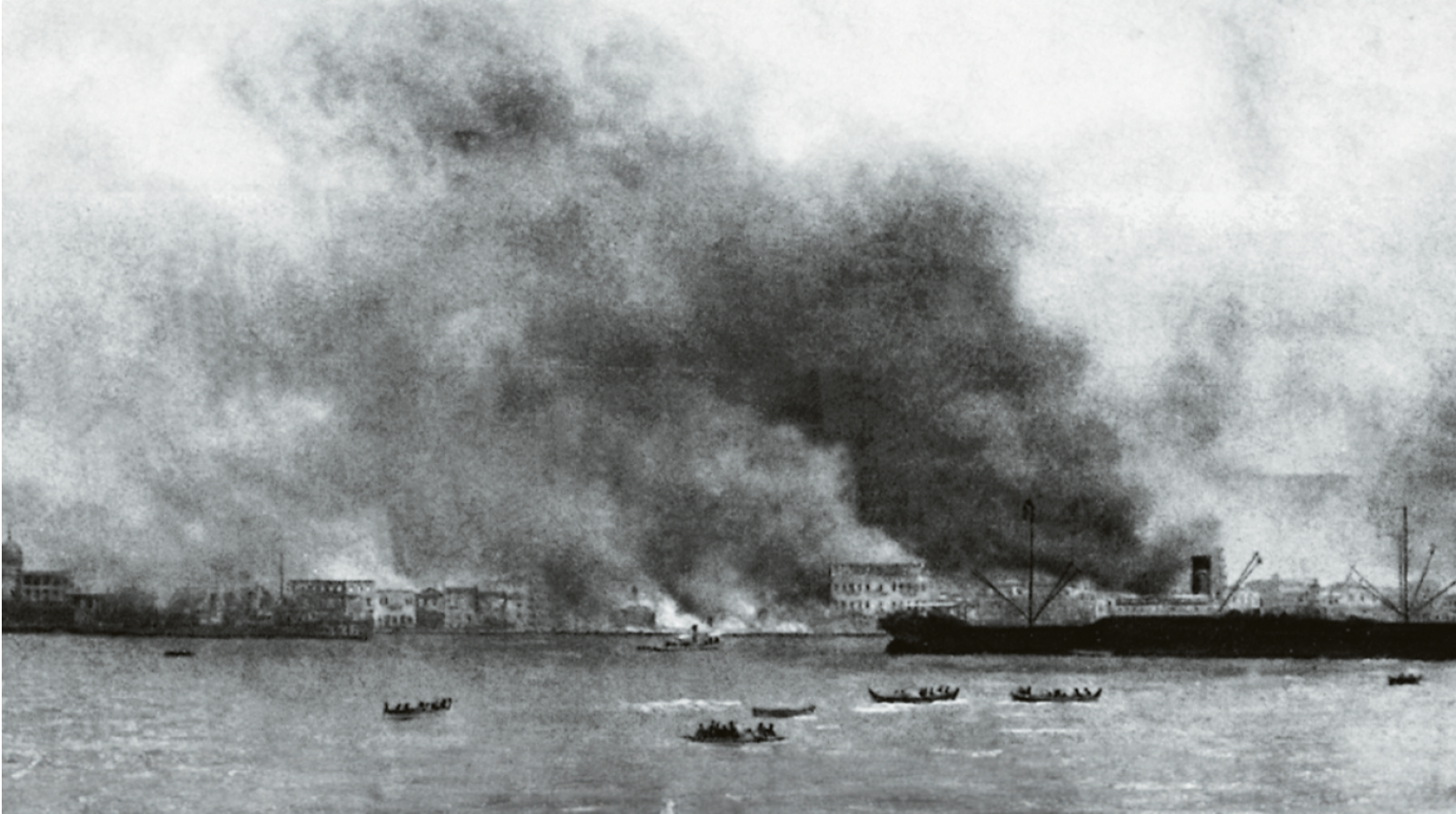
That August of 1922 was unlike any other for the Greeks of Asia Minor, who felt and saw destruction approaching at full speed, powerless to stop it. In Smyrna, the carefree summers of the past had given way to fear of what would follow the defeat of the Greek Army by the advancing Turks.
Everyone was distraught about what was to come, and debates on whether they should stay or leave only heightened the tension. At the end of the month, a young politician, Georgios Papandreou, sent by the Liberals, met in Smyrna with Greece’s High Commissioner, Aristeidis Stergiadis, who informed him of the defeat and the impending catastrophe.
When Papandreou asked why he didn’t tell the people to flee, according to the historian of the interwar years G. Dafnis in his book Greece Between Two Wars, Stergiadis replied:
“Better they stay here and let Kemal slaughter them, because if they go to Athens, they will overturn everything.”
Stergiadis, however, made sure to save himself first, just one day before the Turks entered one of the most beautiful cities of the East, where the Greek population dominated.
The calendar read August 26, 1922, when at 7:30 p.m., Aristeidis Stergiadis left the building of the High Commission to save himself. The people who had gathered grew enraged when they saw the man chosen by Venizelos, who had been so “neutral” during his administration that he provoked the Greek population of Smyrna.
He had to be protected first by the police director Nikiforakis and gendarmes in order to return to the High Commission building and notify the British, who sent a steamboat with marines to collect him. He departed amid the curses of the crowd, fleeing from Smyrna, from which the last Greek troops had also withdrawn. When night fell, the talk and tension subsided for a few hours, but apart from children, few could sleep, anxious about the next day.
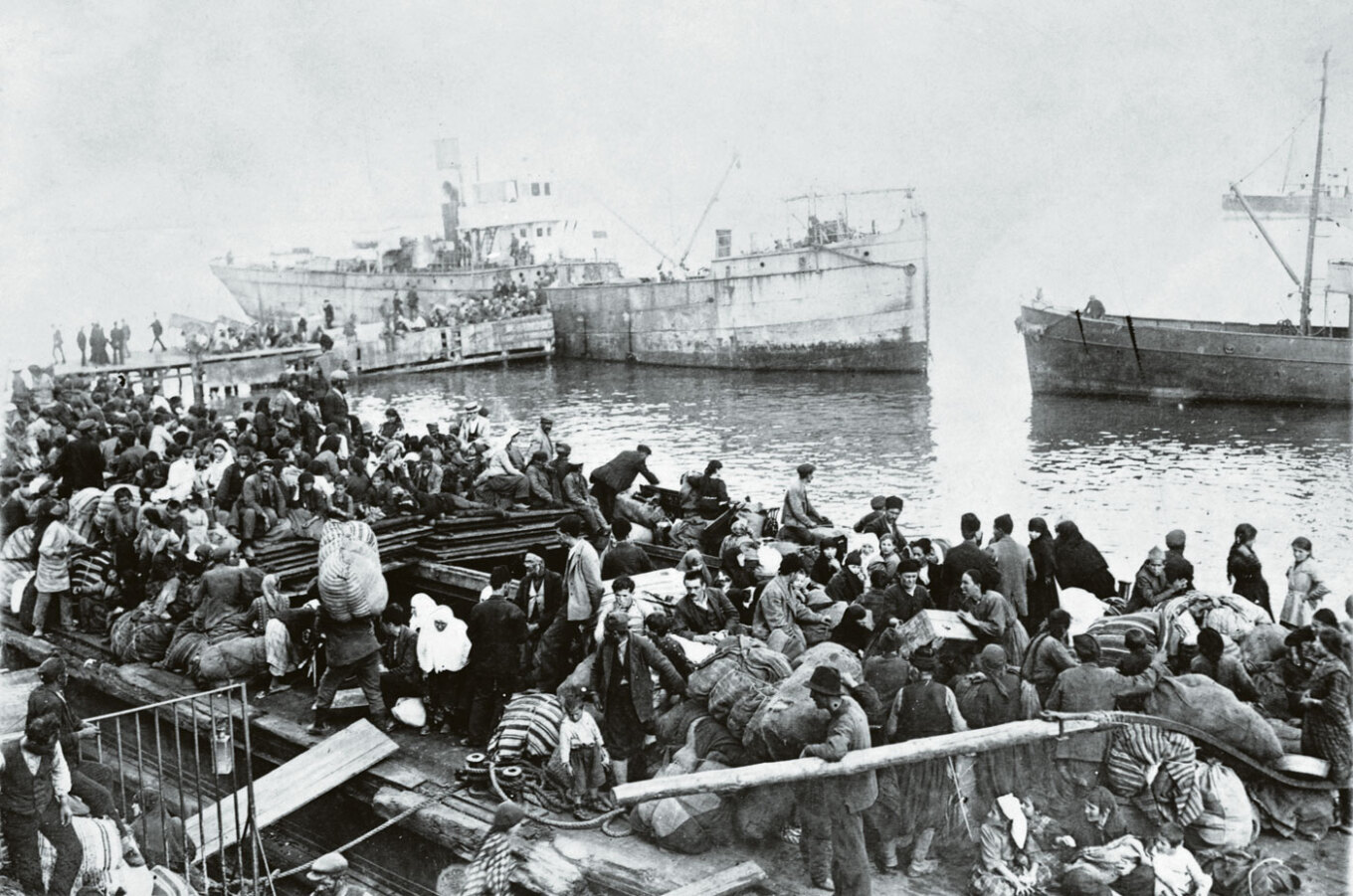
The Martyrdom of Chrysostomos
The Turkish troops entered Smyrna on August 27 under the command of Nureddin Pasha, whose first priority was to arrest Metropolitan Chrysostomos of Smyrna. He had clashed openly with Stergiadis many times because of his fiery sermons to his flock, declaring that liberation was near.
The Turks were seething with hatred against the Metropolitan, and many urged him to leave Smyrna. He categorically refused, insisting that his place was with his faithful. That afternoon, he was cursed and denounced by Nureddin Pasha, who immediately handed him over to a frenzied mob eager to unleash its fury.
The Metropolitan’s martyrdom lasted for hours, with the Turks behaving worse than beasts, exhausting all their savagery on the clergyman. Hands seized him, dozens beat him with clubs, iron bars, and stones, pulling at his beard and kicking him across his body as they dragged him toward the Turkish quarter. The Metropolitan prayed and blessed the raging mob of his torturers—an act that enraged them even more, and they began stabbing him indiscriminately.
They gouged out his eyes, cut off his nose, and when he continued to bless them, they hacked off his hands and feet, smashing his head against the blood-soaked ground. One of his torturers pulled him by the hair and slowly slit his throat while he was still alive, so he would suffer longer.
When they were done with him, they threw what was left of the Metropolitan of Smyrna onto a cart with other Greek corpses and buried him in a mass grave. His last words before his martyrdom began were:
“It does not matter if I am sacrificed for my flock. Do as you wish…”
Ask me anything
Explore related questions




