





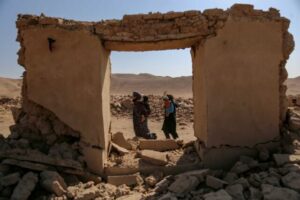
A collision zone between the Indian and Eurasian tectonic plates—responsible for some of the deadliest earthquakes worldwide—is once again in focus after a new wave of seismic activity in Afghanistan. According to Dr. Brian Baptie, seismologist at the British Geological Survey, this region releases about 15% of the planet’s total seismic energy, making it one of the most dangerous earthquake hotspots on Earth.
“The driving force behind the latest earthquake is the same one that formed the Himalayas, the Karakoram, and the Tibetan Plateau—the collision of the Indian and Eurasian tectonic plates,” Dr. Baptie told the Science Media Centre.
Why Afghanistan Is at High Seismic Risk
The Indian plate is pushing northward into Eurasia at a speed of around 45 millimeters per year, creating one of the most seismically active zones on the planet. This constant movement explains why Afghanistan lies in an area of extremely high seismic hazard, with frequent earthquakes spreading across complex fault systems.
The country has a long history of devastating earthquakes, especially in the Hindu Kush region in northeastern Afghanistan. Since 1900, at least 12 earthquakes with magnitudes above 7.0 have been recorded there. Other regions of eastern and southeastern Afghanistan are also highly vulnerable.
Dr. Baptie warns that the scale of seismic activity, combined with the risk of multiple natural disasters and poor construction standards, often leads to catastrophic loss of life.
Deadly Earthquakes in Afghanistan and the Region
Some of the most tragic recent events include:
- 2022 earthquake (magnitude 6.0) in southeastern Afghanistan, which killed over 1,000 people and triggered landslides.
- 2023 Herat earthquakes (series of four quakes, magnitude 6.3) that left nearly 1,500 dead.
- 2005 Kashmir earthquake (magnitude 7.6) near Muzaffarabad, which claimed at least 76,000 lives across the region.
Conclusion
With its position at the heart of the Indian–Eurasian tectonic collision zone, Afghanistan remains one of the world’s most earthquake-prone countries. Experts warn that without improved infrastructure and disaster preparedness, future quakes could prove just as deadly as those of the past.
Ask me anything
Explore related questions




