





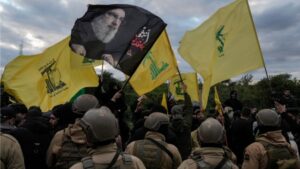
Speaker of the liberal parliament Nabi Berri, an ally of Hezbollah, called for a dialogue on the issue of disarming the Shiite movement, decided by the government under US pressure.
The Lebanese government on August 5 instructed the army to draw up a plan to disarm by the end of 2025 the movement, which is supported and funded by Iran, a sworn enemy of Israel.
Weakened after the 2024 war with Israel, in which part of its arsenal was destroyed and its leadership decimated, Hezbollah, the only Lebanese faction to keep its weapons after the civil war (1975-1990), rejects the idea.
Shiite ministers, including representatives of Hezbollah and Mr Berri’s Amal (“Hope”) movement, pulled out of the most recent cabinet meeting in protest at the planned disarmament.
“We reaffirm that we are open to discussing the fate of these weapons (…) in the context of a calm and consensual dialogue,” Mr Berry said during a speech dedicated to the anniversary of the 1978 disappearance of Amal’s founder, Musa Sadr.
He criticised the measures announced by the government, which are based on a US proposal.
“What is proposed in the US document (…) looks rather like an alternative to the ceasefire agreement” between the Israeli army and Hezbollah, he added.
Despite the ceasefire agreement, the Israeli military continues its raids in Lebanon, stressing that it is and will continue to target Hezbollah.
Yesterday, it reported hitting a Hezbollah facility in southern Lebanon. According to the official Lebanese news agency ANI, Israeli aircraft fired “a large number of missiles”. AFP footage shows columns of thick smoke rising from the area.
ANI later yesterday reported one dead in another strike in the south that targeted a motorcycle.
The ceasefire agreement that came into effect in November 2024 stipulated that the Shiite movement’s military infrastructure would be dismantled in southern Lebanon and its fighters would be withdrawn north of the Litani River, some 30 kilometers from the border; only UN cyanocracies and Lebanese army units would deploy and remain in the area.
On the other hand, the Israeli armed forces were predicted to withdraw; nevertheless, they continue to hold five points of “strategic” importance in Lebanese territory.
Ask me anything
Explore related questions




