Greece’s tourism sector continues to break records, with fresh data pointing to a strong performance that extends well into the autumn months. October is expected to outperform last year, reinforcing the trend of lengthening the tourist season beyond the traditional summer peak. Meanwhile, official figures from the Bank of Greece confirm record-high revenues, driven by stronger visitor spending.
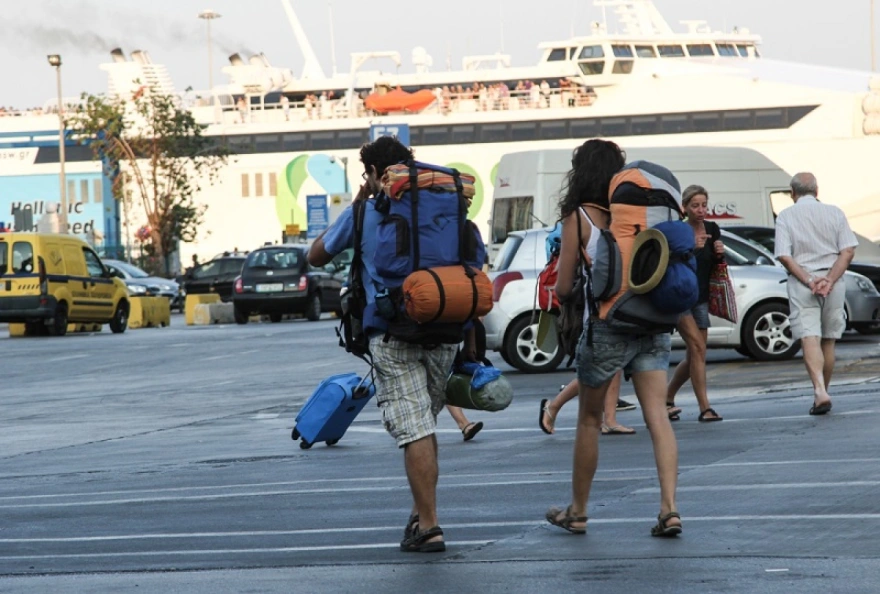
July’s historic high – traditionally one of the most critical months alongside August – surpassed expectations, despite earlier concerns from local tourism bodies about underperformance. Travel receipts reached €4.5 billion in July 2025, up from the previous record of €3.93 billion in July 2024. This surge pushed total receipts for January–July 2025 to €12.2 billion, compared with €10.83 billion in the same period last year. Notably, while arrivals increased by just 2.6% in the first seven months, revenues jumped 12.5%, highlighting a rise in average visitor spending.
October capacity climbs above 3 million seats
For the first time, airlines have scheduled more than 3.06 million seats on inbound flights for October 2025 – a 5.3% year-on-year increase, exceeding growth rates seen during peak summer months. This marks a major milestone in efforts to cement October as part of the extended season, with demand spilling beyond the summer.
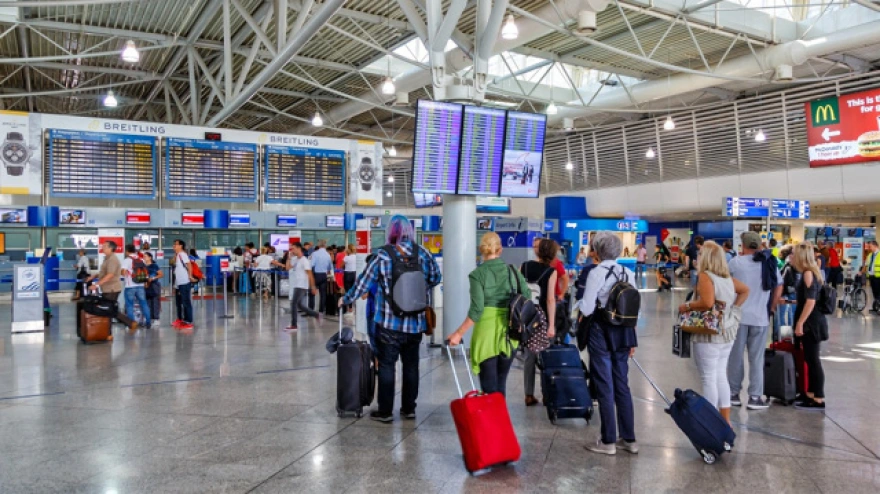
Athens accounts for over a third of these seats (1.15 million, +4.7%), while Heraklion shows a strong +9.4% rise to 482,000 seats. Rhodes follows with 333,000 (slightly down -1.3%), while Thessaloniki (+12.8%, 267,000 seats) and Corfu (+13.9%, 238,000 seats) complete the top five destinations.
Key markets remain Germany (676,000 seats, +3.4%) and the UK (584,000, slightly down), while Israel stands out with a sharp +31% surge to 191,000 seats, surpassing even Italy and France.

Air traffic overall also reflects this momentum: January–August 2025 saw passenger volumes rise 4.6% year-on-year, reaching 57.5 million across Greece’s 39 commercial airports.
Industry leaders, including Aegean Airlines and Athens International Airport, confirm that demand remains resilient despite geopolitical uncertainties and pressure on European household budgets. Aegean has already increased winter capacity by 9% compared with last year, further supporting the trend of season extension.
Ask me anything
Explore related questions