





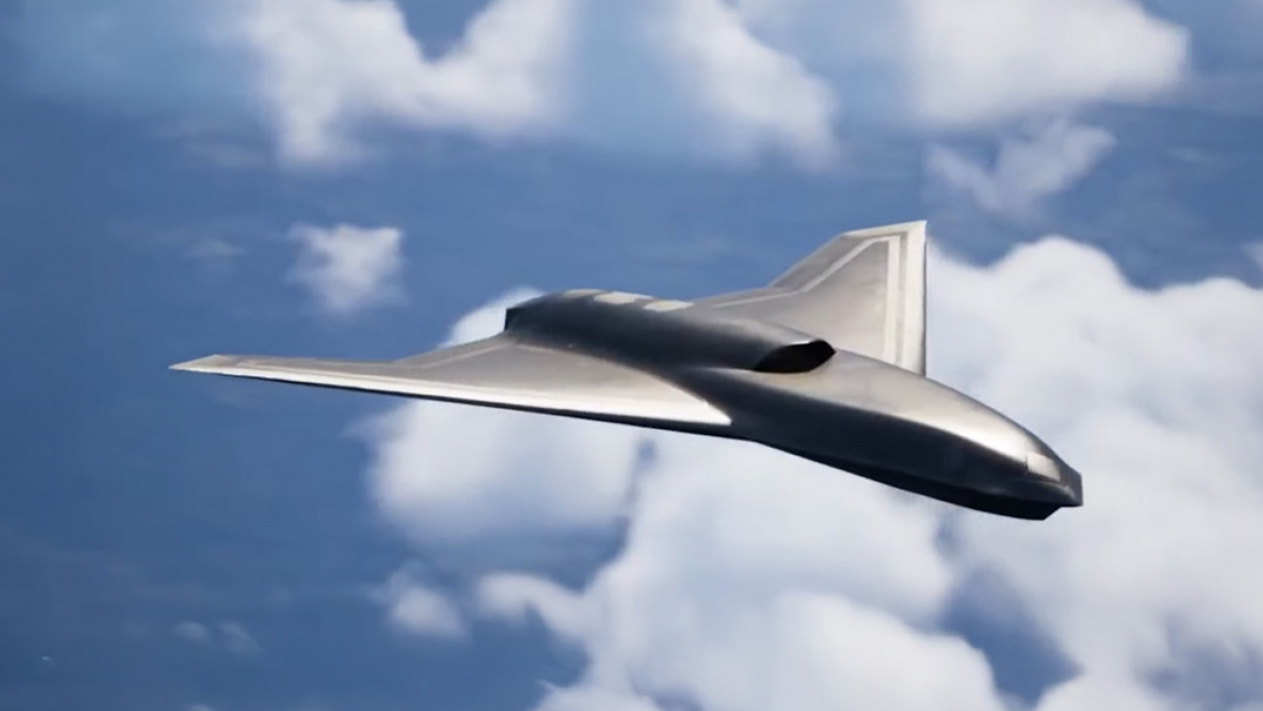
On Sunday (Sept. 21), Lockheed Martin, one of the largest defense and aerospace companies, unveiled the Vectis, a state-of-the-art drone with multiple capabilities that promises to change the game for the U.S. Air Force in 2028, when it is scheduled for release.
Specifically, it is an autonomous drone that does not require a pilot, cannot be detected by enemy radar, and accompanies F-35s on pursuit and reconnaissance missions.
According to The Sun, the “Vectis” is the latest creation of Skunk Works, Lockheed Martin’s secret unit that previously produced legendary aircraft such as the U-2, SR-71 Blackbird, and F-117 Nighthawk. It is being described as a “game-changer” for the U.S. Air Force and its allies.
Vectis’s Features
Larger than a missile-drone but smaller than an F-16 fighter, Vectis falls into the Group 5 UAV category, meaning it weighs over 600 kilograms and can operate at high altitudes.
Early images show a tailless aircraft with a delta-wing shape and top-mounted air intakes, all designed to minimize radar detection.
The drone will be capable of executing precision missions, electronic warfare, surveillance, as well as defensive and offensive air operations.
A key feature is its ability to operate both autonomously and as a “loyal wingman” to advanced fighters such as the F-35 Lightning II.
According to Lockheed, it will have a range that allows flights not only within the U.S. but also across the Indo-Pacific, Europe, and the Middle East.
Unlike other secret prototypes, Lockheed intends to make Vectis available not only to the U.S. Air Force but also to allied nations.
The drone has been designed with an “open architecture” to allow easy upgrades, while the use of digital design and advanced manufacturing methods reduces costs.
Skunk Works head OJ Sanchez emphasized: “Vectis is the culmination of our expertise in fighter development, integration of complex systems, and autonomy. We are not simply creating a new platform – we are building a new paradigm for airpower, based on a flexible, adaptable, and cost-effective drone framework.”
What Vectis Means for the U.S. Air Force
The unveiling comes at a time when the U.S. Air Force has its smallest fleet in history, with fewer than half the fighters it had in 1987.
At the same time, existing aircraft are being retired faster than they are replaced, making the development of inexpensive, autonomous drones like Vectis necessary.
The Chief of Staff of the U.S. Air Force, General David W. Allvin, noted: “The CCA (Collaborative Combat Aircraft – escort fighter) program aims to provide decisive advantage in high-threat environments. The process accelerates the integration of new systems through innovative design and strategic procurement. These aircraft will help us move from readiness to operational dominance.”
Vectis is expected to make its first flight within the next two years and become fully operational by 2028. It will be usable daily for both training and combat operations, with reliability and durability built in from the start.
Its versatility opens the door for use by the Navy, Marine Corps, and allied air forces, putting Lockheed in competition with rivals such as Boeing’s MQ-28 Ghost Bat.
As China unveils its own “stealth” drones, the Vectis reveal demonstrates the U.S.’s determination to maintain its technological superiority.
Ask me anything
Explore related questions




