





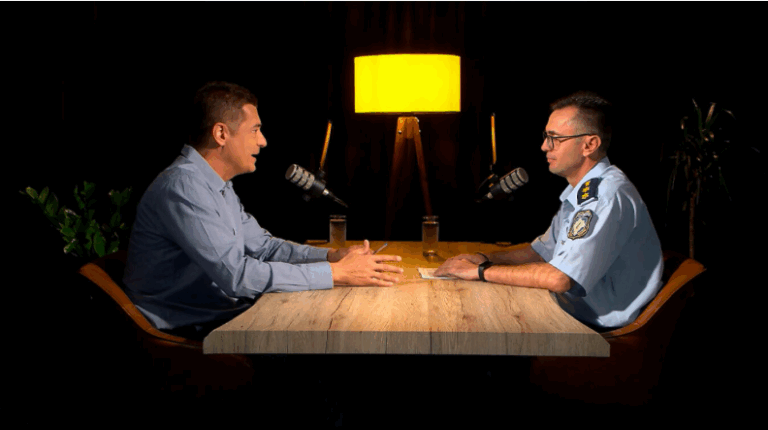
Papageorgiou pointed out a paradox in Greek law regarding drunk driving: if someone causes an accident—even one with injuries—and then leaves the scene, they cannot be charged with driving under the influence, even if they were drunk. This is because the breathalyzer test cannot determine the exact time alcohol was consumed. As a result, a driver can simply claim that they went home upset and drank after the crash. In such cases, like Bisbikis’s, the offender is prosecuted for fleeing the scene but not for alcohol-related charges.
The Traffic Police officer emphasized that the law is applied equally to everyone but admitted that “the image of a well-known person in handcuffs sends a powerful message to all drivers.”
He also addressed public complaints about late-night roadblocks, where all drivers are checked for alcohol, often causing heavy traffic jams. According to him, a significant number of drivers still drink and drive, and many continue to speed excessively. He revealed that police now also monitor social media to track illegal street racing meetups and to identify drivers who post videos of traffic violations.
On the new Highway Code and fines, Papageorgiou explained that the focus has shifted from punishing vehicles to punishing drivers. This means fewer violations now lead to plate confiscation, while more result in license suspensions. “When we confiscated plates, we were effectively punishing the whole family that couldn’t use the car—not just the offender,” he said.
Regarding daily traffic jams, he admitted there is little the police can do, especially on major roads like Kifisos Avenue and the Attiki Odos. Their main intervention remains monitoring the Emergency Lane, which many drivers still misuse despite steep fines.
With fines and license suspensions on the rise, Papageorgiou said police offices are seeing long queues of drivers appealing for leniency. He mentioned the most common excuses people use—and acknowledged that calls still come in from high-ranking individuals asking for “help for a good kid who won’t do it again.”
Finally, he responded to the age-old question: who are better drivers—men, women, young, or elderly—and who causes the most accidents.
Watch the full interview with Dimitris Papageorgiou on “First Word” with Antonis Sroiter.
Ask me anything
Explore related questions




