
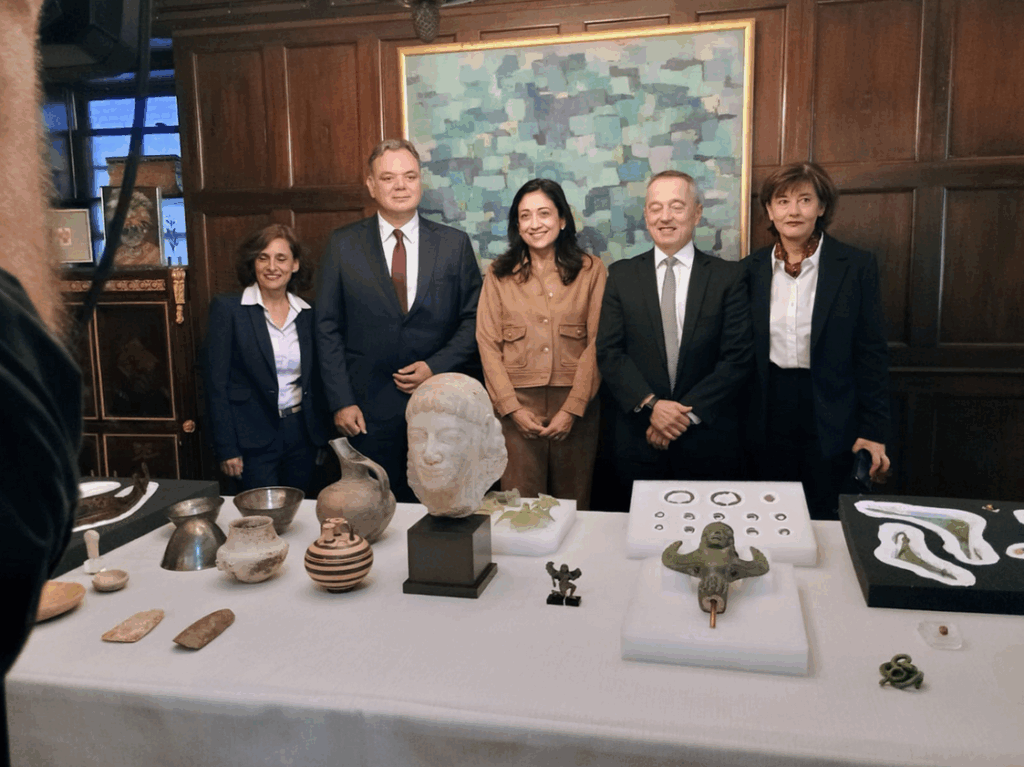
Another blow against antiquities smuggling has been achieved by the dynamic team of Greek-American Manhattan Assistant District Attorney Matthew Bogdanos, in collaboration with the Greek Ministry of Culture, through the seizure of 29 antiquities dating from the Final Neolithic period (5000–4000 BC) to the Late Hellenistic period (2nd/1st century BC). These artifacts were handed over to Greek authorities today to be returned to their place of origin.
Among them stand out:
- Two stone axe heads (5000–4000 BC),
- A Minoan agate seal stone depicting an ibex (3100 BC),
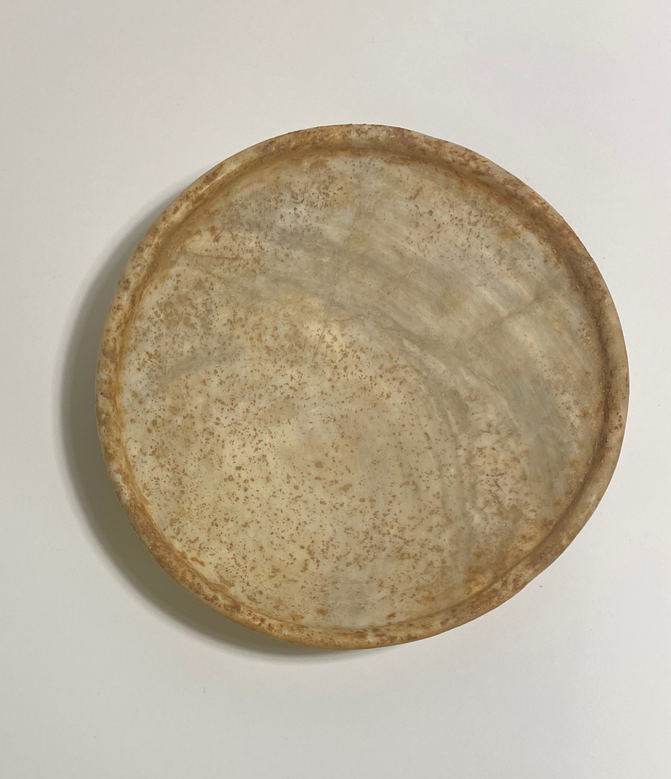
- Three marble Early Cycladic bowls (2700–2400 BC),
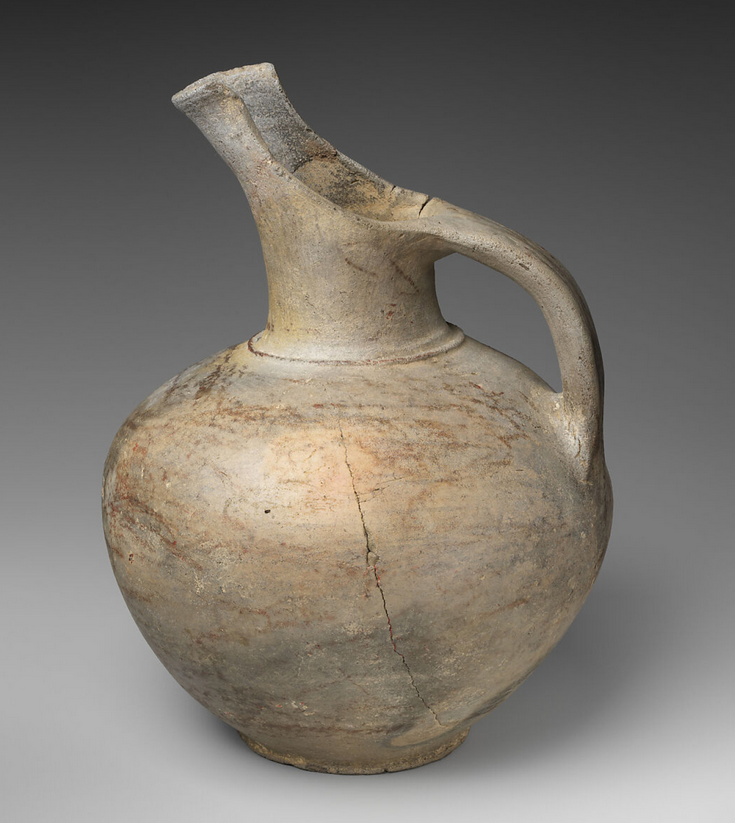
- A spouted Early Cycladic jug (2700–2300 BC),
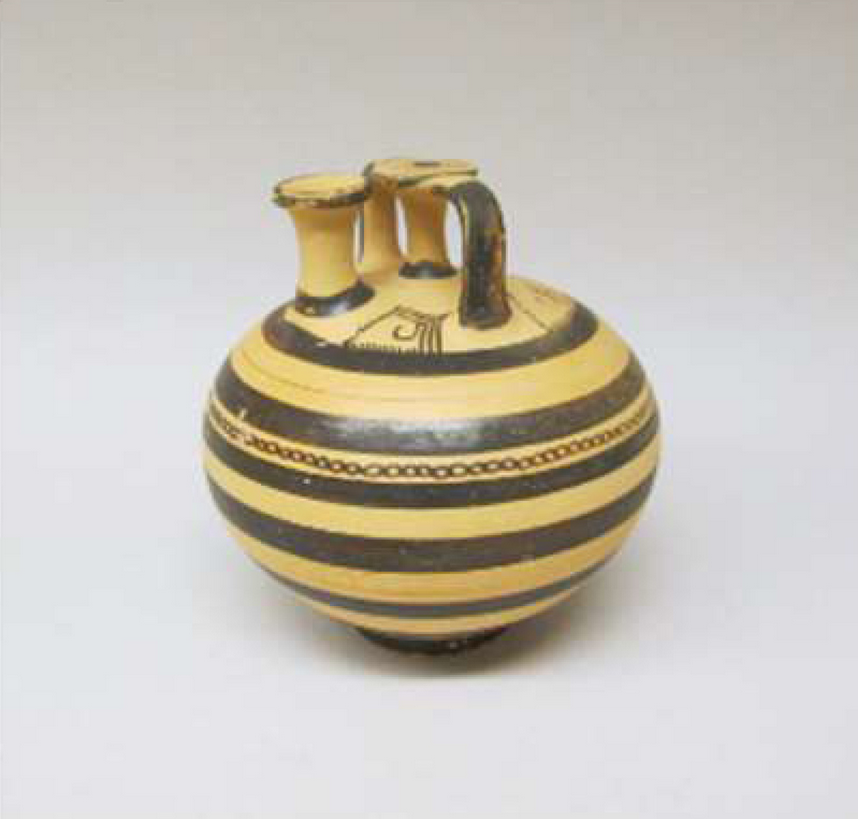
- A Mycenaean stirrup jar (1200–110 BC),
- Two bronze belt fittings from Western Macedonia (7th century BC),
- A bronze furniture leg in the form of a Siren, work of a Laconian workshop (around 600 BC),
- A marble kouros head (mid-6th century BC),
- A bronze attachment in the form of the Gorgon Medusa, probably from a Corinthian workshop (late 6th century BC),
- A freestanding coiled bronze snake (5th century BC),
- A gold necklace pendant (5th–4th century BC),
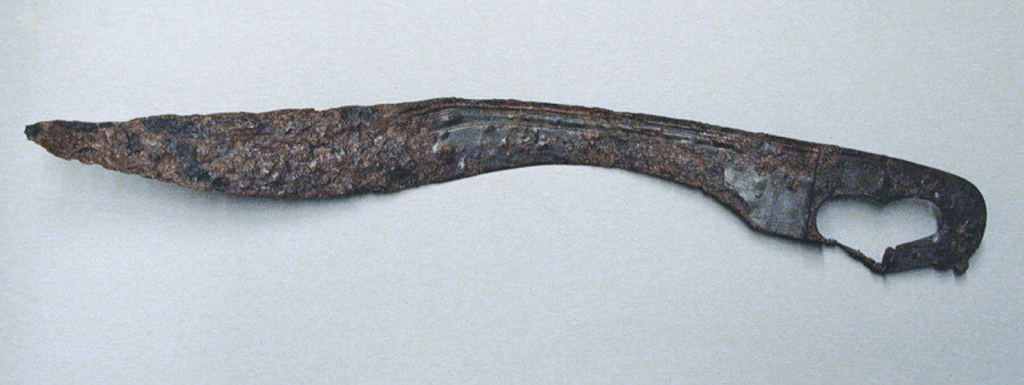
- Two iron sacrificial knives (5th–4th century BC),
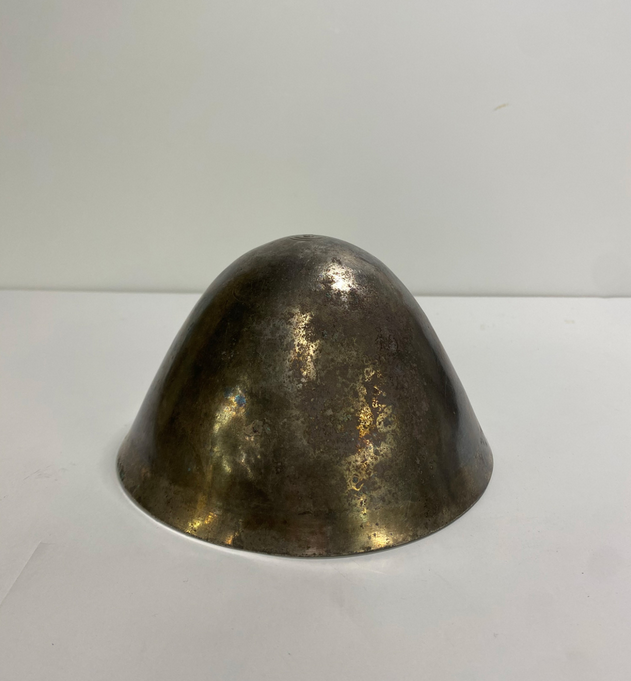
- Three silver conical cups (around 300 BC), and
- A bronze fitting with the bust of Atalanta (2nd–1st century BC).
After months of intensive investigation, and with the assistance of the Documentation and Protection of Cultural Property Directorate of the Ministry of Culture, the Manhattan District Attorney’s Office managed to find evidence linking the illegal origin and trafficking of these antiquities to the New York gallery Fortuna Fine Arts. Associates of the gallery were arrested in 2020 for fraud and falsifying the provenance of artworks.

It is noteworthy that out of the 29 seized objects, 18 had ended up in the collections of the Metropolitan Museum of Art in New York. This fact demonstrates how easily illicit antiquities can be funneled even into the world’s most prestigious museums and serves as a stark warning about the effectiveness of provenance control mechanisms in museums worldwide. However, due to the close cooperation developed in recent years between the Metropolitan Museum of Art and the Greek Ministry of Culture, the repatriation process was facilitated.
“Every repatriation of Greek antiquities is an extremely important event and vindicates the policy of the Ministry of Culture in recent years. Greece is now internationally recognized as a country that has placed the fight against the illicit trafficking of cultural property at the forefront of its policies—an issue directly linked to organized crime and terrorism. This was also evident at Mondiacult, the global conference on cultural policy organized by UNESCO in Barcelona,” stated Minister of Culture Lina Mendoni. She added: “The new success of the Antiquities Trafficking Unit, led by Matthew Bogdanos, and the Department of Homeland Security Investigations fills us with joy and optimism. I have often said, and will continue to emphasize, that the fight against the illicit trafficking of cultural goods requires strong partnerships and hard work. We are fortunate to have built and maintained these collaborations and to see tangible results. Warm thanks to everyone who contributed to the return of these 29 antiquities.”

For his part, Matthew Bogdanos, head of the Antiquities Trafficking Unit and Assistant District Attorney in Manhattan, meaningfully stressed: “This success is due to my colleagues, both in the Antiquities Trafficking Unit and in the Greek Ministry of Culture, who consistently and willingly contribute to the documentation of these objects. We continue with determination — we do not rest, we do not delay. These are the people, this is the place, this is the time for the fight against the illicit trafficking of cultural property.”
Ask me anything
Explore related questions