





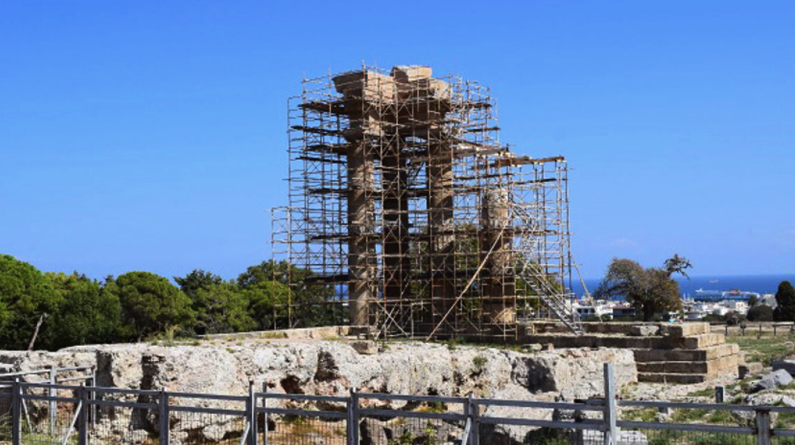
Work is underway on the restoration of the Temple of Pythian Apollo on the ancient acropolis of Rhodes (Monte Smith) by the competent Directorate for the Restoration of Ancient Monuments of the Ministry of Culture.
The goal is the restoration and strengthening of the monument, along with its protection and preservation from damage due to intense erosion and harsh weather conditions.
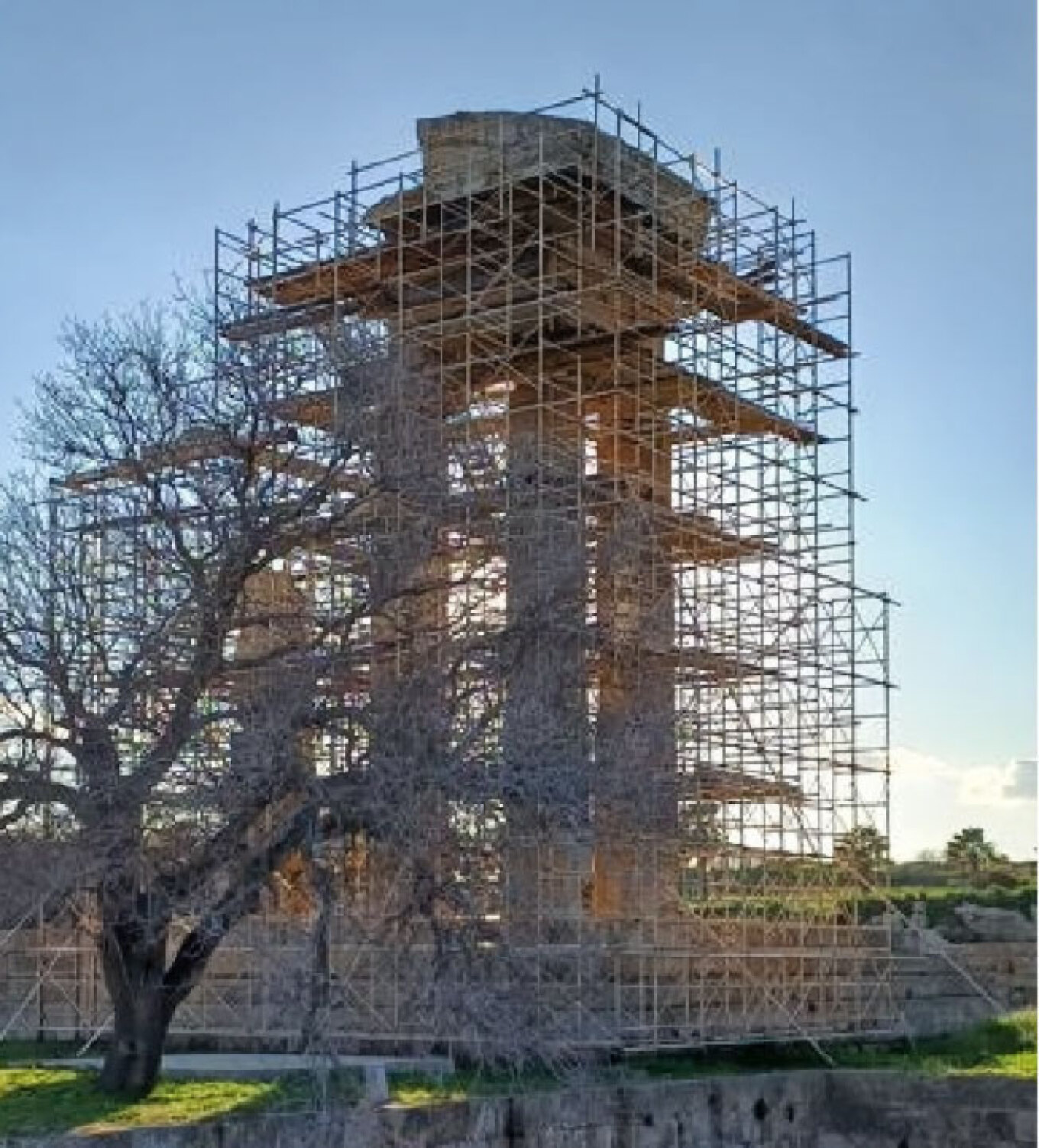
Disassembly and Documentation
After dismantling the monument and thoroughly documenting both the in-situ and disassembled elements, the authentic ancient building components are separated and preserved, while the modern restoration parts from previous interventions are removed.
As part of the work, the possibility of reinserting original elements in their correct positions is being investigated, in order to correct errors from previous restorations carried out in the 1930s and 1960s.
Statement by the Minister of Culture
Minister of Culture Lina Mendoni stated:
“The Sanctuary of Pythian Apollo was part of the complex of sanctuaries and public buildings on the acropolis of Rhodes. The original phase of the monument dates to the late 4th or early 3rd century BC.
It was rebuilt twice in antiquity: after the earthquake of 226 BC, and again following a fire at the end of the 1st century BC.
Italian Restoration and Current Project
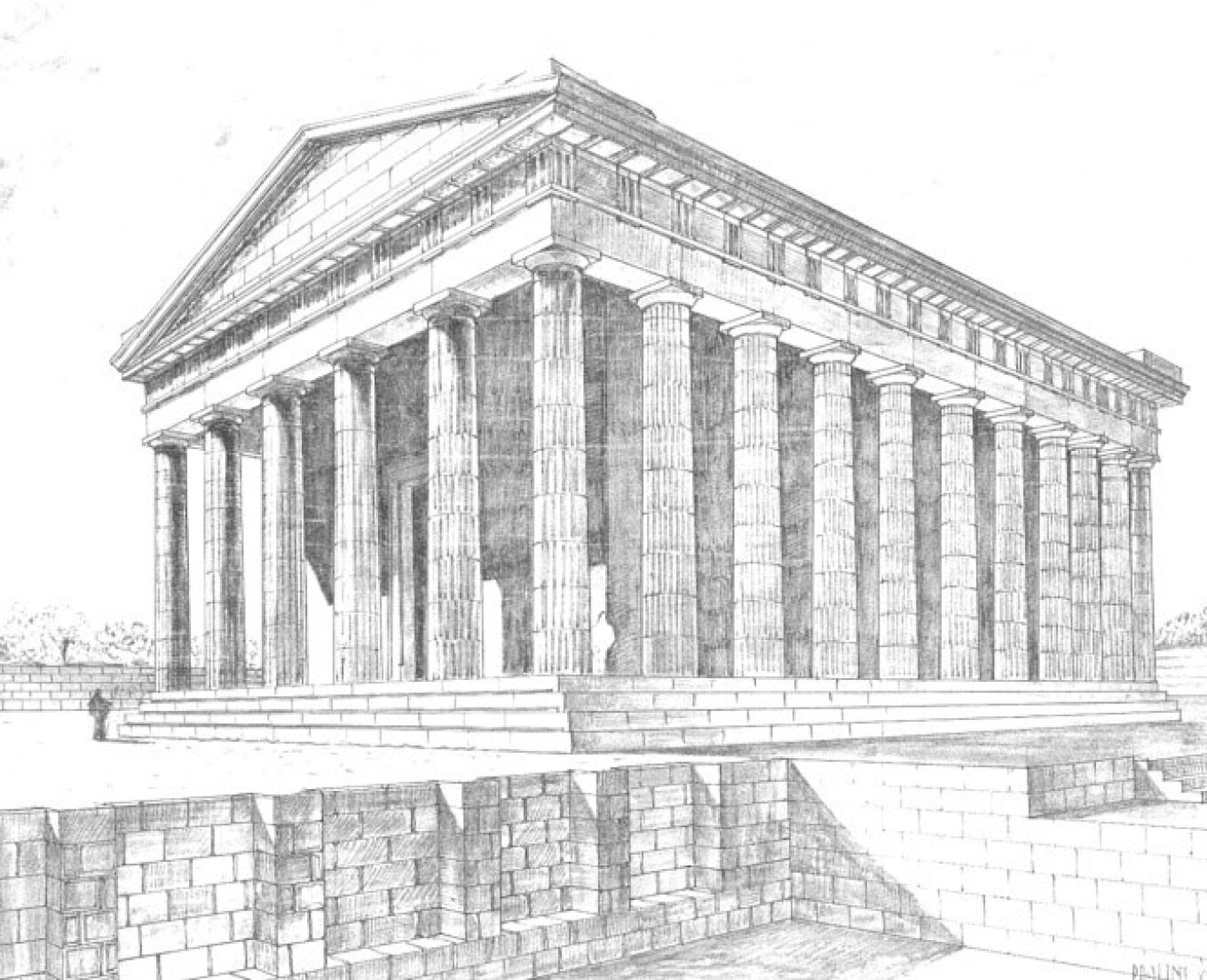
The current form of the monument is the result of restoration by the Italians under Mario Paolini in 1937–1938. These interventions gave a partial idea of the temple’s scale and monumentality.
The current restoration seeks to correct earlier errors, protect the fragile building material, preserve authentic rock-cut parts—unique in Greece—and enhance visitor understanding of the monument.
When completed, the project will highlight not only the archaeological site itself, but also the architecture and legibility of the monument, boosting its appeal to visitors.
“With these interventions, the Temple of Pythian Apollo regains its significant place in the historical narrative of the Rhodes acropolis,” the Minister concluded.
History of the Temple
The temple is located within the acropolis of Rhodes. Its location was already known before the Italian occupation, but major excavations began in the mid-1920s, during which the temple was fully revealed. At that time, much of the archaeological site was excavated, uncovering the Odeon, the Stadium, and the Temple of Artemis.
The Temple of Apollo is thought to have held a commanding position in the ancient city, on the eastern slope of Mount Agios Stefanos (also known as Mount Smith). Excavations suggest it was the largest temple in the ancient city, surpassing in size even the Temple of Zeus Polieus and Athena Polias to the north, and the nearby Temple of Artemis.
The temple and most monuments of the acropolis appear to have survived until the early Christian period. After that, they were likely damaged by natural disasters, invasions, or stone looting, as happened to many ancient structures.
During World War II, the temple suffered major damage due to the placement of machine gun nests in the area. Restoration and repair works were carried out by the Archaeological Service between 1959 and 1960.
Ask me anything
Explore related questions




