
The Ministry of Digital Governance is preparing to launch a public consultation in Parliament for a new bill that will finalize the procurement of 2,000 artificial intelligence cameras to be installed on roads across Athens and Thessaloniki.
According to the plan, the AI Road Safety System — expected to be fully operational by the first quarter of 2026 — will use AI tools to record and process traffic violations and send automatic notifications via SMS to offenders. These 2,000 AI cameras will be linked with 388 additional cameras of similar technology to be installed by the Region of Attica across 41 major roadways and 17 municipalities, as well as about 500 cameras to be placed on buses (and possibly trams).
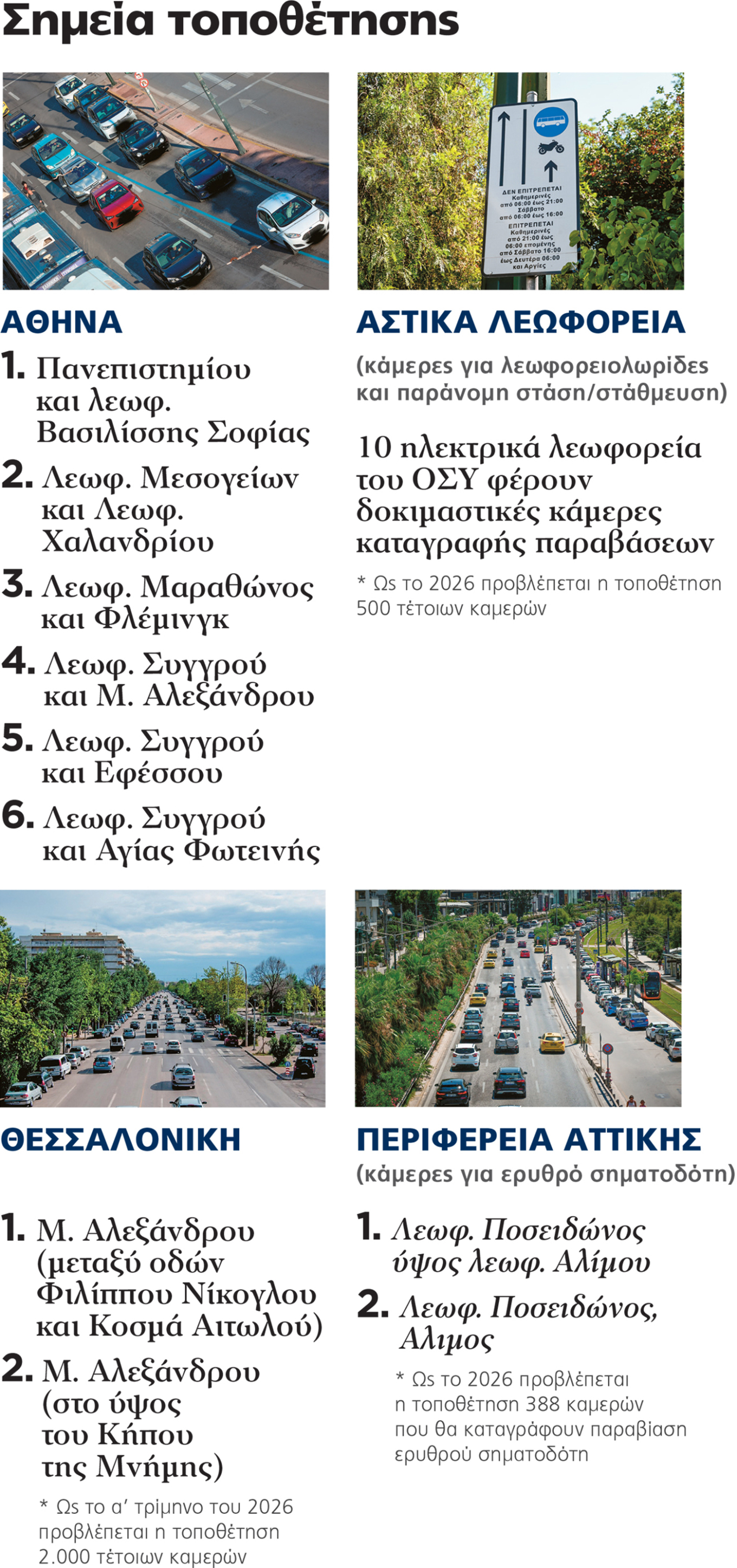
Currently, six AI cameras are being tested on major Athenian avenues and two in Thessaloniki, along with 10 AI cameras on OASA urban buses. The Attica Region is already operating its first two red-light cameras. By early next year, all systems are expected to be fully delivered, interconnected, and operational.
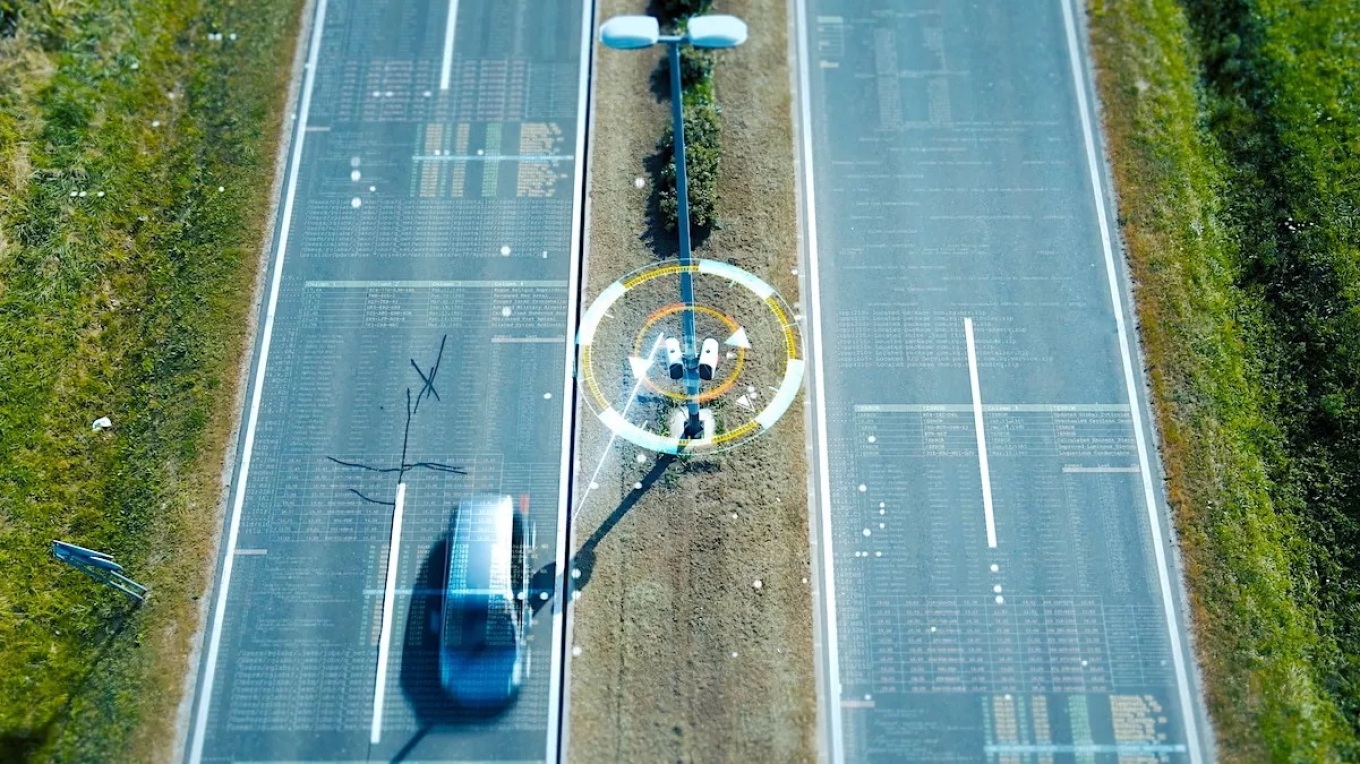
This initiative marks one of the most significant road safety reforms in decades, aiming to reduce traffic accidents through the use of digital technologies, coordinated by the Ministry of Digital Governance in collaboration with the Ministries of Infrastructure and Transport and Citizen Protection.
The Bill
The draft law titled “Digital Enhancement of Road Safety” includes:
- A unified electronic system for recording and managing traffic violations.
- Digital delivery of fines.
- A nationwide network of AI-powered smart cameras.
- The establishment of a Road Safety Operations Center and a National Road Safety Observatory to monitor accident data.
Revenue from fines will be reinvested in road safety initiatives.
The bill, already approved by the Cabinet, provides for:
- Integration with AADE (the Independent Public Revenue Authority), the National Communication Registry, and the Hellenic Police.
- Online submission of appeals and the option for video-call hearings.
- Digital payment of fines, real-time updates on penalties and driver points, and automatic violation detection through AI-connected cameras.
The Procurement
The tender for the system’s IT infrastructure is complete, and the camera procurement tender is now in public consultation.
The project involves over 2,000 AI cameras (eventually more than 3,000 nationwide) with a contract duration of 11 years, valued at €93.8 million (excluding VAT). Funding will come from collected fines and other lawful sources.
The cameras will automatically detect:
- Red-light violations
- Speeding
- Bus lane misuse
In addition, 500 mobile camera systems will be mounted on vehicles and buses, capable of real-time license plate recognition.
Full installation across Greece is expected by 2026, barring any delays.
The First Eight Cameras
AI cameras will be installed at eight pilot locations in Athens and Thessaloniki, chosen based on traffic volume and accident statistics.
The AI software can automatically recognize violations — for instance, detecting a driver holding a phone, capture a photo, and send a digital violation notice to the driver’s gov.gr account, along with the image. The driver will also receive an SMS alert and can dispute the fine online.
The system’s first public demonstration took place at the 89th Thessaloniki International Fair (TIF), where Minister Dimitris Papastergiou presented a live demo of the technology.
Cameras on Buses
Since June 16, a pilot program has begun installing cameras on urban buses (10 electric and low-emission buses). These record bus-lane violations, road conditions, and traffic flow, producing real-time data.
The Region of Attica is also implementing 388 automated red-light cameras (not AI-based) at high-risk locations. Currently, two are active on Poseidonos Avenue near Alimos, one of the city’s most frequent red-light violation spots.
Meanwhile, the Attiki Odos highway already operates its own certified speed-camera system, directly connected with the Traffic Police for issuing fines.
Mobile Phone Detection
The new AI-powered traffic cameras will record and automatically issue fines for a wide range of violations, including running a red light, speeding, driving or stopping in bus lanes, not wearing a seatbelt or helmet, using a mobile phone while driving, using the emergency lane (LEA) illegally, ignoring pedestrian crossings, and failing to pass a vehicle inspection (KTEO).
In particular, regarding mobile phone use—one of the leading causes of road accidents in Greece—the system’s software has been trained to detect when a driver is using a phone for either talking or browsing. When detected, it will capture a high-resolution image of the violation and categorize it under “driver distraction.”
The cameras provide a comprehensive view of the scene, taking ultra-high-resolution photos that allow identification of a vehicle’s color and type. They can also focus on the windshield to analyze driver behavior—such as whether the driver lifts a phone or fails to wear a seatbelt.
For violations subject to administrative fines, the system will automatically issue and send them. For those involving license suspension, such as mobile phone use while driving, the driver’s license will be revoked electronically and automatically.
Authorities also remind drivers that, under the new Highway Code (ΚΟΚ), if a driver involved in a traffic accident (e.g., a crash with injuries) is suspected of having used a mobile phone, the Traffic Police have the right to request lifting of communication privacy to inspect the device and confirm whether it was being used at the time of the incident.
Mobile devices (phones, tablets) record screen activity and operations, and some even track when a user’s gaze is fixed on the screen, which can serve as digital evidence.
“You Are Being Checked for a Violation”
With the new system, drivers will receive a text message from the General Secretariat for Information Systems / Attica Traffic Police stating:
“You are being checked for a violation of the Highway Code.”
The system will not only perform digital verification of violations and deliver citations via the gov.gr inbox, but will also update the point system and automatically suspend a driver’s license electronically.
To minimize errors, footage captured by AI cameras will be uploaded to a secure central server, and the driver will be notified via SMS. Payment will be made through gov.gr’s wallet, after official verification of the violation.
What Happens If the Driver Isn’t the One Who Committed the Violation?
If, for instance, a person receives a fine for a violation committed by someone to whom they had lent their vehicle, Greek law (Article 104 of the Highway Code) stipulates that violations recorded by electronic devices—such as radars or cameras—are considered automatic violations, and the registered vehicle owner is held responsible.
However, there is an appeal process: the owner can file an objection, but must identify the actual driver responsible for the offense. The authorities will then decide whether to transfer the fine to that person, provided the explanation is accepted as valid.
Ask me anything
Explore related questions