





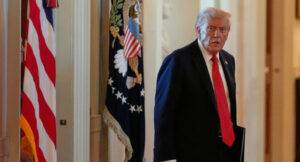
On Saturday night, October 4, Donald Trump called Benjamin Netanyahu with a clear message: “The war in Gaza is over.”
According to the president’s own description in an interview with TIME, his envoys had brokered a two-phase deal with Qatar, Egypt and Turkey:immediate ceasefire, return of hostages versus Palestinian prisoners, opening of humanitarian aid, partial withdrawal of Israeli forces and start of negotiations for a final settlement.
“Bibi, you can’t fight the whole world,” Trump reportedly said, recalling what he had done about Israel and making it clear he would not tolerate any further developments. Despite initial objections, Netanyahu acquiesced.
The deal, which if it holds up would end the longest war in Israel’s history (with about 2,000 Israelis and nearly 70,000 Palestinians dead), is part of a broader strategy by Trump to reshape the Middle East.
He attributes the current momentum to his willingness to use military force: from the assassination of Qassem Soleimani in his first term to the strikes on three Iranian nuclear facilities this spring that “changed the geometry” of the field. Tehran’s isolation, according to the White House, has hastened the fall of the Assad regime, while new government formations in Damascus and Beirut have signaled an intention to re-engage with the US. Meanwhile, anti-Houthi bombing in Yemen has led to an agreement not to target US ships in the Red Sea.
Behind the scenes of the deal, Trump also capitalized on the incident of Israeli attacks on Hamas officials in Doha – an incident that angered allies because of a violation of Qatar’s sovereignty but, he claims, “tied up” regional mediation. The American team moved intensively on the sidelines of the UN General Assembly, concluding a 20-point framework with Qataris, Egyptians, Turks and Israelis-with a ceasefire, hostage exchange, demilitarization of the Strip and a new political authority at its core.
Trump has made no secret of the fact that he has imposed “red lines” on both sides. To Hamas: “No more gradual surrender – ‘you will give us the hostages, all of them,'” he said, accompanying the demand with a threat of “total elimination” in case of a withdrawal. To Israel: public embrace, private pressure to end operations, with a warning that unilateral annexation moves in the West Bank would be met with a fierce American backlash. “It won’t happen, because I gave my word to the Arab countries,” he said, adding that “Israel would lose all support from the US.”
The question of Palestinian leadership remains open. Trump says he likes Mahmoud Abbas but doubts he can lead Gaza after the war. The name of Marwan Barghouti, the jailed leader of Fatah, is also on the table, with many believing he has unique unifying credentials – a scenario the president acknowledges he is considering.
Beyond Gaza, the White House sees an opportunity to broaden the Abraham Accords to normalize Israel-Saudi Arabia. Riyadh is setting two conditions: a definitive end to hostilities and a credible prospect of Palestinian sovereignty, even if not immediately full statehood. Trump appears confident that “both are achievable,” speaking of economic integration of the region-railways from the Mediterranean to the Persian, trade agreements, a regional energy grid.
Whether the fragile architecture will endure will depend on two factors: the continued US involvement in the “micro-management” of implementation, and the president’s ability to maintain pressure on key players-primarily Netanyahu and the Arab guarantors. As he admits, “as long as I’m there, it’s going to get better and stronger.” What will happen “afterward” remains unanswered.
Ask me anything
Explore related questions




