





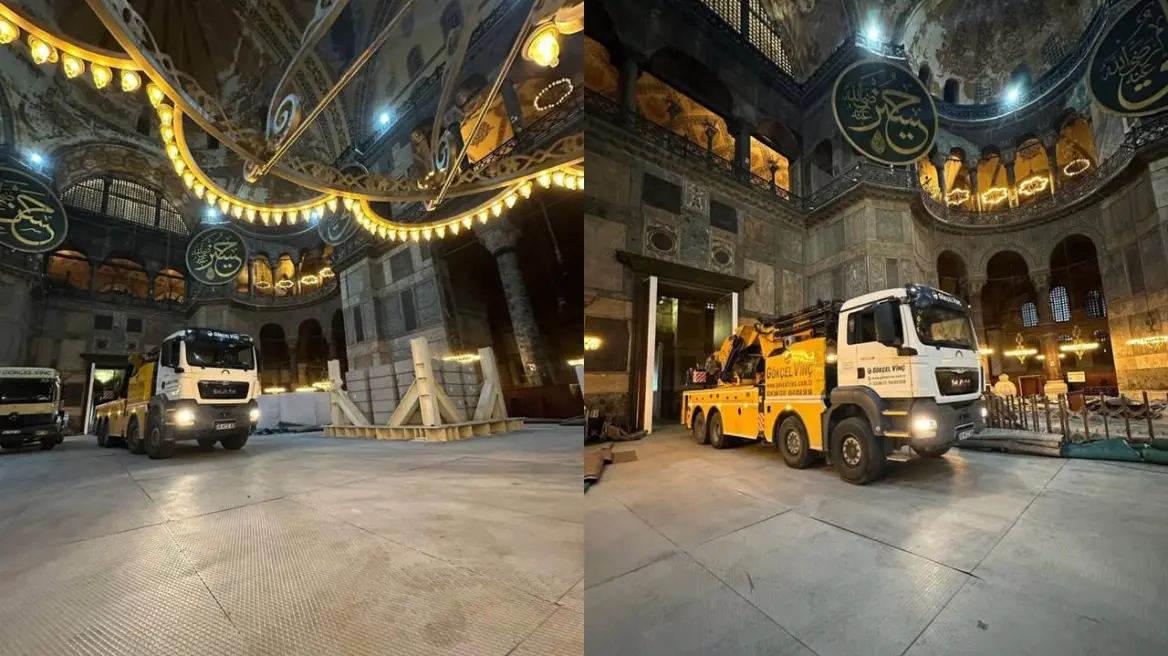
Concern has arisen over images showing a crane truck inside Hagia Sophia, as photos depict the vehicle on the church floor, parked on temporary protective panels, and another vehicle near the so-called Imperial Gate, the main ceremonial entrance of the monument. The images, widely circulated on social media, have raised questions about whether the particularly fragile floor of the monument is being adequately protected during maintenance work.
The issue, reported by Turkiye Today, sparked public discussion, prompting Turkey’s Ministry of Culture and Tourism to issue an official statement addressing the concerns. In an earlier statement, Minister Mehmet Nuri Ersoy emphasized that reinforcement work is proceeding without interrupting worship, describing Hagia Sophia as “1,486 years old” and noting that the main apse and central dome are undergoing “the broadest and most comprehensive process of historical restoration,” aimed at greater earthquake resilience while preserving the monument’s original character.
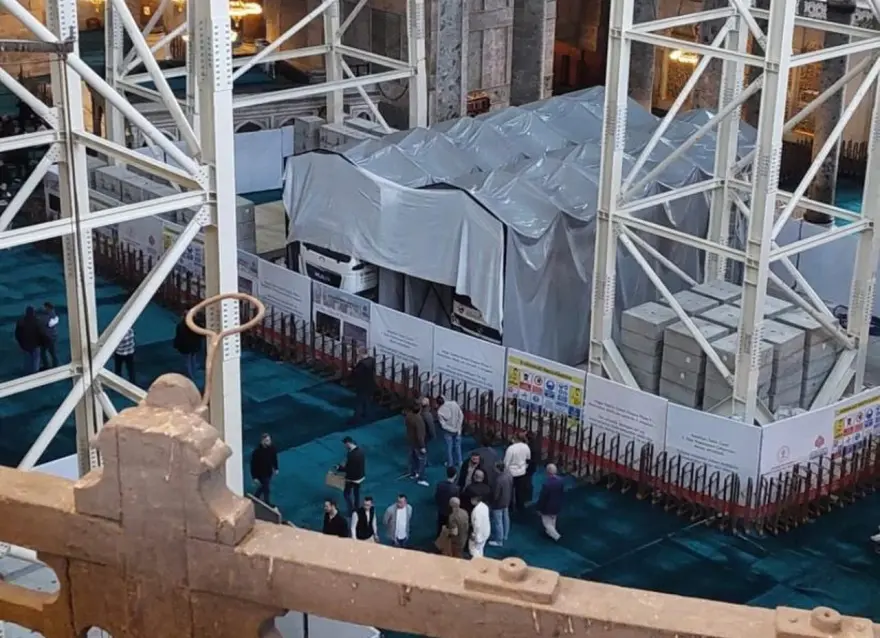
Despite the presence of temporary protective panels under the crane truck’s wheels, experts have pointed out that the system shown in the photos appears simple, with flat panels that do not ensure complete load distribution. According to an anonymously published scientific assessment, the floor of Hagia Sophia is not a single layer but includes mosaics, ancient stone slabs, and in some areas, cavities resembling underlying chambers. Concentrated heavy loads or vibrations from heavy vehicles could, as noted, transmit stresses through these layers, potentially causing damage over time.
Experts remind that such monuments require more complex load-distribution systems, with thicker, interlocking protective panels combined with beams or steel plates that spread the weight over a wider area.
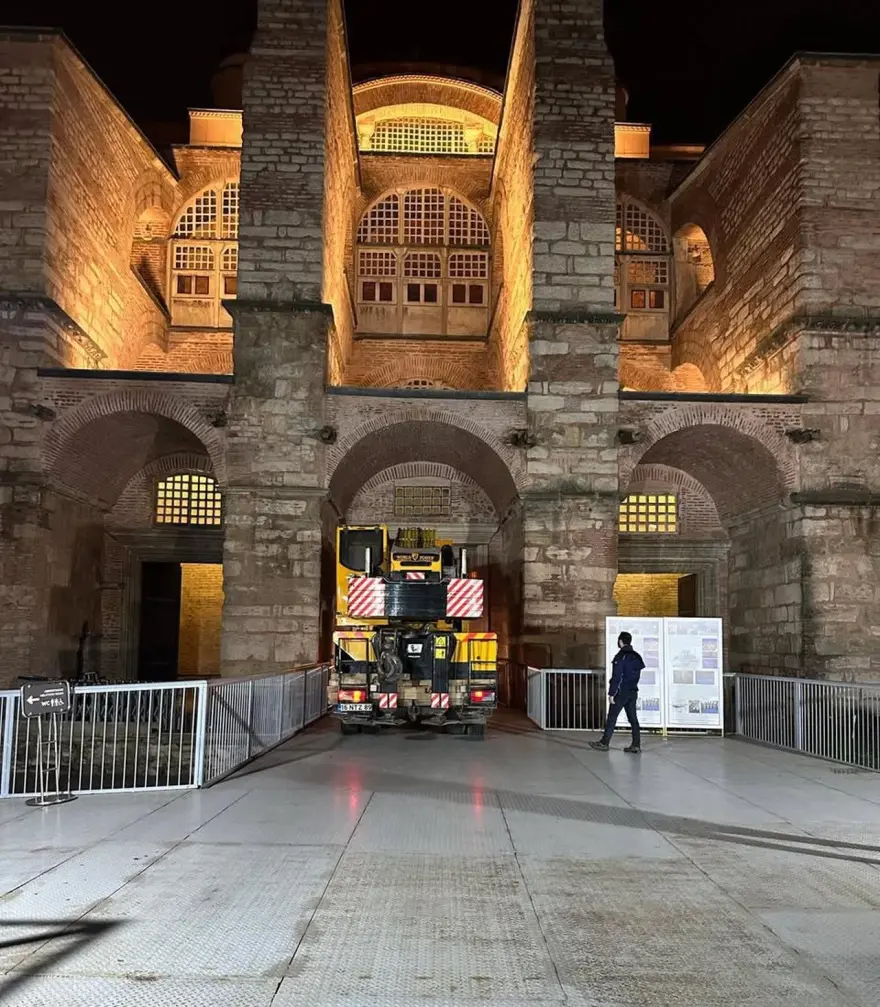
Following the public debate, the General Directorate of Foundations, responsible for managing religious institutions, released detailed information on the protection methods being applied. According to the ministry, before the vehicles entered, static load studies, soil classification, and bearing capacity measurements were conducted, showing that the underlying floor can support up to 25 tons per square meter. For additional safety, a temporary platform capable of bearing up to 30 tons per square meter was constructed.
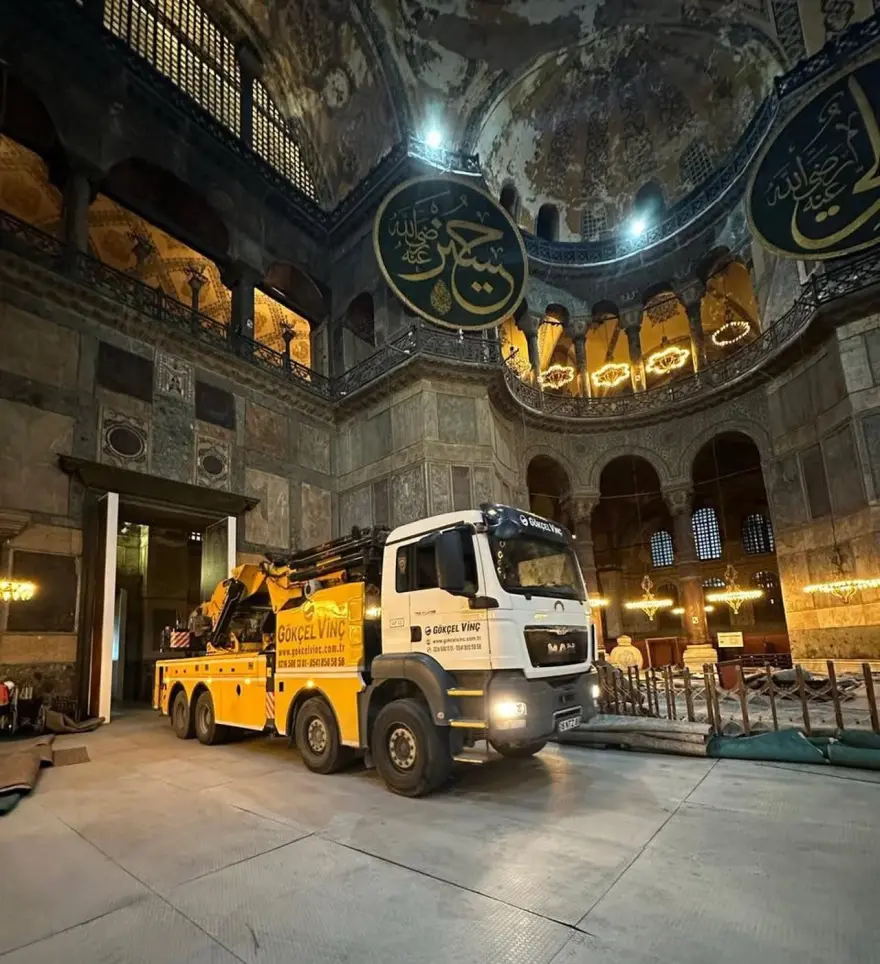
The statement notes that the heaviest vehicle to be used, about 45 tons, actually applies a load of only 6 tons per square meter to the floor, thanks to a special weight distribution system.
Ask me anything
Explore related questions




