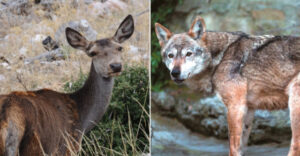
On the eastern slope of Mount Parnitha, a red deer runs in terror and exhaustion. As its strength begins to fail, it jumps into Lake Beletsi and hides there to save its life. Among the trees, on the lush outskirts of Parnitha, the shadows of its pursuers can be seen moving swiftly but silently.
The wolf pack, divided into two groups, surrounds the area where the deer is located, but in vain. After hours of searching, they become disoriented and move away. As the wolves turn their attention to a dog they are now chasing, the deer escapes. But for how long?
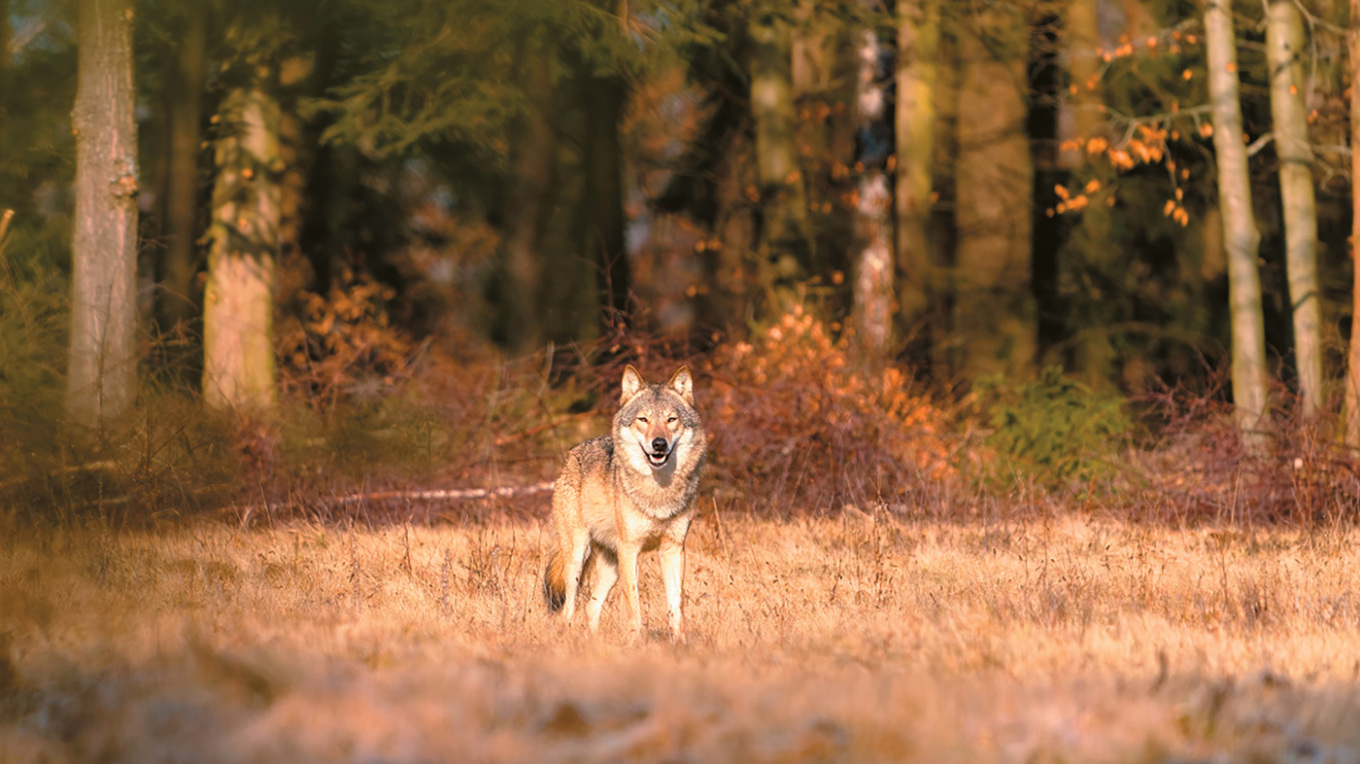
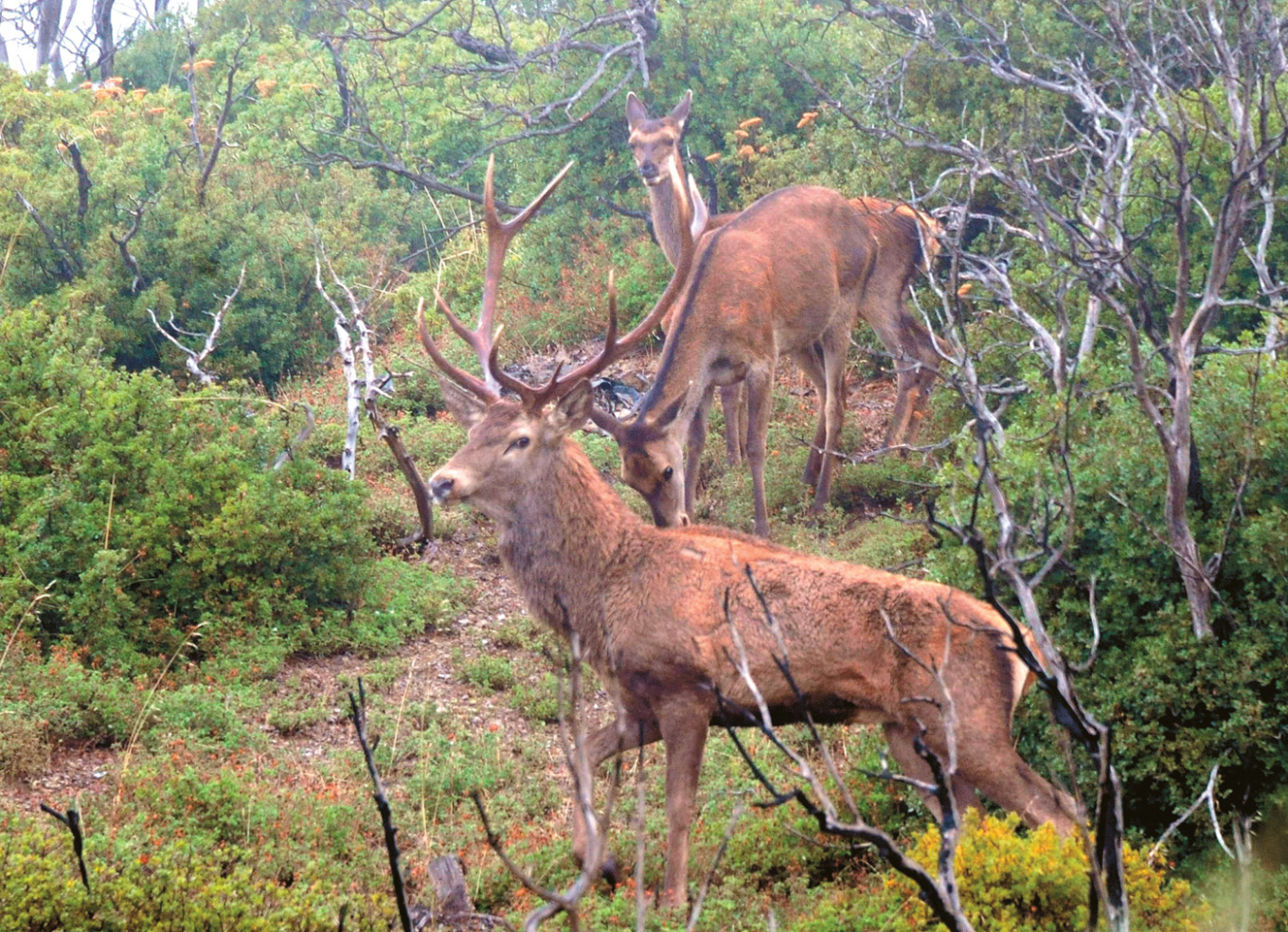
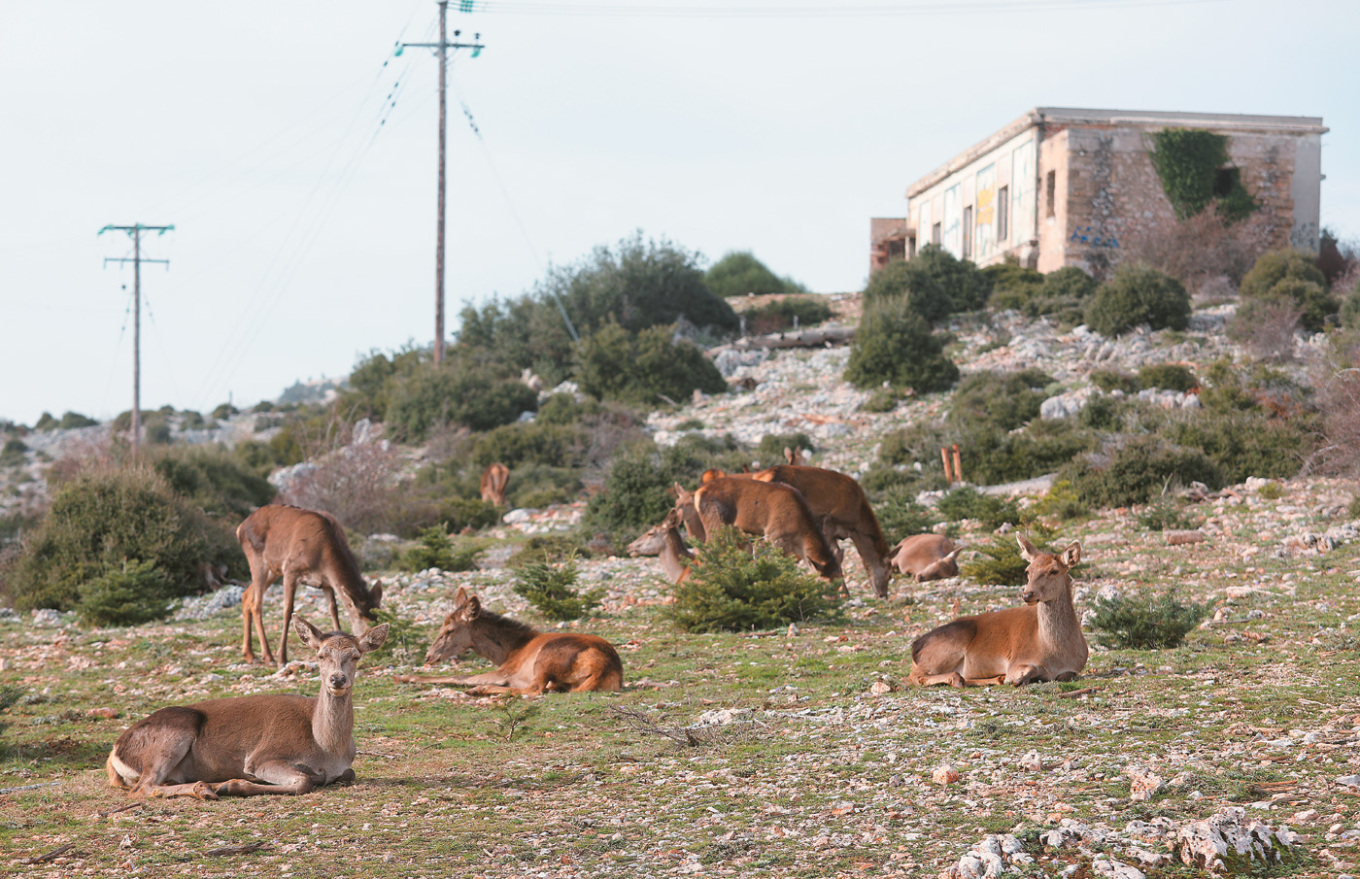
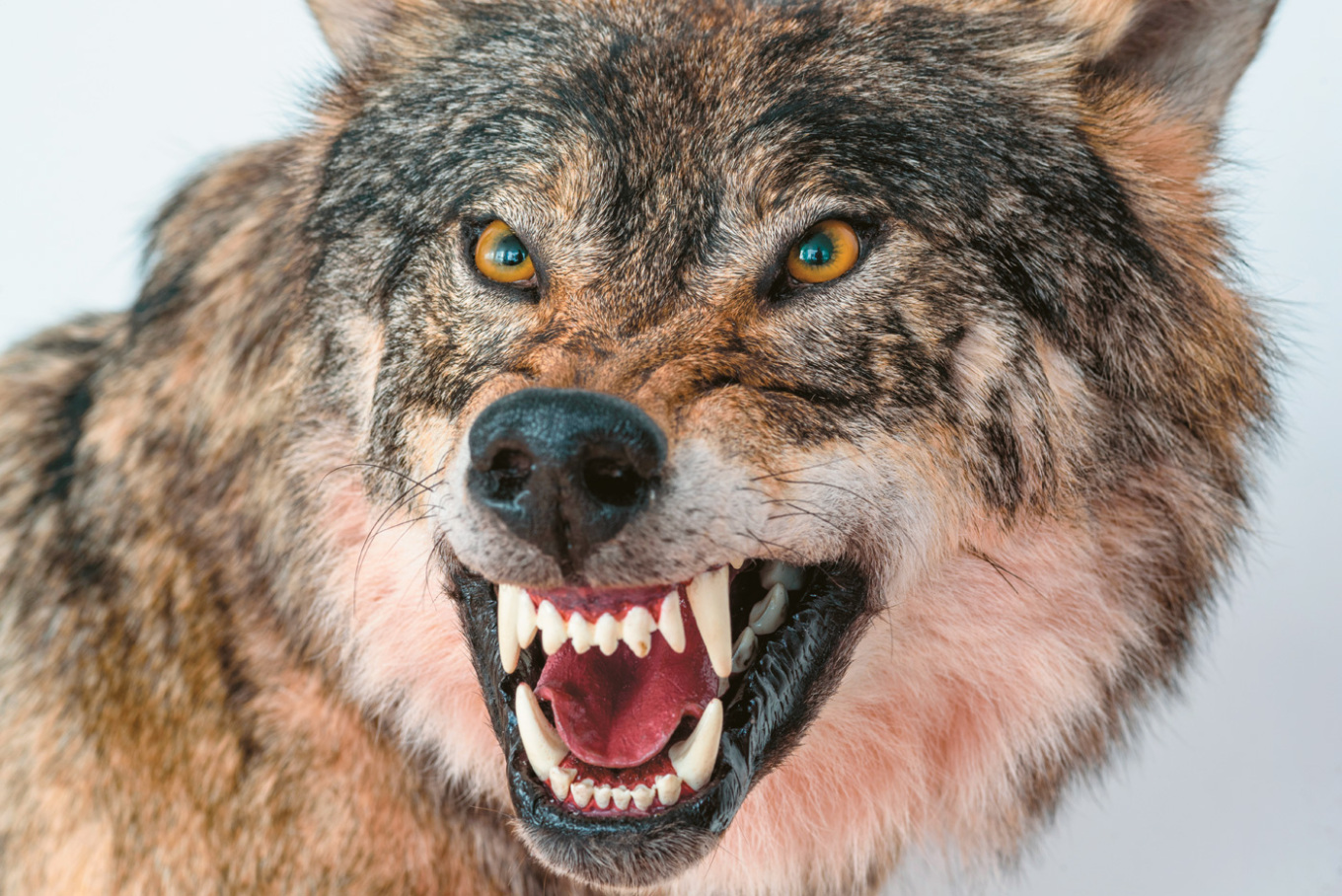
In Parnitha, the isolated deer population is on the brink of extinction. From the maximum carrying capacity of the area, 1,300 individuals a few years ago, their numbers now fluctuate around 50–60. The wolves that settled in Parnitha, following wild boar – the absolute scourge of the natural environment – as opportunistic predators… eventually adapted to hunting deer, which are easier prey, and have driven them almost to extinction. At the same time, increasingly frequent sightings of wolves in residential areas, such as Ippokrateios Politeia and even Zofria (!), where last week wolves tore apart a domestic dog, have raised alarm among authorities and concern among residents.
For this reason, as revealed today by “THEMA”, an operation to restore the balance of nature in Parnitha is being launched in the wider area, by order of the Environmental Prosecutor. This includes the removal of wolves and wild boar from residential areas, as well as measures to save the deer. For the time being, according to information, the preferred solution is to confine the deer to the so-called Parnitha Deer Breeding Center (or refuge), a fenced and guarded area inaccessible to wolves and stray dogs. After breeding, one proposal is for deer to also be released into other forest and mountainous areas of the wider region and the country.
“Risk of injury to humans”
The placement of deterrent traps at the foothills of the mountain is only one part of the wolf removal operation coordinated by the General Directorate of Forests. Like a scene from the Wild West, a group of wolves that habitually descends to the foothills has been declared “wanted”. Some of its members have reportedly been… captured and safely transported back into the forest.
Despite the fact that the order issued last March by the Prosecutor for Animal and Environmental Protection for the “capture” and transfer of Parnitha’s wolves to northern Greece was “frozen” – if not cancelled – following reactions from scientists and discussions with the prosecutor, it remains on the table.
This is evidenced by a document from the General Directorate of Forests to all competent bodies (including the Athens Public Prosecutor’s Office, the Minister of Environment, the Parnitha Forestry Department, police authorities, OFYPEKA, the Management Unit of Parnitha National Park and the Association of Municipalities and Communities for the Protection of Parnitha), which refers to the 28 March prosecutorial order for the transfer of the wolves of Parnitha to the mountainous regions of northern Greece.
In the document entitled “Adoption of accompanying measures by Local Authorities to reduce food attraction for wildlife in Parnitha National Park”, it is stated, among other things, that “within the context of implementing the relevant order of the Athens Prosecutor’s Office (i.e. the order to transfer the wolves) and the parallel support of special accompanying measures for the protection of the deer living in Parnitha National Park, cooperation with the respective Forestry Services is deemed necessary, as well as your contribution within the scope of your responsibilities in order to reduce food dumping mainly in forest areas or even in urban zones adjacent to forest areas.”
“The measure,” states the document signed by the Deputy Head of the General Directorate of Forests and DP, Evangelos Gkoundoufas, “is considered very important due to the food attraction exerted on multiple species, including wildlife species, in these areas. The habituation of wild animals to humans and frequent interactions increase the risk of human injury and road accidents involving moving vehicles.”
The General Directorate of Forests calls for citizens to be informed not to leave dry food next to garbage bins (for strays), for poorly closing bins located on the boundaries of Parnitha National Park to be replaced, for garbage to be collected more frequently, and for illegal landfills to be cleared. Authorities also request immediate notification in case of sightings of wild animals (wolves, wild boar, etc.) outside the National Park, as well as dead animals indicating pack attacks.
Mr Gkoundoufas notes that “limiting the interaction of food dependency and the habituation of wild animals to human activities are important actions that can be undertaken by Local Government and can effectively contribute to reducing the presence of animals in these locations.”

“Open the refuge”
Although the competent authorities and stakeholders (municipalities, hunting organisations, SYNPA, “Callisto” and scientists, among others) differ and disagree on the issue of wolves in Parnitha, they agree on two points: the risk of definitive extinction of the Parnitha deer, which are prey to wolves, and the reopening of the Deer Breeding Center in Parnitha.
“Taking measures is imperative,” says SYNPA President Vassilis Lazarou to “THEMA”, stressing that “the deer is at risk of extinction. Wolves now need to be restricted and I don’t understand why we are not reopening the Breeding Centre.” The General Secretary of Fyli Municipality, Argyris Argyropoulos, explains that regarding the deer, “we are ready as a municipality to assist in any way necessary to place the deer in the protected area of the Breeding Centre,” and that something must also be done about the wolves. “Last week, wolves ate a dog in Zofria, on the edge of the city plan. It is worrying that the wolves reached that point, as it means they crossed roads with vehicle traffic. We have identified wolves even in Poikilo Mountain.”
For the wolves’ habit of descending ever closer to residential areas, Mr Argyropoulos explains that municipalities and authorities have begun taking measures by placing deterrent traps. These are not the classic traps intended to capture wolves, but specially designed ones meant to frighten passing wolves and create such a negative experience that they will avoid returning to the wider area.
“This measure works, but it is temporary,” explains Spiros Psaroudas, general coordinator of the organisation “Callisto”. “Wolves are intelligent animals and quickly realise they are not threatened, so they learn to ignore these traps.” So what should be done? Should wolves be removed, and are Parnitha’s deer truly at risk? “Discussing the removal of wolves from Parnitha is foolish,” says Mr Psaroudas. “We have said before that even if we manage to remove them, others will immediately come. Or the gap will be filled by packs of dog-wolf hybrids that do not fear humans, meaning attacks on people could occur.” He explains that scientific studies (three wolves in Parnitha, from two of the three local packs, wear collars transmitting information about their behaviour to specialists) show that they do indeed hunt deer.
At the same time, scientists are mapping the routes and core areas where deer move in order to draw useful conclusions. “The deer population, being isolated, is by definition vulnerable,” says Mr Psaroudas. “We should not mince words. There is a risk that they will all be exterminated, to the very last! Not only by wolves, but also by disease, fire, poachers or another event. The only solution, therefore, is to achieve balance in nature.”
DISPERSAL OF DEER
The plan under consideration by scientists, to be presented at a broad meeting with all competent bodies (OFYPEKA, the General Directorate of Forests, municipalities, the organisation “Callisto”, etc.), expected to be held at the Ministry of Rural Development early next month, is the dispersal of deer. At this meeting, scientists will present their findings regarding not only the behaviour of wolves and deer, but also their populations.
In the last count, before summer, the deer numbered 140, while current unofficial OFYPEKA estimates speak of just 50–60 remaining individuals. The University of Thessaly is conducting a count at present and will provide the definitive answer.
Regardless, scientific bodies are expected to propose opening the Breeding Center, a restricted, guarded and wolf-free area near Bafi, for the reproduction and rescue of the deer. However, as this cannot be a permanent solution, scientists will propose that deer be transferred from the Center to other areas so that the species can “colonise” regions beyond Parnitha.
Thus, the unique but isolated population of red deer in Parnitha will never again be at risk of total extinction, as it will also exist in other parts of Attica and Greece in general. Moreover, who would say no to the presence of this noble, beautiful animal that existed in antiquity in Parnitha, disappeared and was reintroduced by Otto?
However, not everyone shares the same view. The Municipality of Fyli, the Municipality of Acharnes and the Parnitha Cooperative insist that the solution proposed last summer by the Environmental Prosecutor – the capture of all wolves in Parnitha and their transfer to the mountainous regions of northern Greece – is the appropriate one. They submit this recommendation to the General Directorate of Forests, requesting implementation of the prosecutorial decision to protect the deer and limit the risks arising from the cohabitation of wolves and humans in residential areas. For the time being, at least, the exile of the approximately 50–60 wolves of Parnitha does not seem to be favoured. After all, as the deer population has declined, wolves have once again begun hunting wild boar, even in suburban areas. These reproduce uncontrollably, and hunting associations in Attica have been mobilised to control their population.
THE “WANTED” OF HALKIDIKI
In another part of the country, in Neos Marmaras, Halkidiki, a pair of “wanted” wolves is under close surveillance and arrests are expected. Although it sounds amusing, scientists say it is quite serious. The female wolf attacked a child during the summer – a five-year-old Serbian tourist playing carefree on the beach of Agios Nikolaos, Sithonia. The animal attacked the child from behind, biting and scratching her, as reported by the mother, who saved her daughter by throwing stones and shouting, together with her husband. In this case, scientists from “Callisto” determined that the situation is not as “innocent” as in Parnitha, where the three packs avoid contact with humans.
In this case, the female wolf is engaging in territorial dominance, attempting to assert herself as the dominant mammal and create a pack. “This is dangerous behaviour, which the wolf will pass on to her pups, and we will not allow that,” explains Mr Psaroudas. The animals have already been located, the male has been captured and fitted with a transmitter, and the female will also be captured and permanently removed from the area.
THE “ACCUSED”
■ Three packs, totalling 50–60 wolves, live in Parnitha.
■ About 8 of them are “accused” of descending into residential areas.
■ 3 wolves from 2 of the 3 packs are under scientific monitoring (wearing collars).
■ Their diet, up to 75%, consists of deer, while they also eat garbage and dogs.
■ In their latest attack in Zofria, they tore apart a dog.
■ Dozens of deterrent traps have been placed near urban or suburban areas.
THE VICTIMS
■ 1,300 was the peak population of Parnitha deer.
■ 140 were recorded in the last count, in summer.
■ 50–60 are estimated to remain today, though counting is not yet complete.
■ Scientists propose introduction into the protected Breeding Centre, reproduction and dispersal to other parts of the country.
THE “WANTED”
■ A pair of wolves attacked a 5-year-old girl in Halkidiki during the summer.
■ They were declared “wanted” by scientists and were immediately located in Neos Marmaras.
■ The male was captured and fitted with a transmitter.
■ The female is responsible for the attack, as she attempts to dominate the area.
■ She will be captured and removed, as her aggressive behaviour would be passed on to her cubs.
Photos: Shutterstock, EUROKINISSI
Ask me anything
Explore related questions