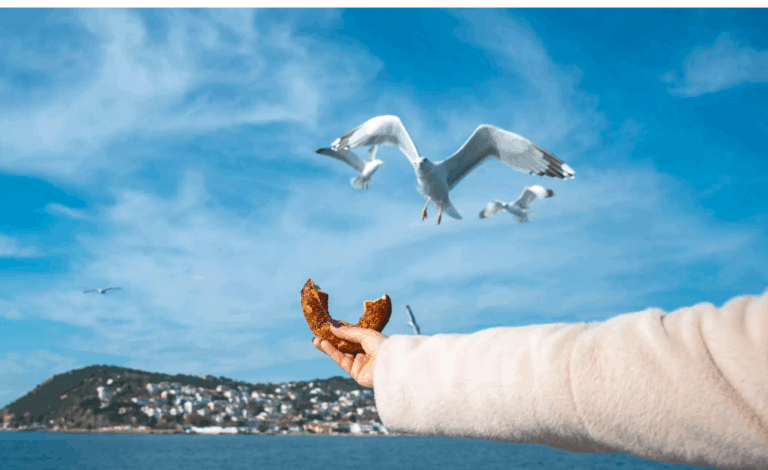
It is at this moment that passengers often take to the deck, pull out their Thessaloniki-style bread rings (koulouri), tear them into pieces, and start feeding the seagulls. Some even capture this scene on video, eager to share it on social media.
However, what seems like a harmless and joyful gesture can have unintended consequences: feeding seagulls is actually discouraged. These white-winged birds are commonly found near any bodies of water—beaches, coastlines, and marinas—and increasingly, in urban areas where food is easily accessible from trash bins. Nevertheless, few would consider feeding seagulls from their home window.
While feeding seagulls may feel like a benign act, a simple way to connect with nature during a journey, it fundamentally alters their natural behavior and disrupts the delicate balance of their ecosystem.
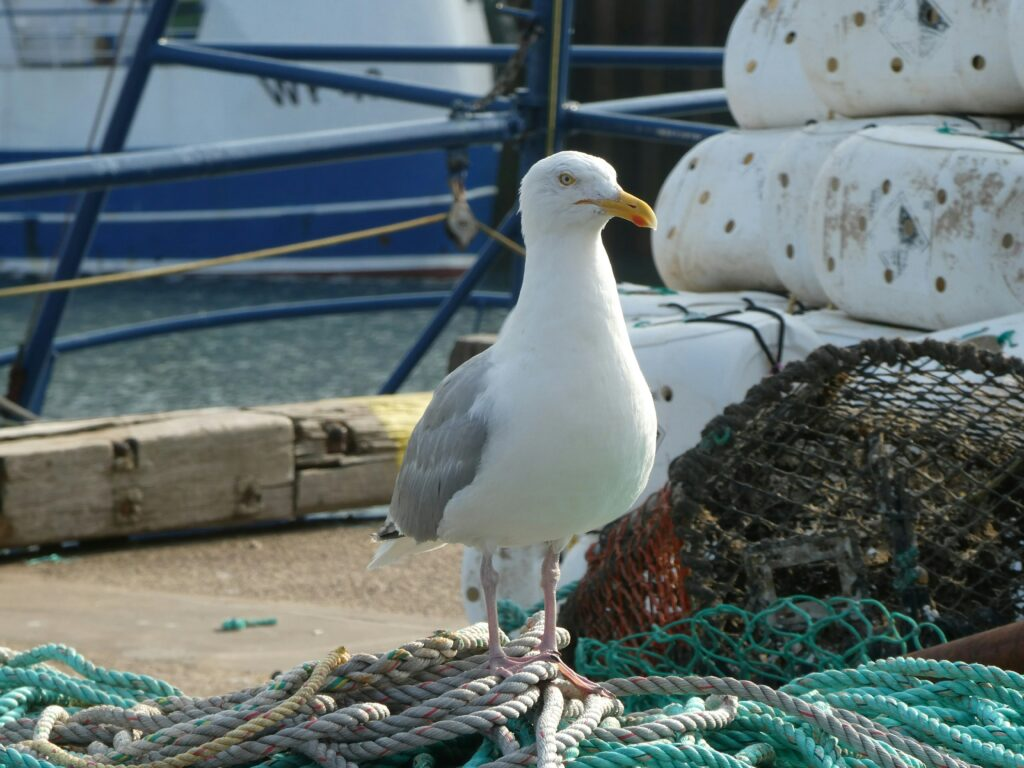
Here are some key reasons why feeding seagulls is problematic:
- Typically, the food offered—such as bread—is nutritionally inadequate and unsuitable for their diet.
- When seagulls become accustomed to human-provided food near shores or marinas, they tend to remain close to urban areas, eventually nesting in cities rather than their natural habitats, thereby disturbing local ecosystems.
- Seagulls can become aggressive when competing for food, unable to distinguish whether food is meant for them or for humans.
- Approaching seagulls with their young can provoke defensive and potentially aggressive behavior from the parents, who perceive any threat to their offspring.
The Greek Ornithological Society highlights the dangers of feeding wild birds in an informative post:
“Imagine yourself on the deck of a ship…
The breeze tousles your hair as you enjoy the view alongside your sandwich…
Ahead, a flock of seagulls is on high alert:
Seagulls: ‘Fresh food nearby!’
You: ‘Sorry, not everyone’s getting a piece!’
Your sandwich: ‘How did I get involved in this?’
Though this may sound humorous, feeding seagulls and other wild animals is far from harmless and can lead to serious consequences:
– It alters their natural behavior
– It fosters dependency on humans
– It increases the risk of injury and aggressive encounters
– It causes health problems and disrupts ecological balance.
Seagulls do not thrive on chips, cookies, or bread! Their natural diet consists of fish, crustaceans, and other marine organisms. Human food lacks essential nutrients and may be harmful—particularly if it contains sugar or causes false satiation.
Next time you travel by ship, savor your snack guilt-free—alone. Observe the seagulls, photograph their elegant flight, but resist feeding them. Nature is most beautiful when left untouched.”
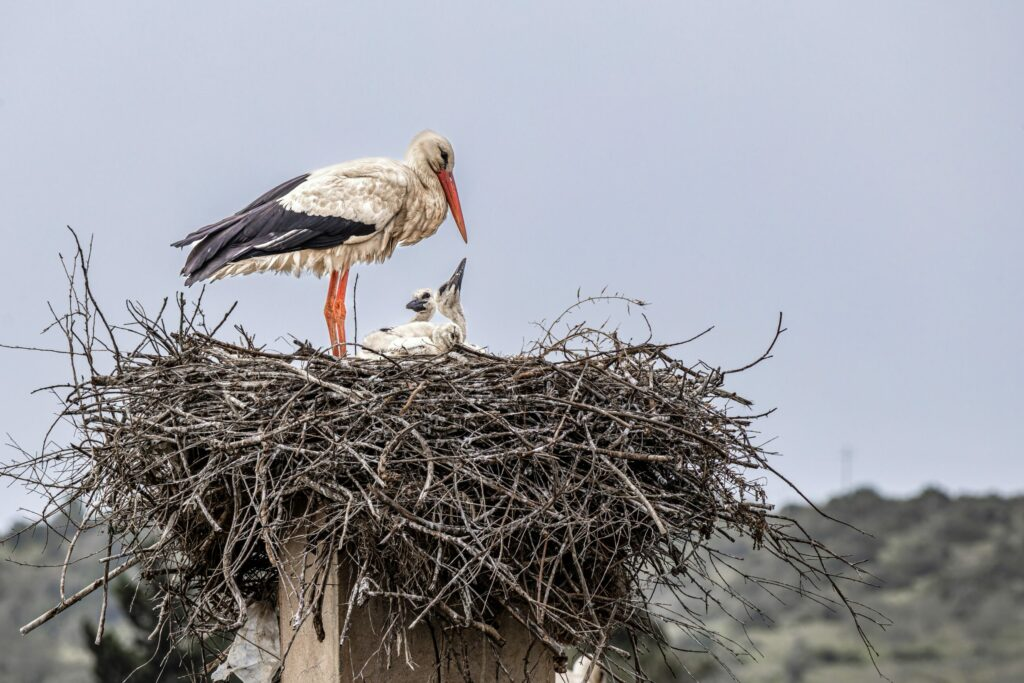
In recent days, two contrasting stories about storks in Greece have highlighted the importance of protecting wildlife.
So, the next time you encounter seagulls at sea or along the coast, keep your bread and koulouri to yourself. Admire their graceful presence, capture photographs, and allow them to continue their natural journey undisturbed. If you live in an urban area where seagulls frequently visit your balcony or yard, take care to secure trash and food scraps to prevent easy access.
Should you spot a seagull in distress in Athens, contact the Wildlife Protection and Care Association ANIMA at 6972664675 or 2109510075. Providing a photograph of the bird will help experts assess its condition and determine necessary care.
Ask me anything
Explore related questions