

×
GreekEnglish

×
  • Politics
  • Diaspora
  • World
  • Lifestyle
  • Travel
  • Culture
  • Sports
  • Cooking
Monday
01
Jun 2026
weather symbol
Athens 25°C
  • Home
  • Politics
  • Economy
  • World
  • Diaspora
  • Lifestyle
  • Travel
  • Culture
  • Sports
  • Mediterranean Cooking
  • Weather
Contact follow Protothema:
Powered by Cloudevo
> Culture

Researchers reconstruct the scents of ancient civilizations

A study describes how museums can use “molecular evidence” to bring the public into contact with the smells of the past

Newsroom February 5 07:30

Δείτε περισσότερα άρθρα μας στα αποτελέσματα αναζήτησης

Add Protothema.gr on Google

Recent advances in biomolecular archaeology reveal that ancient objects can preserve molecular “fingerprints” of past aromatic practices. These molecules provide unprecedented insight into ancient perfumery, medicine, rituals, and everyday life.

An interdisciplinary research team led by chemist and antiquity specialist Barbara Huber, from the Max Planck Institute of Geoanthropology and the University of Tübingen, describes in a study published in Frontiers in Environmental Archaeology how museums can use this molecular evidence to help the public experience the scents of the past.

>Related articles

Karpathos frog: The island prince fighting for survival

Airbnb hosts face tax notices over income discrepancies

More than 2,400 digital traffic fines issued through Greece’s smart camera system

Drawing on the research data, perfumer Karol Kalvez developed a series of formulations that translated ancient chemical traces into a fragrance suitable for museum spaces. “The real challenge lies in imagining the scent as a whole. Biomolecular data provide essential clues, but the perfumer must translate chemical information into a complete and coherent olfactory experience that conveys the complexity of the original material, rather than merely its individual components,” she explains.

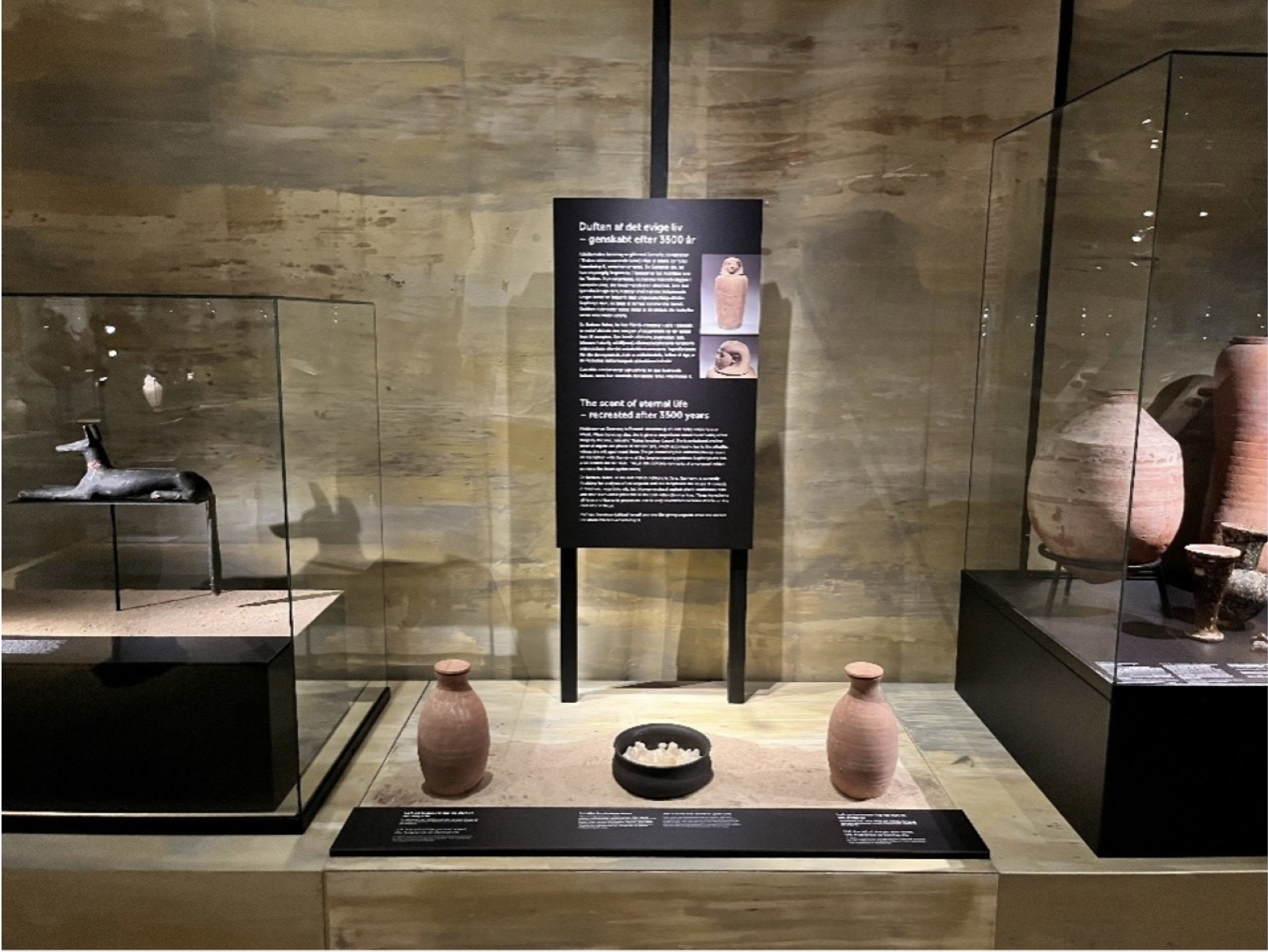
The researchers then developed two ways of presenting ancient scents in public spaces. Starting with the “Scent of the Afterlife,” a reconstruction of the aromas associated with embalming in ancient Egypt, they created a portable scented card and a fixed scent-diffusion station.

At the August Kestner Museum in Hanover, where the objects that inspired the project are displayed, the scented card was incorporated as a core element of guided tours. The fixed station was installed in the exhibition “Ancient Egypt – Obsession with Life” at the Moesgaard Museum in Aarhus, Denmark. As Moesgaard curator Steffen Terp Laursen notes, “the scent station transformed the way visitors perceived embalming. Smell added an emotional and sensory depth that explanatory panels alone could never provide.”

Ask me anything

Explore related questions

#culture#Geoanthropology#greece
> More Culture

Follow en.protothema.gr on Google News and be the first to know all the news

See all the latest News from Greece and the World, the moment they happen, at en.protothema.gr

> Latest Stories

Fire in Agioi Theodoroi, interruption of the Suburban Railway

June 1, 2026

Kyriakos Mitsotakis at Posidonia

June 1, 2026

Karpathos frog: The island prince fighting for survival

June 1, 2026

Kuwait blames Iran for attacks on its territory

June 1, 2026

Curacao: The football history of the smallest country ever to have been to the World Cup

June 1, 2026

New insect species discovered in Kastellorizo cave named after Tolkien’s Balrog

June 1, 2026

Airbnb hosts face tax notices over income discrepancies

June 1, 2026

PPC: Stable prices in June despite the uncertainty of the international markets

June 1, 2026
All News

> Greece

In reverence, the emotional deposition in Jerusalem, see photos & video

The Holy Temple of the Resurrection opened after many days due to the war between Israel and Iran

April 10, 2026

In the final stretch for the accreditation of joint master’s degrees: Aiming for their launch in the coming academic year

April 10, 2026

Schedule for Epitaph Procession today (10/4)

April 10, 2026

Perfect weather for Easter excursions, according to Tsatrafyllia’s forecast

April 10, 2026

Easter in Greece: The customs that continue in Greek tradition – From Nafpaktos to Corfu

April 10, 2026
Homepage
PERSONAL DATA PROTECTION POLICY COOKIES POLICY TERM OF USE
Powered by Cloudevo
Copyright © 2026 Πρώτο Θέμα



