





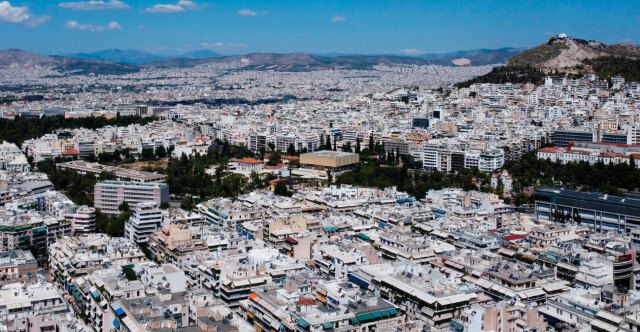
The trends in the Greek housing market are examined in the new issue of Alpha Bank Insights, entitled “The Housing Market Pulse: Navigating Persistent Demand, Policy Efficiency and Structural Supply Rigidities in Greece”, highlighting the “Greek paradox”: high inventory and high homeownership, but at the same time a severe housing crisis.
According to Alpha Bank, the issue of affordable housing has taken on the dimensions of a housing crisis at a pan-European level (Council of the European Union, 2025). A simple approach to assess the dimensions of the problem is to examine the path of house prices over the last decade. In particular, house prices have increased by 53% in the EU-27 and by 46% in the euro area in nominal terms. Taking inflation into account, the real increase from 2015 to 2024 in Europe exceeds 20%.
In Greece, the aspects of the housing issue can be captured as follows: First, in the current housing market recovery phase, prices are rising at a significantly higher rate than household disposable income, which suggests a deterioration of the conditions for obtaining affordable housing. Second, overall housing costs are the highest among EU-27 countries, equal to 35.5% of disposable income in 2024 (19.2% in EU-27).
Residential real estate, however, is the dominant form of non-financial wealth in Greece, which in turn accounts for two-thirds of total household wealth, compared to about one-third in other countries such as Japan, Switzerland, and the United States (UBS, Global Wealth Report 2025). This phenomenon can be attributed to the historical role of the real estate market in Greece during the drachma period. In periods of high inflation, i.e., when the value of liquid assets was eroding, the real estate market was traditionally seen as a means of preserving wealth. This finding raises the question of how a country with a remarkable stock of real estate and a high – albeit declining compared to the past – homeownership rate (almost 70% in 2024) is facing a housing crisis today.
Conclusions
The main question that the study seeks to answer is how a country with a remarkable part of its wealth invested in real estate and a relatively high homeownership rate, like Greece, is facing a housing crisis in the present context. At a first level, the intensity of the phenomenon can be explained by the following five factors.
First, the advanced age of the housing stock negatively affects its quality in relation to modern housing needs, making it necessary to allocate significant financial resources both for its renewal and its renovation with a view to selling or renting it.
Second, the high percentage of vacant properties. The field research has highlighted the causes of this high rate, leading to some recommendations for policy-making in this regard.
Third, the high cost of housing (including utility bills) as a percentage of household disposable income, compared to other European countries.
Fourth, the comparatively higher degree of urbanisation in Greece as a result of the high concentration of jobs in urban centres has a negative impact on the availability of affordable housing in these centres.
Finally, the growth of the sharing economy over the last decade, especially in specific regions.
Ask me anything
Explore related questions




