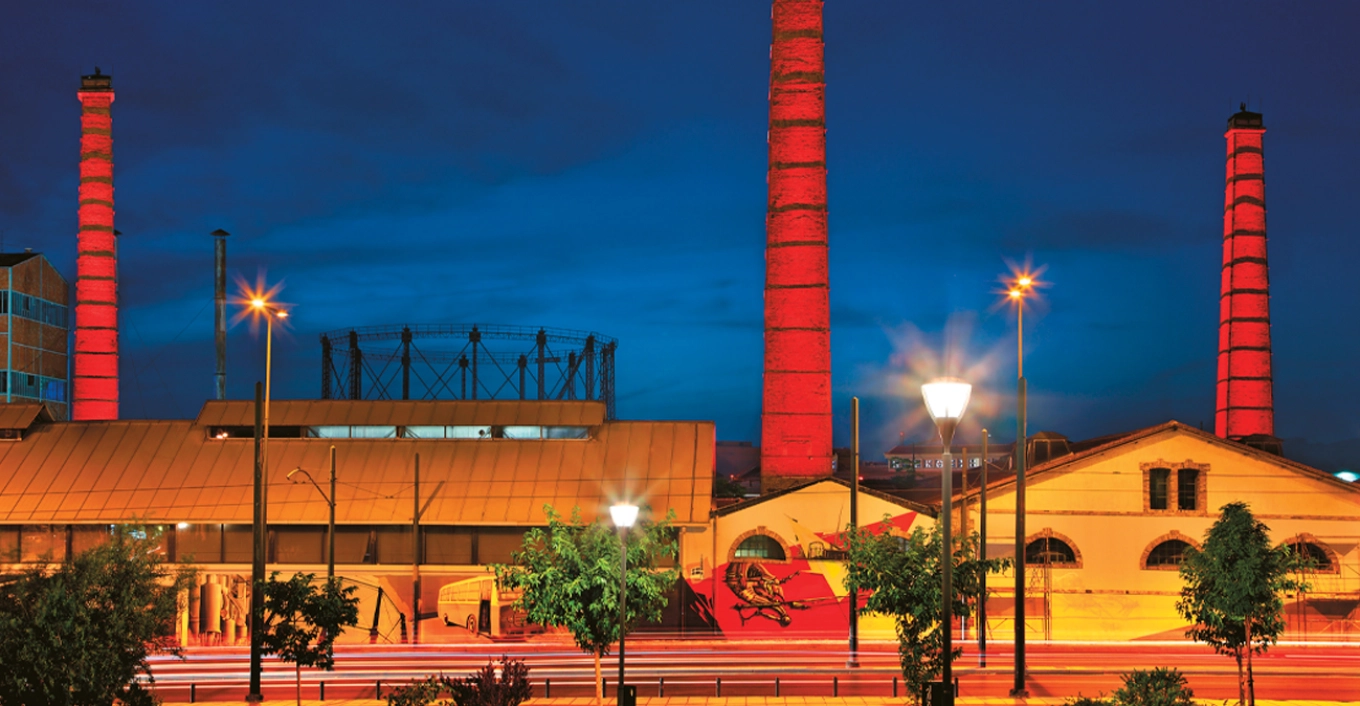
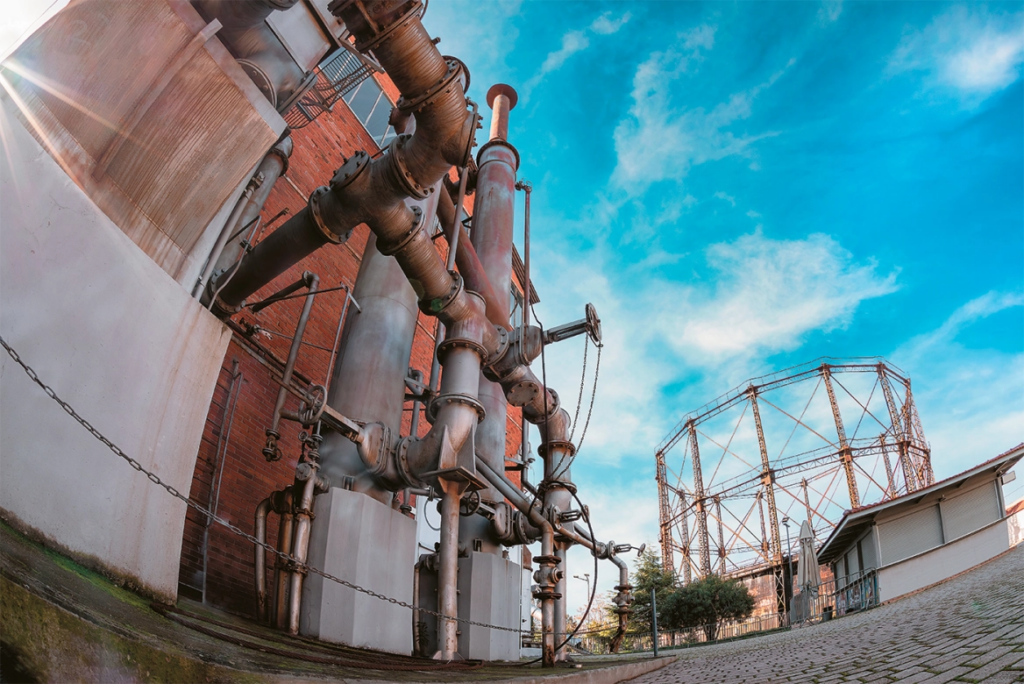
Those who did not live through its years of operation feel as though they are walking through a living museum. And that is not far from reality, as the old Athens Gasworks factory is the best-preserved of its kind in Europe and the only one that retains all of its mechanical equipment in situ.
Visitors thus come into direct contact with a crucial part of the capital’s history, “conversing” with a space that once shaped an entire city and created a new neighborhood. A space that continues to shape Athens’ life today, now serving as a valuable and irreplaceable hub of multifaceted activities.
This is largely due to the emblematic personality of Melina Mercouri, who, as Minister of Culture, preserved the Athens Gasworks as a listed historic monument. This year marks 40 years since her 1986 decision, which paved the way for a new era for the entire area.
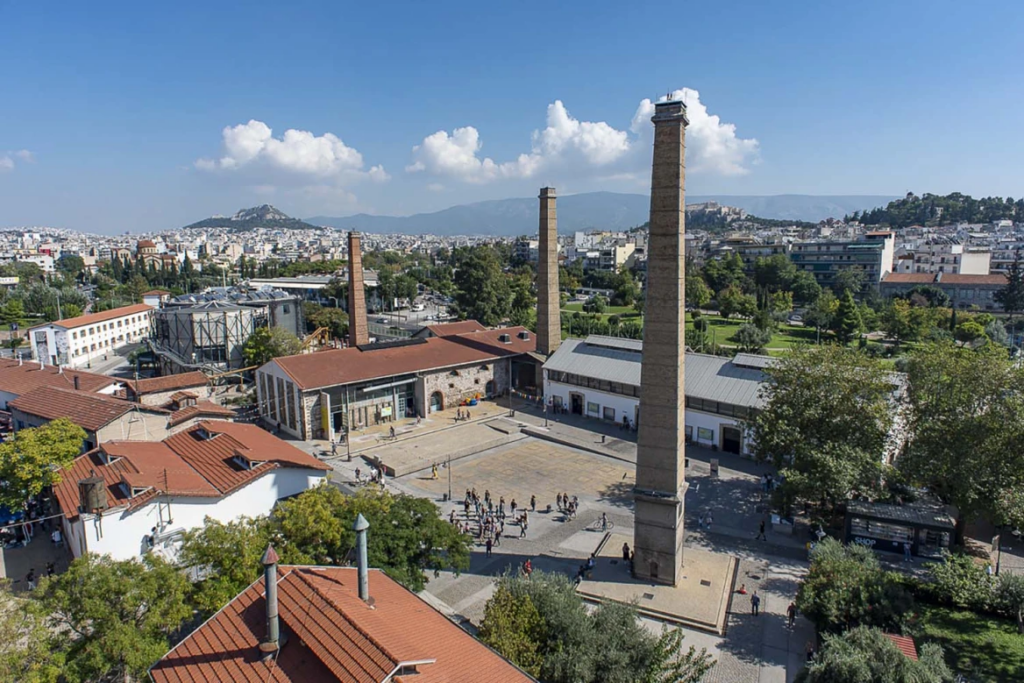
Today, the Gasworks factory is the only one in Europe that preserves all its mechanical equipment in situ.
Lighting Athens
It is difficult for younger generations even to imagine what Gazi and “Gazochori” (as the workers’ settlement was called) looked like decades ago: poor, low houses, brothels, seedy shops, workshops and machine shops, as well as the central vegetable market that operated there before being moved to Rentis.
In the 1860s, despite its proximity to major archaeological sites, priority was given to “modernization” through coal gas, which would provide precious energy and light to the then-small Athens of about 60,000 residents.
In 1857, just 23 years after Athens was established as the capital of the new Greek state, the Gas Lighting Company was founded by French entrepreneur François-Théophile Féraldi to initially meet public lighting needs, later expanding to residential and industrial use. He was granted the exclusive 50-year privilege to establish and operate the gasworks for the city’s lighting.
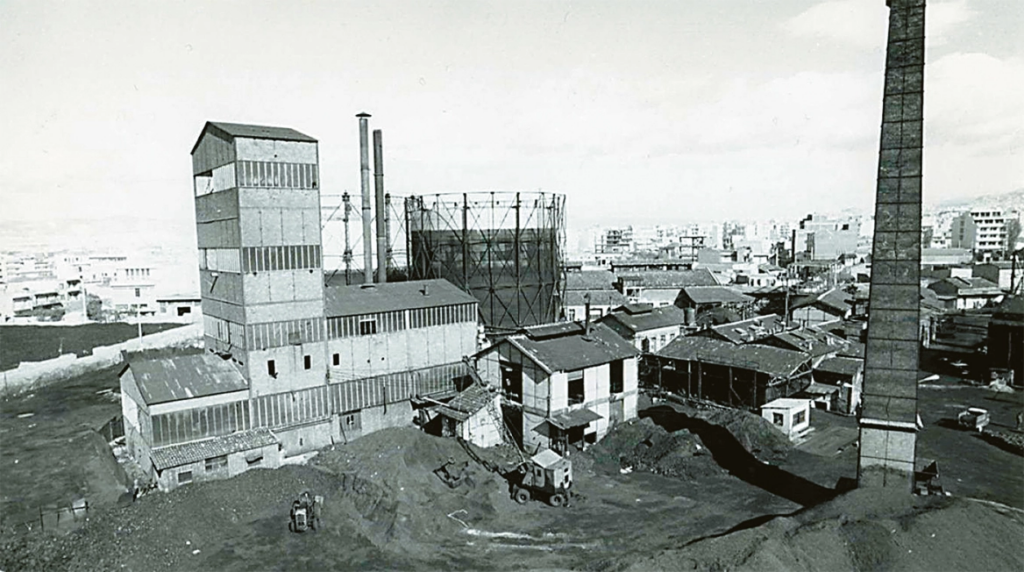
At a time when, after sunset, everything plunged into darkness—broken only by a few oil and later petroleum lamps in central spots and household lanterns—this was revolutionary.
In 1858, by royal decree of King Otto, the exact location, construction plan, and production process were defined, following the French model. Machinery was imported from Paris due to the lack of domestic expertise.
The site was chosen because it lay far from the city center at the time, yet along Piraeus Street, ensuring direct access to the port of Piraeus for raw materials. It was also next to the Eridanos River, which supplied abundant water for operations.
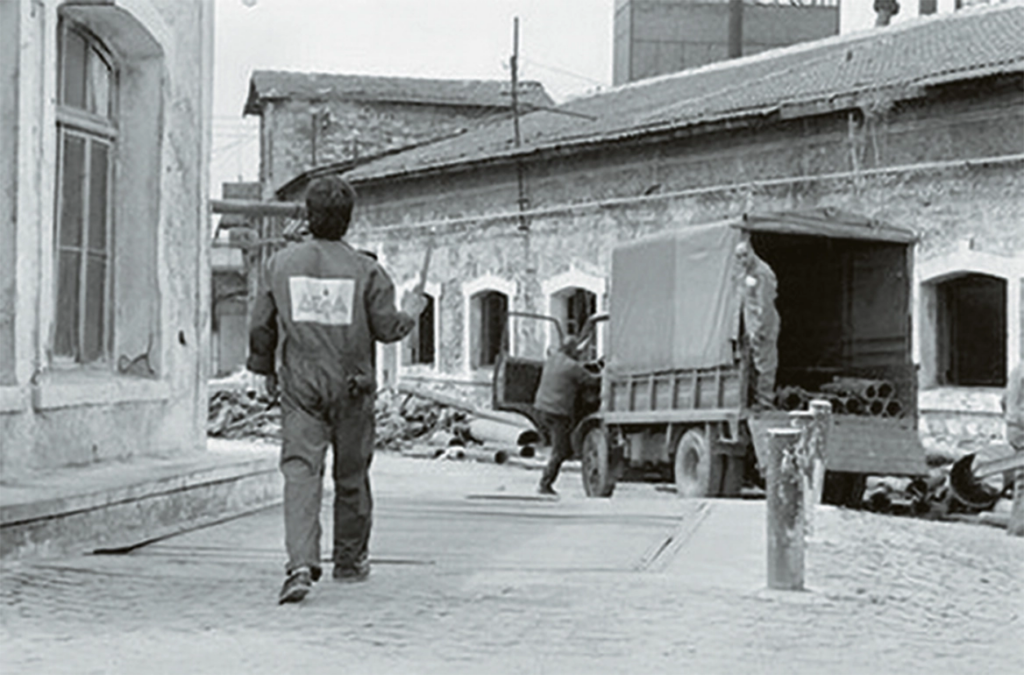
“Let There Be Light”
In 1862, the industrial complex began operating—the first energy production unit in Greece. Gas street lamps immediately improved daily life and enhanced the sense of safety at night, bringing a European flair to the capital’s center.
In 1887, under banker and Lavrion mines owner Giovanni Battista Serpieri and his partner Foulon de Vaux, the company expanded significantly. New buildings, furnaces, gas holders, and worker facilities (locker rooms, baths, barber shop, etc.) gave the complex its present form. It played a critical role during the historic 1896 Olympic Games.
The exclusive operating privilege was extended until 1938, after which the enterprise passed to the Municipality of Athens.
From 1920 onward, German technology was adopted to improve gas quality, and innovative water gas production was introduced. In 1952, the Municipal Gas Enterprise of Athens (DEFA) was established. However, electrification—especially after World War II—gradually rendered coal gas obsolete.
Smog and Closure
By the 1970s, as gas use declined, residents increasingly demanded the factory’s removal. In the early 1980s, Athens’ notorious “smog” crisis intensified public pressure. In 1982, protesters even tore down part of the surrounding stone wall.
In 1983, coal-based production ceased, and the network connected to the Aspropyrgos refineries, switching to naphtha technology. Nevertheless, the plant was soon deemed outdated and hazardous, not only due to pollution but also because of its proximity to the Acropolis and other key archaeological sites.
In 1984, after 122 years (1862–1984), the furnaces were extinguished permanently.
A Landmark Decision
On July 21, 1986, then-Minister of Culture Melina Mercouri declared the Gazi area a historic site, recognizing the Gasworks as a unique example of a city gas production and distribution unit, a typical industrial complex tied to Athens’ immediate past and collective memory.
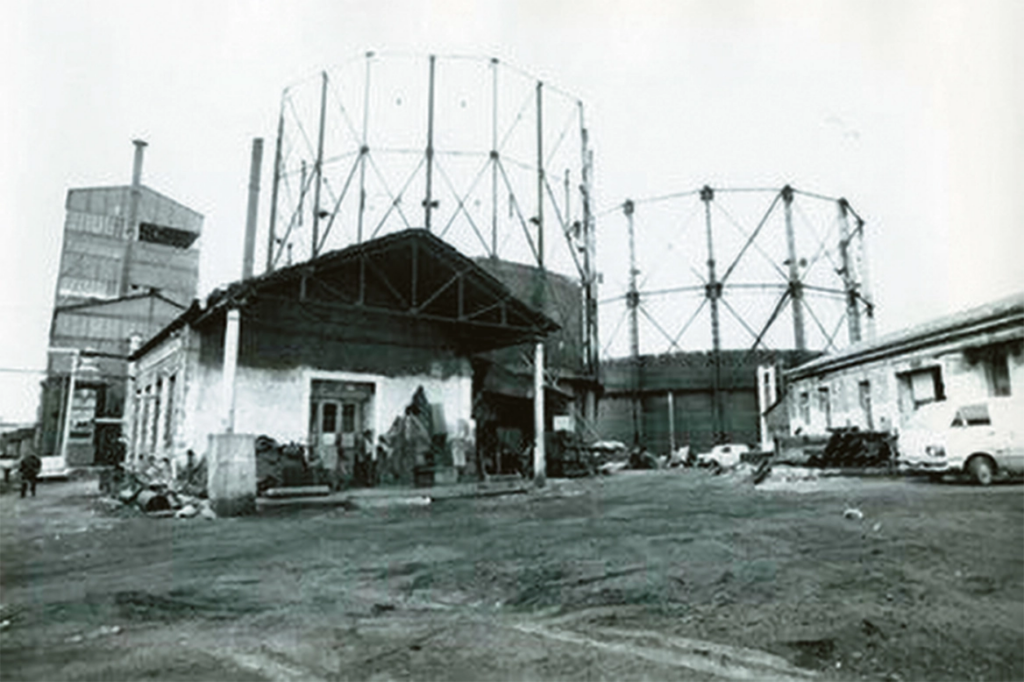
Its machinery, tools, and gas holders remained largely intact. The complex functioned as a self-contained “industrial town,” with carpentry shops, foundries, repair workshops, restaurant, clinic, and barber shop—supporting a well-organized internal economy. Generations of workers from across Greece lived nearby in neighborhoods such as Anafiotika, Kerameikos, and Thissio.
From “Infectious Gazochori” to Cultural Hub
Originally an uninhabited area of fields and marshes, the workers’ settlement became known by 1885 as “Gazochori,” often cited in newspapers as a center of infectious diseases. Poverty, mud, coal smoke, and crime defined its early decades.
From 1901 to 1957, the Athens central vegetable market operated there, later joined by car repair shops and small industries. During the Nazi occupation, the area suffered severe hardship, with 65 deaths recorded in the harsh winter of 1941 alone.
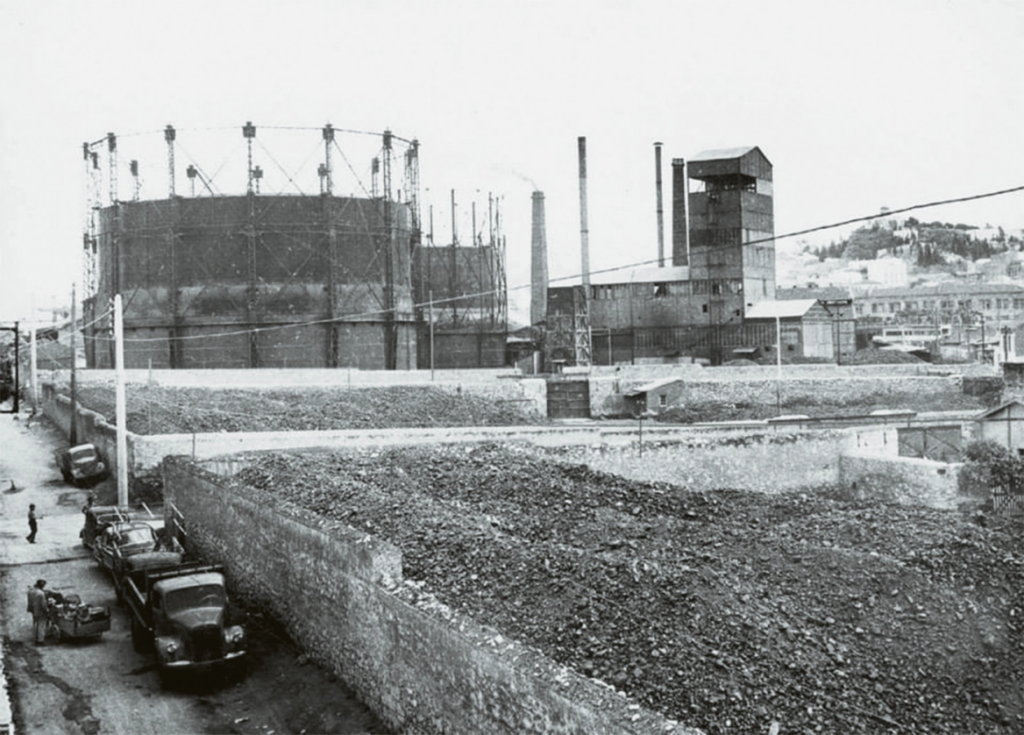
After the factory’s closure, redevelopment plans aimed to upgrade the area while preserving residential use. For about a decade the complex remained closed, until restoration began in 1995. It was gradually transformed into Technopolis of the Municipality of Athens, including seven buildings and two courtyards. In 1999, the first artistic events were hosted there.
Since then, Technopolis has become one of Athens’ most recognized cultural venues. In 2013, the Industrial Gas Museum was established, allowing visitors to explore the site’s history.
The New Era
Gazi’s transformation unfolded in phases. In the 1990s, entertainment venues appeared. In 1993, entrepreneur Ilias Marosoulis converted a former workshop into the “Gazi” performance venue, inaugurated by Stamatis Kraounakis, Lina Nikolakopoulou, and Alkistis Protopsalti.
By 2007, with the metro reaching Kerameikos, Gazi became a hotspot for nightlife, bars, clubs, and restaurants. Real estate boomed—until the 2008 financial crisis brought decline.
In recent years, the area has regained momentum, attracting tourists and locals alike. With the former Gasworks—now Technopolis—hosting major festivals, exhibitions, and events year-round, Gazi once again shapes Athens’ present and future.
Ask me anything
Explore related questions