Five members of Iran’s women’s football team have received humanitarian visas in Australia, with Prime Minister Antony Albanese offering support to the rest of the team as well.
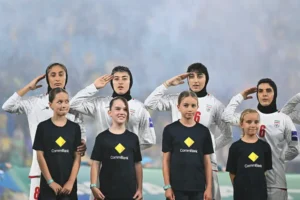
The team participated in the Women’s Asian Cup, and there were fears that the players could face sanctions upon returning to Iran after refusing to sing their national anthem before their match against South Korea.
Minister of Immigration Tony Burke confirmed that the five players were moved to a safe location by Australian police and that they have the ability to remain in the country. The other team members have been informed that they can seek assistance if they wish. The five who received visas are Fatemeh Pasandideh, Zahra Ghanbari, Zahra Sharbali, Atefeh Ramazanzadeh, and Mona Hamoudi.
Australia provides permanent protection to refugees and people in need through its humanitarian visa program, allowing them to live, work, and study in the country. The Minister emphasized that the players are not politically active and are simply seeking safety.
Tensions peaked on Monday at the team’s hotel on the Gold Coast when protesters tried to convince the players to stay in Australia, with some lying on the ground to prevent team members from leaving. The visa issuance process began with discussions between the players and Australian authorities and was completed around 1:30 a.m. Tuesday local time.
The case drew international attention, with U.S. President Donald Trump calling on social media for Australia to grant asylum to the players. The Prime Minister said Australians were moved by the women’s situation and that federal police, in cooperation with the Security Authority, are providing security for the players.
During the matches, the team initially remained silent during the national anthem, while in later matches they sang and gave military salutes, raising concerns that the players were pressured by government officials. Some members of the Iranian community in Australia appeared at the stadium with the pre-revolution Lion and Sun flag, showing solidarity and recognizing that the players are in a difficult position, and that whatever decision they make will be extremely challenging.
They threw away their Hijabs
The players, who were required to wear hijabs during official national team appearances, appear to have removed them in a meeting with the Australian Minister of Immigration, despite threats to their lives for their decision not to sing the national anthem in the match against South Korea.
Previously, Zahra Ghanbari had received personal threats and insults after her hijab fell off while celebrating a goal during a match with her team. She was even expelled and forced to issue a public apology if she wanted to play again.
Ask me anything
Explore related questions